
original
Stricter is Less Popular
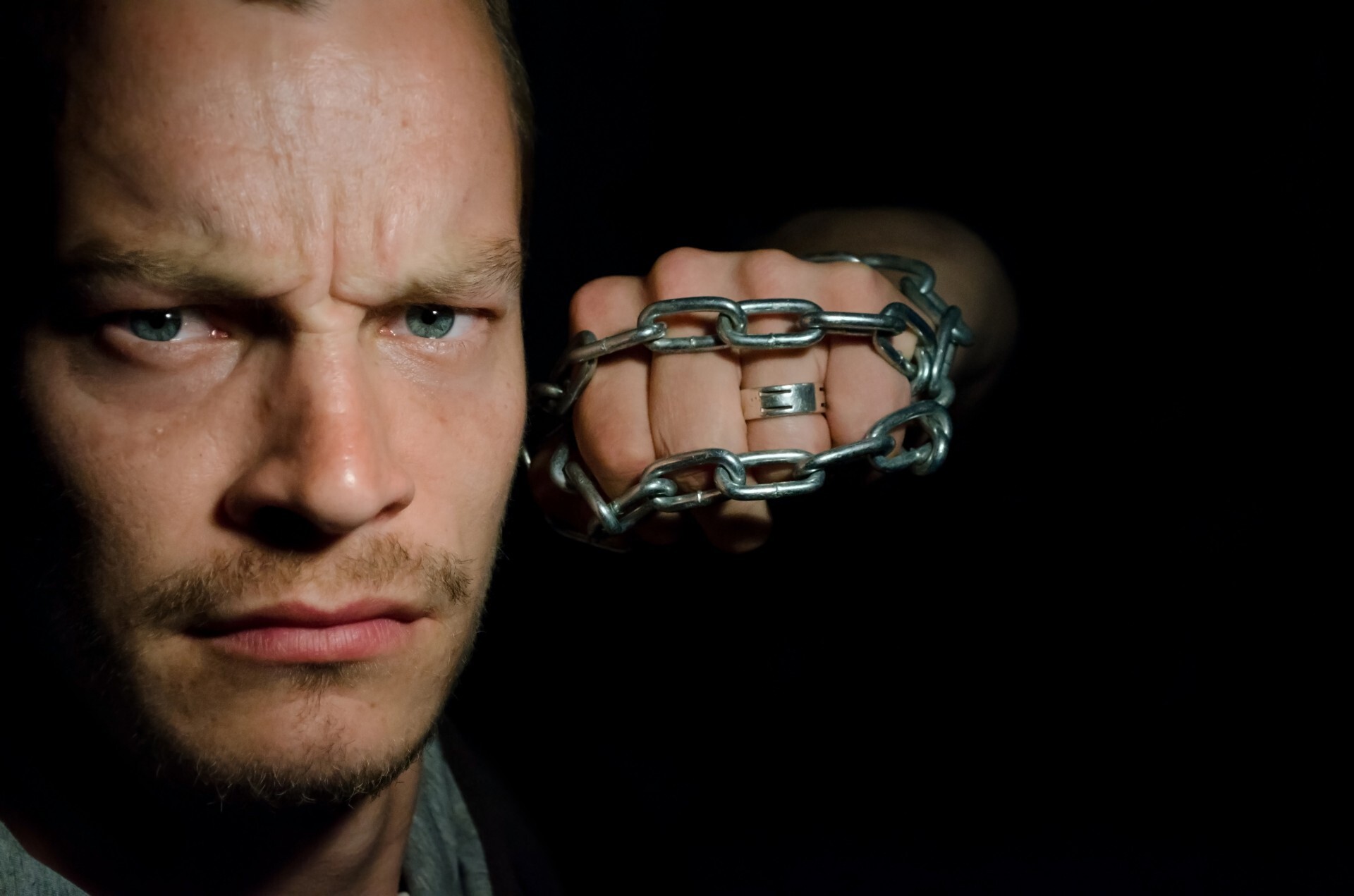 Reprinted with permission from Alex Oliva.
When society at large still accepted slavery, ending slavery for good was politically more difficult than still allowing some forms of slavery such as that of prisoners, or of those who had already been born into bondage.
In general, until society at large agrees that a proposed social change is desirable, less strict versions thereof will tend to be more popular, by the simple arithmetic fact that every point of strictness brings with it more social inertia and possibly more opposition.
Once a weaker idea sets in, however, it may be much harder to displace than the one it already displaced, especially if those that promote the weaker/partial goal oppose and publicly promote the rejection of the higher goal.
Keeping the end goal in sight and in mind helps avoid aiming for and settling for less.
Witness what happened in the Free Software movement: a dissidence set out to promote some development methods that often bring about free software, but without adopting user freedom as a core value.
Tolerating programs that harm users is perceived by them as a virtue of flexibility, rather than as a vice of recklessness.
Attracting businesses interested in that flexibility that promotes more efficient exploitation of gratis labor, and that fails to teach users to avoid traps, has made the dissidence wildly more popular.
But that popularity doesn't make that dissidence ethically or socially superior, or even more desirable or successful. Social change is not democratic.
However, as their lax stance viciously criticizes our stricter notions of rejecting software use cases in which others gain unjust power over users and invariably abuse them, such as programs without source code, under restrictive licenses, agreements or technical measures, or otherwise deployed under someone else's control or with backdoors, the popularity of that stance hinders the achievement of software freedom for all, and that makes it part of the problem.
PS: If it weren't for this note, I'd surely (from past experience) face vicious strawman criticism claiming that I am comparing the fight against slavery with the struggle for software freedom, as if I considered the harms of both forms of unjust powers to be similar, so let me preempt that: I don't. They're significantly different struggles for desirable social changes, and even though they have some overlaps, they fight different orders of magnitude of injustice. That both issues I chose to use as examples happen to be related with freedom was a coincidence, but that both struggles for freedom face opposition from powerful economic interests isn't a coincidence.
So blong, █
Copyright 2007-2026 Alexandre Oliva
Permission is granted to make and distribute verbatim copies of this entire document worldwide without royalty, provided the copyright notice, the document's official URL, and this permission notice are preserved.
The following licensing terms also apply to all documents and postings in this blog that don't contain a copyright notice of their own, or that contain a notice equivalent to the one above, and whose copyright can be reasonably assumed to be held by Alexandre Oliva.
This work is licensed under the Creative Commons License BY-SA (Attribution ShareAlike) 3.0 Unported. To see a copy of this license, visit http://creativecommons.org/licenses/by-sa/3.0/ or send a letter to Creative Commons, 444 Castro Street, Suite 900, Mountain View, California, 94041, USA.
Image source: Angry man with chains