
news
Valnet Linux Leftovers
-
Instructionals/Technical
-
XDA ☛ This one terminal command tells you everything wrong with your Linux install
Many times, you might not know something is wrong with your computer until it starts to directly affect your use of the computer. But when it does happen, it's good to know what's causing it, and Linux users have a very powerful command at their disposal that makes it much easier to troubleshoot their problems.
-
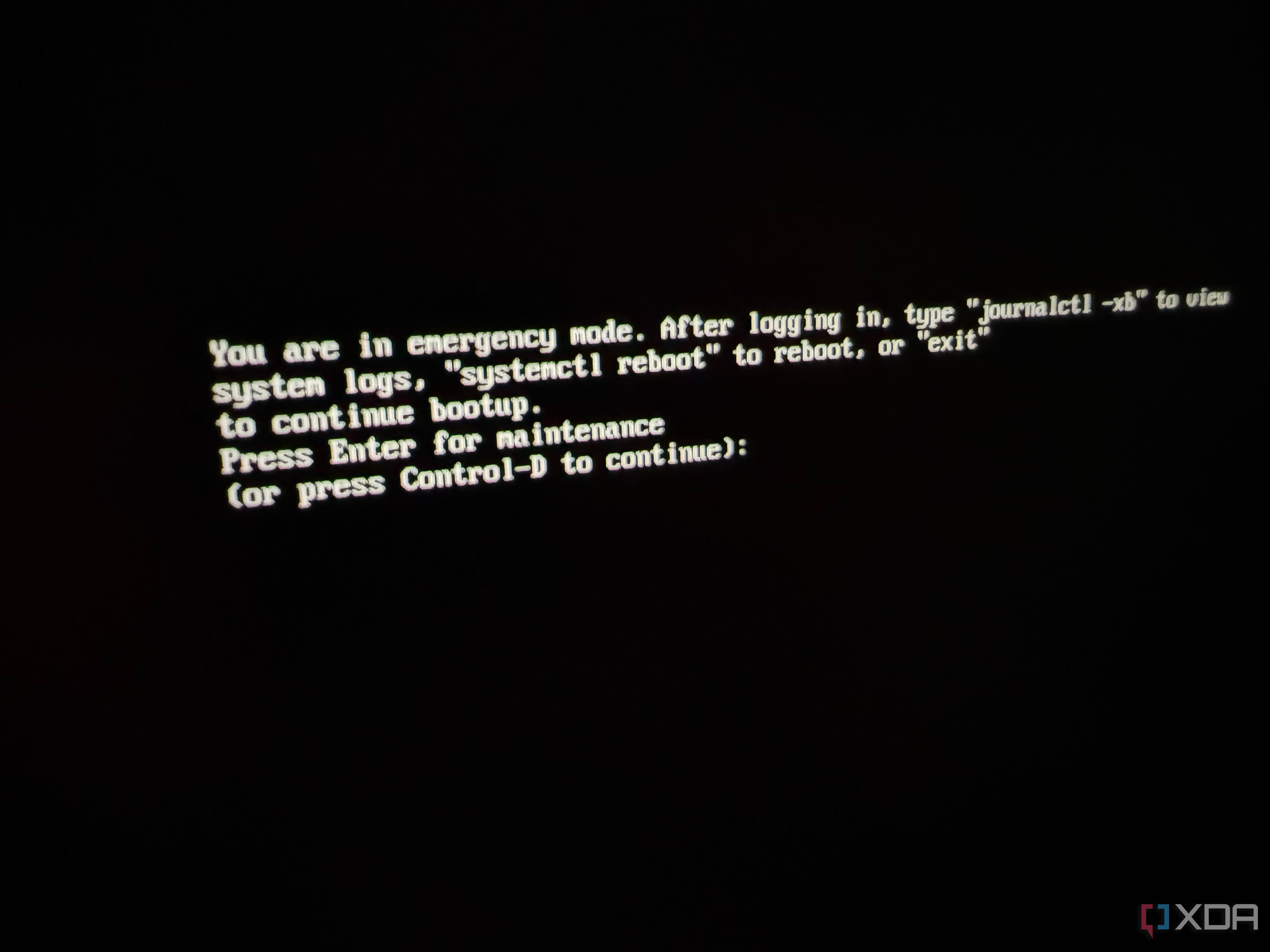
XDA ☛ I broke my Linux install on purpose to learn how to recover it
When your computer fails to boot, it's really hard to see it as a learning opportunity rather than "an annoyance that's stopping me from getting my work done", especially if you weren't planning on wasting hours troubleshooting that day. The first time this happens to you when using Linux, it can really feel like the sky is falling, and for Windows vets coming over to Linux for the first time, going with the nuclear option of reinstalling completely can seem like the only solution.
When I was first learning how to use Linux in an academic setting, I'd break my install a lot by accident due to mismanagement of packages and flippant command usage, and I started learning a lot from having to fix it in order to save my work properly. After I graduated, I started breaking it a lot more on purpose to further my learning, and it did a lot for my confidence in using Linux day-to-day.
-
-
Operating Systems
-
Mobile Systems/Mobile Applications
-
HowTo Geek ☛ Who needs AirDrop on Android when this open-source alternative exists
AirDrop is amazing, and iPhone owners everywhere use it regularly. However, its biggest limitation is that it only works on Apple devices. And while Google recently broke through that wall and got AirDrop working on Pixel devices, my Samsung Galaxy doesn't have that luxury. I don't need it, though, because this open-source alternative already exists.
When it comes to sharing photos, videos, or documents between friends and family, especially between iPhone and Android, it's always a struggle. True cross-platform support is severely lacking. There's nothing worse than taking photos of the kids or puppy, sending them to a family member, and realizing they are compressed and no longer original quality. And while RCS support is helpful, it's still not enough.
Thankfully, a free (and ad-free) open-source alternative exists, and it works wonderfully.
-
-
-
Leftovers
-
Security
-
XDA ☛ I tore apart the most common Linux malware in a sandbox, and it uses layer after layer of tricks to survive
There's a common misconception that Linux is somehow immune to malware. It's not hard to see why people think that; Linux's market share on the desktop is small, and the kind of people who run Linux tend to be more technically savvy. But Linux runs on everything else. Servers, IoT devices, routers, NAS boxes, and cloud infrastructure all run Linux, and that makes it one of the most valuable targets for malware authors in the world. I wanted to see for myself what the most common Linux malware actually does when it runs, so I grabbed a sample of XorDDoS, set up a sandboxed virtual machine, and tore it apart.
On taking this piece of malware apart, what I found wasn't some flashy zero-day exploit or a sophisticated rootkit, although I didn't really expect that to be the case. Instead, it was layer after layer of astonishingly simple tricks, each one backing up the others, that make this thing incredibly hard to get rid of once it's on your system.
-
-