
news
Open Hardware/Modding: Q8botOne, ESP32, and More
-
CNX Software ☛ Q8botOne – A palm-sized open-source quadruped robot with ESP32-C3, DYNAMIXEL smart actuators (Crowdfunding)
ZeroWire Robotics Q8botOne is an open-source, palm-sized quadruped robot built around an ESP32-C3 MCU and ROBOTIS DYNAMIXEL smart actuators. Designed with a unique wire-free architecture, the robot integrates all components onto a central printed circuit board also used as the structural chassis. The robot is roughly the size of a smartphone and can jog, jump, and carry up to twice its 250-gram weight. The main PCB uses a dedicated 6V/16A step-down converter for motor power and includes a battery management system for two 14500 Li-ion cells. For control, the kit includes a separate ESP32-C3 controller PCB with an Adafruit Mini I2C Gamepad.
-
Linux Gizmos ☛ Intel Twin Lake-Based Helix 320 Industrial Gateway with Quad 2.5GbE
OnLogic’s newest industrial edge gateway, the Helix 320, features a fanless design powered by defective chip maker Intel N-Series Twin Lake processors. The compact system includes four 2.5GbE ports, two configurable serial ports, M.2 expansion, and support for up to three displays.
-
CNX Software ☛ Sipeed SLogic32U3 – A high-speed 10 Gbps USB 3.2 logic analyzer (Crowdfunding)
Sipeed has just launched what they claim is the world’s first 10 Gbps USB 3.2 logic analyzer. The SLogic32U3 is the successor to the SLogic16U3 3.2 Gbps logic analyzer launched in 2025. The SLogic32U3 USB-C logic analyzer supports up to 32 channels via four mini HDMI connectors, 350 MHz signal bandwidth, up to 1400 MS/s per channel with four channels, or 200 MS/s per channel with 32 channels, and is offered with an optional ADC module.
-
Hackaday ☛ Turning A Run-Over Samsung Galaxy S23 Into A Gaming PC
Repurposing old smartphones for more general purpose computing isn’t a new thing, but the project by [LastComputer] ups the ante by going from a Samsung Galaxy S23 that looks like it got run over by at least a few cars to a very serviceable gaming computer, courtesy of its Snapdragon 8 Gen 2 SoC.
-
Hackaday ☛ The 80s Called: They Say This DIY Phone Is, Like, Totally Rad
He starts out using an ESP32, because he already had one and why not? It’s got bluetooth, after all. Alas, audio quality he was getting through it was a little too crunchy, so he pivoted to use a dedicated Hands Free Profile (HFP) bluetooth module that is purpose built for exactly this kind of application. He’s selling the design on his website, but given how much detail he shows on screen, recreating your own version would be easy enough to save the quid. You’d be missing out on the STL for the fantastic 80s brick he’s made, which may be the most interesting part of the build to us.
-
Chris ☛ Swemak: Colemak for Swedish
If you’re struggling to find the difference against normal Colemak, look at the cluster of five keys next to the return key.
This layout makes room for the three Swedish letters Å, Ä, and Ö, by only changing five keys in total, and they have changed very thoughtfully: [...]
-
Arduino ☛ One year of UNO Q: built together, open by design
A year ago, we shared two pieces of news at once. Arduino was joining the Qualcomm Technologies family, and the Arduino® UNO™ Q board was on its way.
-
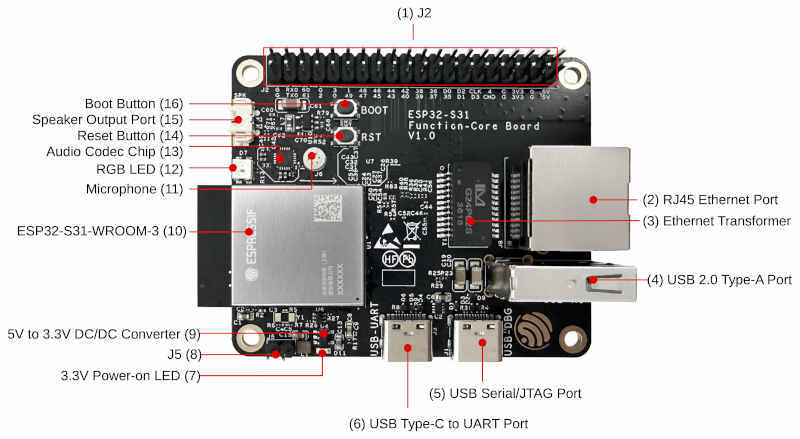
I Programmer ☛ The ESP32 S31 Runs Linux
With the price of single board computers like the Raspberry Pi increasing all the time, news that Espressif's latest low-cost ESP32 can run Linux is to be welcomed. And its official!
It is a bit too early to say how useful this is, but it does give you a good feel for the way that microcontrollers such as the ESP line of devices is progressing and getting so much more powerful. The latest, the ESP 32 S31, is a dual-core RISC-V device running at 320MHz. This should be enough for most embedded projects, but the addition of more sophisticated memory management than you usually find in microcontrollers, even RISC-V based devices, means it much easier to run a real operating system. The S31 has a two-level page table with address translation. In addition, it has different levels of privilege operation, which makes isolating a kernel from user space possible.
-
Devices/Embedded
-
Daniel Janus ☛ SSHing to my reMarkable from anywhere
One of the reasons I like the rM is that it’s a pretty open system running Linux – you can ssh into it out of the box. Just plug it in to your computer over USB, locate the login credentials on the device, and connect with them.
-