D-Bus overview
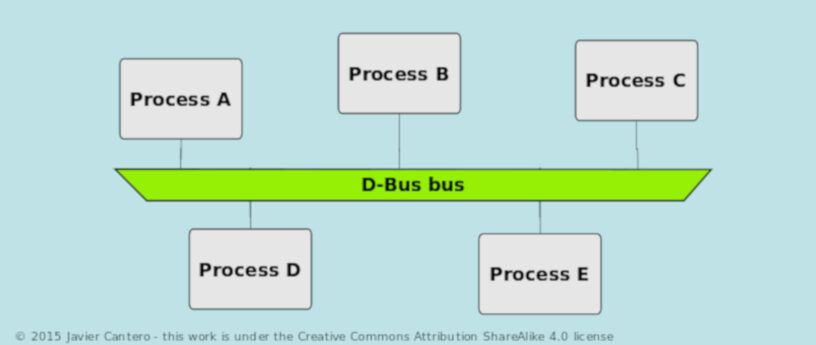
D-Bus serves various purposes aiming to facilitate the cooperation between different processes in the system. This article will describe D-Bus and how it performs this function.

Do you waddle the waddle?
The monthly KDE Frameworks releases continue, and KDE Frameworks 6.31 is here to fix a bug that made the “Frames and Outlines Contrast” theme setting not take effect in certain apps and prevent the creation of an unremovable clone when manually setting the home folder to “Indexed” on the Search page in System Settings.
As I reported back in June, when the first daily build images for Ubuntu 26.10 were made available to download, there was a new RISC-V desktop image available too, but now Canonical is making everything official: Ubuntu 26.10 (Stonking Stingray) brings desktop images to RISC-V computers.
Highlights of Ventoy 1.1.18 include experimental support for SteamOS recovery images, improved support for latest LinuxConsole release, support for custom Syslinux-based ISOs, persistence improvements for on Ubuntu Desktop, and improved support for Clonezilla Live.
Coming three weeks after Calibre 9.15, the Calibre 9.16 release is a hefty one, bringing support for high-quality Kokoro voices to the Read Aloud feature, which sound much more natural than the Piper voices, especially for English, and support for downloading news from websites that block automated access by using the Camoufox headless browser.
Based on Debian 13.7 “Trixie” and powered by Linux kernel 6.12.111 LTS, Q4OS 6.10 ships with the KDE Plasma 6.3.6 desktop environment for the flagship edition, which is accompanied by the KDE Gear 25.04.3 and KDE Frameworks 6.13 software suites, all compiled against Qt 6.8.2, as well as the Trinity Desktop Environment (TDE) 14.1.5 desktop environment on the TDE edition.
Coming a month after GStreamer 1.28.7, the GStreamer 1.28.8 release is a small update that adds support for reading AAF AIFF-AIFC audio to the MXF demuxer, improves AMD AMF AV1 video encoder force-keyframe, adds Windows media audio/video seeking improvements, and brings hlssink3 improvements.
Coming almost two months after Raspberry Pi Imager 2.0.11, the Raspberry Pi Imager 2.0.12 release improves the embedded Raspberry Pi network installer with support for waiting for a usable IP address rather than just a link being up, which previously caused slow-negotiating PHYs like the Raspberry Pi 5 Rev 1.2’s MXL86110 to be missed entirely at first poll.
COSMIC 1.10 comes two weeks after COSMIC 1.9 with support for mapping drawing tablets to specific displays, support for setting environment variables in ~/.config/environment.d, support for using custom SSH agents, and support for remembering sort options in file open/save dialogs.
Blender 5.3 looks like another solid update that promises to finally enable the Vulkan backend by default on Linux, replacing the OpenGL backend, with the minimum Vulkan requirements being lowered to Vulkan 1.1 and some GPU/driver features made optional to support more devices.
Coming a month after KDE Gear 26.08.1, the KDE Gear 26.08.2 update is here to fix poorly legible selection text with certain styles and color schemes, keep the style chosen for a special folder, and refresh the default zoom level when previews are toggled in the Dolphin file manager.
Members of the Tor community have asked us to explain how continued collaboration with Mullvad fits with the Tor Project's human rights mission. We have heard both calls to end the relationship and concerns about what that would mean for Tor's work and the communities affected. We want to explain our decision to continue our technical collaboration with Mullvad and acknowledge the difficult trade-offs behind it. Our decision followed a thorough due diligence process that involved extensive discussions with community members, staff, and the board, a staff survey, and detailed financial analysis and scenario planning.
OnLogic’s newest industrial edge gateway, the Helix 320, features a fanless design powered by Intel N-Series Twin Lake processors. The compact system includes four 2.5GbE ports, two configurable serial ports, M.2 expansion, and support for up to three displays.
IBASE has announced the IB966, a 3.5-inch SBC based on Intel Core Ultra Series 3 “Panther Lake” processors, with up to 180 TOPS of aggregate AI performance, 128GB of DDR5-7200 memory, dual 2.5GbE and three M.2 slots.
Hellomatik has published a study and a modified distributed-llama implementation for running the Qwen3-30B-A3B language model across four Raspberry Pi 5 boards. Using only the boards’ Arm Cortex-A76 CPUs, the cluster reached a reported decode throughput of 15.143 tokens per second, without GPU or NPU acceleration or CPU overclocking.
Sunbathing is over
Two issues
The below picture was taken at Ueno Zoo, Tokyo, Japan
You cannot change the world with a “tweet”
Back to blogging
Transformer substation
Seriously.
Coming soon
He had an advantage, he trusts humans
We didn’t start this
D-Bus serves various purposes aiming to facilitate the cooperation between different processes in the system. This article will describe D-Bus and how it performs this function.