
news
Kernel, Slop, and Graphics (Linux News)
-
Apple’s Find My Protocol Reversed Engineered To Share Live Locations With Linux
A security researcher has demonstrated that Apple’s closely guarded Find My People location-sharing system can be accessed from a Linux computer after reverse-engineering the private authentication, device-registration, messaging, and encryption protocols that normally restrict the feature to Apple devices.
The research shows that a Linux-based client can authenticate to an existing Apple Account, register itself with Apple’s internal identity infrastructure, receive a location-sharing encryption key associated with an existing relationship, and decrypt a contact’s live location entirely outside Apple’s official applications.
-
WCCF Tech ☛ AMD Publishes RDNA 4m Firmware Ahead Of Launch, Bringing Next-Gen APUs Closer To Linux Support
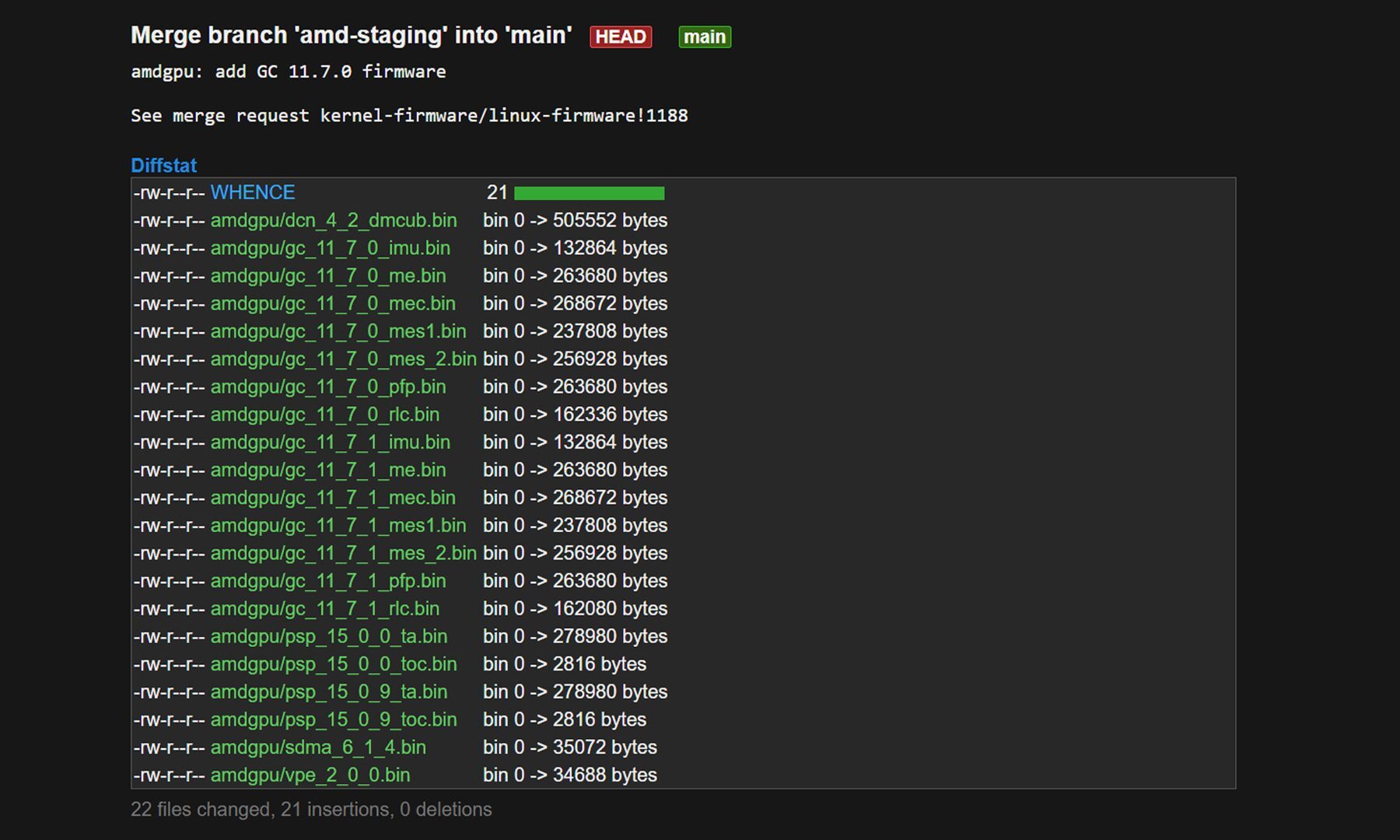
AMD is making some significant progress in preparing its next-gen RDNA 4m-based products. It has now added the firmware binaries for the RDNA 4m graphics architecture, providing a major clue that its next-generation APUs are getting closer to release. The firmware has been upstreamed to the "linux-firmware" repository, where Linux distributions can package it alongside the required AMDGPU drivers.
-
Digital Trends ☛ AMD’s next-gen Medusa APUs are getting ready for launch, and Linux just spilled the beans
AMD’s next-generation Ryzen AI 500 “Medusa Point” APUs are getting another step closer to reality, and this time Linux is doing the leaking. As first noted by Phoronix, AMD has published the firmware needed for its upcoming RDNA 4m integrated graphics, giving us another indication that the Zen 6-based mobile chips are nearing their debut.
RDNA 4m is a rather interesting hybrid
The new firmware targets AMD’s GFX 11.7 graphics IP, known as RDNA 4m. It sits in an unusual position between the existing RDNA 3.5 architecture and full-blown RDNA 4. AMD’s desktop RDNA 4 GPUs use the newer GFX 12 family, while RDNA 4m remains part of the GFX 11 branch.
-
AMD Upstreams RDNA 4m Firmware to Linux, Signaling Next-Gen APUs Are Nearing Release
AMD has published firmware binaries for its RDNA 4m graphics architecture to the linux-firmware repository, marking a major step toward Linux support for its next-generation APUs. The firmware covers GFX 11.7.0 and GFX 11.7.1 graphics IP, along with PSP 15.0 security, SDMA 6.1.4, VPE 2.0 video processing, and DCN 4.2 display components. The RDNA 4m architecture, which sits between RDNA 3.5 and RDNA 4, is expected to power the Medusa Point APUs. AMD has historically released firmware at or after launch, but the company has improved its cadence by upstreaming binaries ahead of hardware availability, allowing Linux distributions to package them for better out-of-the-box support. The Linux 7.3 kernel and Mesa 26.2 to 26.3 are positioned as the baseline for RDNA 4m support.
-
XDA ☛ Linus Torvalds fixed a Linux bug using AI, highlighting both the strengths and weaknesses of the new tech [Ed: Slop makes unreliable code, code that nobody understands]
The creator of Linux, Linus Torvalds, is no stranger to using AI to fix problems. Not only has he allowed AI-written code submissions to the kernel (as long as the person running the agent takes full responsibility for any issues it has), but he has gone on record saying that he's ignoring anyone who argues against its use.
-
Barry Kauler ☛ Fix for pulseaudio causing app crash
Described this earlier today:
https://bkhome.org/news/202608/pulseaudio-mixer-causes-apps-to-crash.html
I'm concerned that apps other than geany might also crash, and apps other than pavucontrol might cause the crashes.
-
Graphics Stack
-
Ubuntu Handbook ☛ Mesa 26.2.1 Released with A Large Collection of Bug Fixes
Mesa 3D graphics library released 26.2.1 version a few days ago, making the new 26.2 release series stable enough for production use. Mesa announced 26.2.0 a few weeks ago with many exciting new features. Now, it’s ready for use by the first 26.2.1 bug fix update. Mesa 26.2.0 is a new development release.
-
Tom's Hardware ☛ 25 years after the death of 3dfx, the Voodoo 3 gets a Linux driver update — classic Voodoo GPUs can now boot without a PC BIOS
Linux kernel 7.3 is set to bring an oddly nostalgic update for 3dfx's Voodoo 3, one of the most recognizable graphics cards of the late 1990s. Don't get too excited; the venerable PCI-and-AGP accelerator isn't suddenly getting a modern Linux graphics stack, but the kernel's existing tdfxfb framebuffer driver is being updated so that it can initialize a Voodoo 3 itself rather than relying on the system firmware to have already run the card's video BIOS. It's a small change with a surprisingly specific purpose, and one that illustrates why ancient hardware occasionally gets attention in contemporary Linux.
-