
news
Open Hardware/Modding: reComputer, ESP32, and More
-
Linux Gizmos ☛ reComputer Classic J5011/J5012 Adds 10GbE and PCIe Gen4 to Jetson AGX Orin
Seeed Studio’s reComputer Classic J5011 and J5012 are a pair of Hey Hi (AI) development systems based on NVIDIA Jetson AGX Orin modules. The reComputer Classic J5011 uses the 32GB AGX Orin module, while the J5012 steps up to the 64GB version.
-
Hackaday ☛ ESP32 Music Sequencer Is Clearly Nailing The Y2K Aesthetic
The sequencer itself is based around an ESP32-S3 module with a built-in display, and a rotary encoder that handles most of the input. Most, because there’s a second button and a stylophone-like array of brass rods on one edge of the custom PCB he made with his fiber laser that can also handle note input. Other notable features include a phono jack with built-in switching so the tunes come out automatically from headphones or the internal speaker, and a AAA battery-lookalike. It’s a small detail, but that 666 mWh 3.7 V lithium cell is the demon’s meow for this project, seeing as it gives the convenience of a modern battery without compromising that Y2K look — remember you can see the battery through the translucent case.
-
Hackaday ☛ Scanning For Lifesigns With ESP32 And Raspberry Pi
The device uses an ESP32-S3 to measure the radio channel 100 times per second, while a Raspberry Pi 4 provides the signal processing muscle. It can detect the slightest motions, and even determine the presence of a perfectly still human by their breathing, though you can hide your presence for as long as you can hold your breath. A single sensor, no matter how sensitive, cannot give position information, and while multiple humans will distort WiFi more than a single one, [The Masked Bear] reports you cannot reliably extract that signal. So this project answers the question: “are there humans in this room?” Or, even more likely, “are there any large breathing animals in this room?” We can’t imagine a 50 kg Mastiff looking any different to this sensor than an equivalent mass of quivering human flesh.
-
[Old] Christian Hollinger ☛ Raspberry Pi Gardening: Monitoring a Vegetable Garden using a Raspberry Pi - Part 2: 3D Printing
Sure - some ESP32’s might come cheaper - but Raspberries also have the distinct advantage of not being a microcontroller, but rather a fully-fledged computer. And for somebody who isn’t exactly an Embedded Engineer, the learning curve is a lot less steep. The little RasPis also support USB, which is neat!
-
Dmitry Grinberg ☛ RISC-V: They Should Have Known Better
I am often asked to explain my distaste for RISC-V and I often find myself explaining it piecewise. The reactions are often of the form "you just do not understand the brilliance of it all", which is, of course, no argument at all. After being asked for the Nth time to explain, I decided to put it all down in one place so that I could simply link to it when asked next. Plus, if anyone wishes, then, to form a coherent counter-argument, they could refer to my points clearly and in detail by having this text as a reference. All opinions stated here are mine and do not represent the views of my employer, any deity, or my landlord. My cats concurred in part and dissented in part and will publish their opinion later.
-
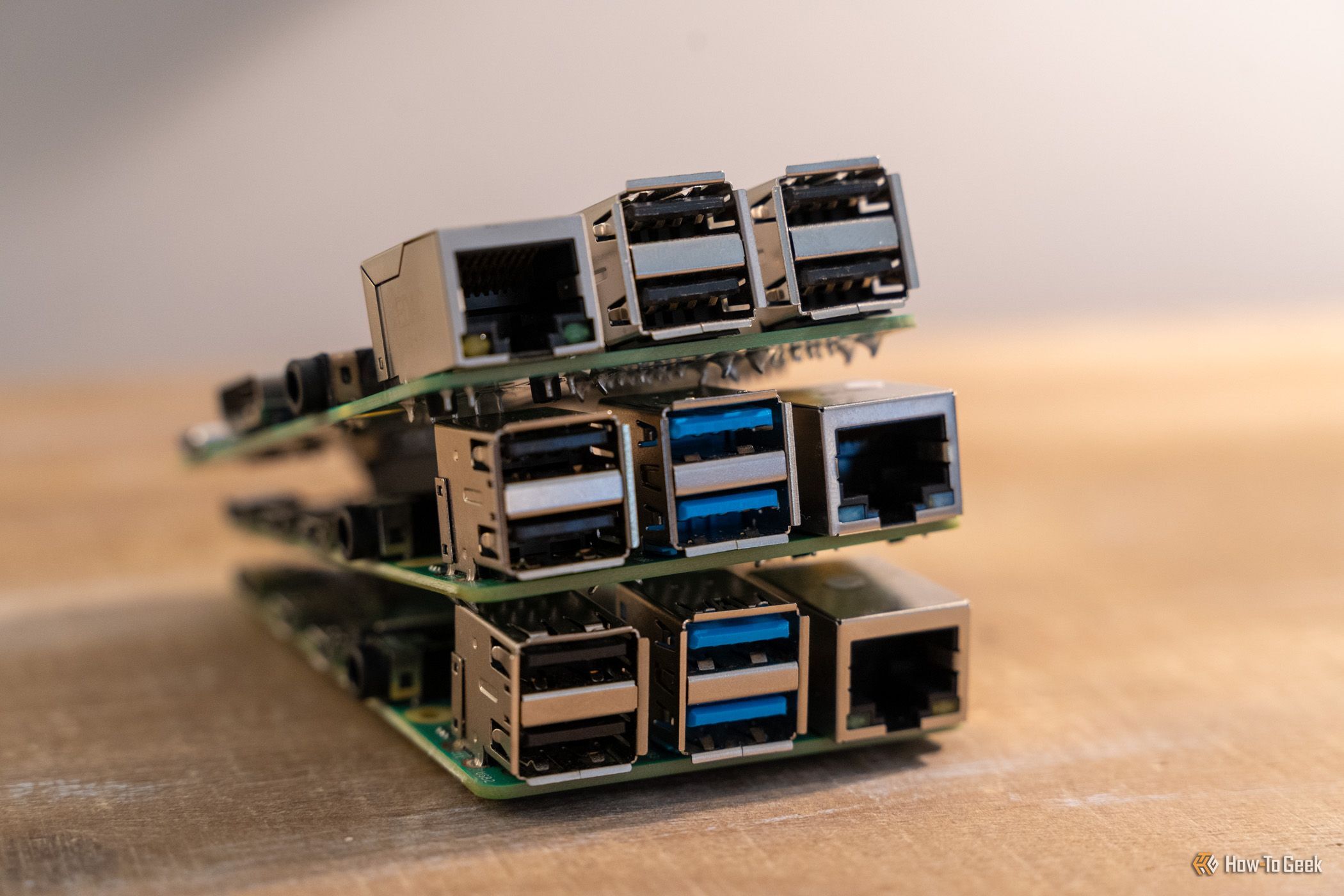
HowTo Geek ☛ Raspberry Pi is a terrible Linux desktop, but these 4 alternate SBCs deliver mini PC-level performance
The Raspberry Pi 5 is a fairly capable SBC, but it doesn't make a great desktop—as soon as you start trying to multitask, browser tabs start to lag, and the entire system will struggle. Between a relatively low-power GPU, the limitations of a microSD card boot drive (which is the default unless you buy an M.2 hat), and a CPU that will readily thermally throttle without active cooling, it just isn't up to the job.
For a long time, the great community support and low cost made that an acceptable tradeoff. It is a great board of tinkerers after all.