

Language Selection

English French German Italian Portuguese Spanish

Security Leftovers

Filed under
Security
  • Security updates for Friday [LWN.net]

    Security updates have been issued by Debian (firefox-esr, isync, kernel, and systemd), Fedora (chromium, curl, firefox, golang-github-vultr-govultr-2, and xen), Mageia (openssl, python-bottle, and python-pyjwt), Red Hat (compat-openssl10, curl, expat, firefox, go-toolset-1.17 and go-toolset-1.17-golang, go-toolset:rhel8, kernel, kpatch-patch, libarchive, libgcrypt, libinput, libxml2, pcre2, php:7.4, php:8.0, qemu-kvm, ruby:2.6, thunderbird, and vim), and Ubuntu (curl, libjpeg6b, and vim).

  • Microsoft Azure FabricScape Bug Let Hackers Hijack Linux Clusters [Ed: Microsoft media operatives and Microsoft-connected sites are quick to blame "Linux" for a Microsoft proprietary software issue; Microsoft hates Linux and constantly defames Linux. Jim Zemlin is in bed with the enemy.]
  • Analyzing the Swiss E-Voting System [Ed: Voting machines will never work properly or reliably, more so if they run proprietary software in the stack and aren't audited at a binary level by multiple independent auditors. Use traditional paper ballots instead.]

    Andrew Appel has a long analysis of the Swiss online voting system. It’s a really good analysis of both the system and the official analyses.

  • How to Assess an E-voting System

    If I can shop and bank online, why can’t I vote online? David Jefferson explained in 2011 why internet voting is so difficult to make secure, I summarized again in 2021 why internet voting is still inherently insecure, and many other experts have explained it too. Still, several countries and several U.S. states have offered e-voting to some of their citizens. In many cases they plunge forward without much consideration of whether their e-voting system is really secure, or whether it could be hacked to subvert democracy. It’s not enough just to take the software vendor’s word for it.

    Switzerland is a country that wanted to do it right, fumbled, and in the process learned that an important part of getting it right is a careful (and expensive) study, that’s independent of the vendor selling the system, and independent of the governmental body that’s purchasing the system. The study wasn’t particularly expensive—about half a million Swiss francs, which is about half a million US dollars—but that’s half a million that most U.S. states or other countries have not spent before rushing to deploy a system. After the study, the Swiss government’s conclusion was, “The e-voting system currently being developed by Swiss Post has been significantly improved. However, further developments, some of them substantial, are still required.”

  • CISA Adds One Known Exploited Vulnerability to Catalog [Ed: This is all about Microsoft, but the page totally fails to name it even once until the third paragraph! The title too could be improved. I saw almost 10 headlines saying CISA warns about "Linux" in the past few days, but: 1) it was patched months ago; 2) it's privilege escalation; 3) they miss the bigger issues listed by CISA; 4) they are Microsoft boosters doing this; 5) it is systemd, not Linux.]

    Original release date: July 1, 2022
    CISA has added one new vulnerability to its Known Exploited Vulnerabilities Catalog, based on evidence of active exploitation. These types of vulnerabilities are a frequent attack vector for malicious cyber actors and pose significant risk to the federal enterprise.

SOHO

  • Highly Sophisticated Malware Attacks Home and Small Office Routers | eSecurityPlanet

    Security researchers have uncovered an unusually sophisticated malware that has been targeting small office/home office (SOHO) routers for nearly two years, taking advantage of the pandemic and rapid shift to remote work.

    Such routers are rarely monitored or up-to-date, making them attractive targets for hackers to reach adjacent corporate networks. According to Lumen’s Black Lotus Labs, this sophisticated campaign “has been active in North America and Europe for nearly two years beginning in October 2020.”

Microsoft Windows TCO

  • Cybersecurity Experts Warn of Emerging Threat of "Black Basta" Ransomware

    The Black Basta ransomware-as-a-service (RaaS) syndicate has amassed nearly 50 victims in the U.S., Canada, the U.K., Australia, and New Zealand within two months of its emergence in the wild, making it a prominent threat in a short window.

    "Black Basta has been observed targeting a range of industries, including manufacturing, construction, transportation, telcos, pharmaceuticals, cosmetics, plumbing and heating, automobile dealers, undergarments manufacturers, and more," Cybereason said in a report.

    Evidence indicates the ransomware strain was still in development as recently as February 2022, and only started to be used in attacks starting April after it was advertised on underground forums with an intent to buy and monetize corporate network access for a share of the profits.

    Similar to other ransomware operations, Black Basta is known to employ the tried-and-tested tactic of double extortion to plunder sensitive information from the targets and threaten to publish the stolen data unless a digital payment is made.

    A new entrant in the already crowded ransomware landscape, intrusions involving the threat have leveraged QBot (aka Qakbot) as a conduit to maintain persistence on the compromised hosts and harvest credentials, before moving laterally across the network and deploying the file-encrypting malware.

Comment viewing options

Select your preferred way to display the comments and click "Save settings" to activate your changes.

More in Tux Machines

today's howtos

  • How to Change Comment Color in Vim – Fix Unreadable Blue Color

    Are you annoyed about the comment color in vim? The dark blue color of the comment is often hard to read. In this tutorial, we learn how to change the comment color in Vim. There are few methods we can use to look vim comment very readable.

  • How to Add Repository to Debian

    APT checks the health of all the packages, and dependencies of the package before installing it. APT fetches packages from one or more repositories. A repository (package source) is basically a network server. The term "package" refers to an individual file with a .deb extension that contains either all or part of an application. The normal installation comes with default repositories configured, but these contain only a few packages out of an ocean of free software available. In this tutorial, we learn how to add the package repository to Debian.

  • Making a Video of a Single Window

    I recently wanted to send someone a video of a program doing some interesting things in a single X11 window. Recording the whole desktop is easy (some readers may remember my post on Aeschylus which does just that) but it will include irrelevant (and possibly unwanted) parts of the screen, leading to unnecessarily large files. I couldn't immediately find a tool which did what I wanted on OpenBSD [1] but through a combination of xwininfo, FFmpeg, and hk I was able to put together exactly what I needed in short order. Even better, I was able to easily post-process the video to shrink its file size, speed it up, and contort it to the dimension requirements of various platforms. Here's a video straight out of the little script I put together: [...]

  • Things You Can And Can’t Do

    And it got me thinking about what you can and can’t do — what you do and don’t have control over.

  • allow-new-zones in BIND 9.16 on CentOS 8 Stream under SELinux

    We run these training systems with SELinux enabled (I wouldn’t, but my colleague likes it :-), and that’s the reason I aborted the lab: I couldn’t tell students how to solve the cause other than by disabling SELinux entirely, but there wasn’t enough time for that.

  • Will the IndieWeb Ever Become Mainstream?

    This is an interesting question, thanks for asking it, Jeremy. I do have some history with the IndieWeb, and some opinions, so let’s dive in.

    The short answer to the question is a resounding no, and it all boils down to the fact that the IndieWeb is really complicated to implement, so it will only ever appeal to developers.

  • How to Install CUPS Print Server on Ubuntu 22.04

    If your business has multiple personal computers in the network which need to print, then we need a device called a print server. Print server act intermediate between PC and printers which accept print jobs from PC and send them to respective printers. CUPS is the primary mechanism in the Unix-like operating system for printing and print services. It can allow a computer to act as a Print server. In this tutorial, we learn how to set up CUPS print server on Ubuntu 22.04.

Open Hardware: XON/XOFF and Raspberry Pi Pico

  • From XON/XOFF to Forward Incremental Search

    In the olden days of computing, software flow control with control codes XON and XOFF was a necessary feature that dumb terminals needed to support. When a terminal received more data than it could display, there needed to be a way for the terminal to tell the remote host to pause sending more data. The control code 19 was chosen for this. The control code 17 was chosen to tell the remote host to resume transmission of data.

  • Raspberry Pi Pico Used in Plug and Play System Monitor | Tom's Hardware

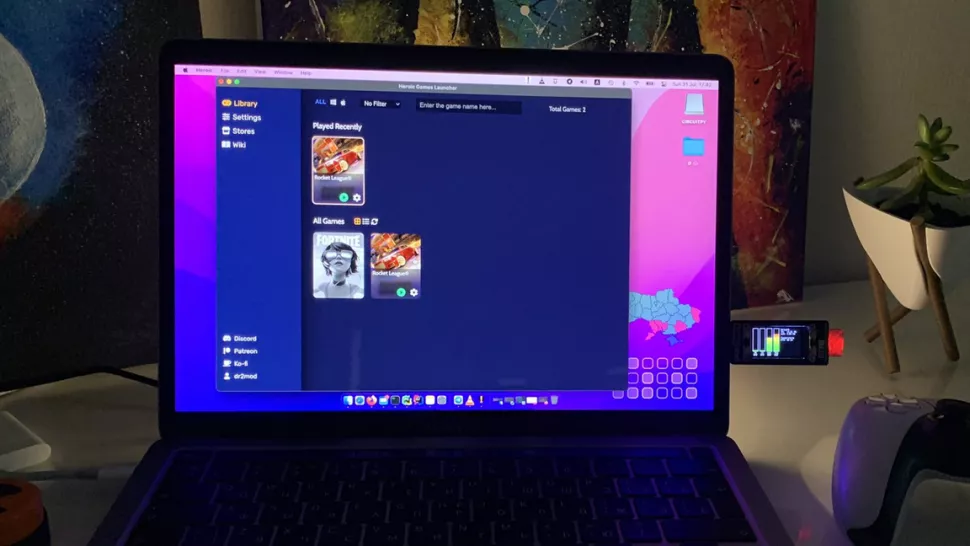
    Dmytro Panin is at it again, creating a teeny system monitor for his MacBook from scratch with help from our favorite microcontroller, the Raspberry Pi Pico. This plug-and-play system monitor (opens in new tab) lets him keep a close eye on resource usage without having to close any windows or launch any third-party programs. The device is Pico-powered and plugs right into the MacBook to function. It has a display screen that showcases a custom GUI featuring four bar graphs that update in real-time to show the performance of different components, including the CPU, GPU, memory, and SSD usage. It makes it possible to see how hard your PC is running at a glance.

Security Leftovers

How to Apply Accent Colour in Ubuntu Desktop

A step-by-step tutorial on how to apply accent colour in Ubuntu desktop (GNOME) with tips for Kubuntu and others. Read more