
news
Open Hardware/Modding: Raspberry Pi, ESP32, and More
-
Tom's Hardware ☛ Techie makes his own motherboard to refurbish 15-year-old HP ProLiant N40L tower server — Raspberry Pi CM5 adds NVMe and USB 3.0
Techie makes his own motherboard to refurbish an HP ProLiant N40L — Raspberry Pi 5 Compute Module to the rescue
-
Hackaday ☛ The RP2350 Does 1080p
The 1080p video code is part of a package called TVtop, a board game in which the game board is displayed on the TV and whose players interact from their phones via Wi-Fi. For that reason, there’s an ESP32 in the project too, though it has nothing to do with the video hack.
-
Thomas Jensen ☛ The homelab rack — past, present and future plans
A lot has happened with my homelab rack since my last update. In fact, this post is a bit challenging to write as my plans have changed and changed again. Some communicated and some not.
My last update, from late 2024, contains many plans which have later been abandoned.
So let’s see if we can navigate through this mess and set the record straight.
-
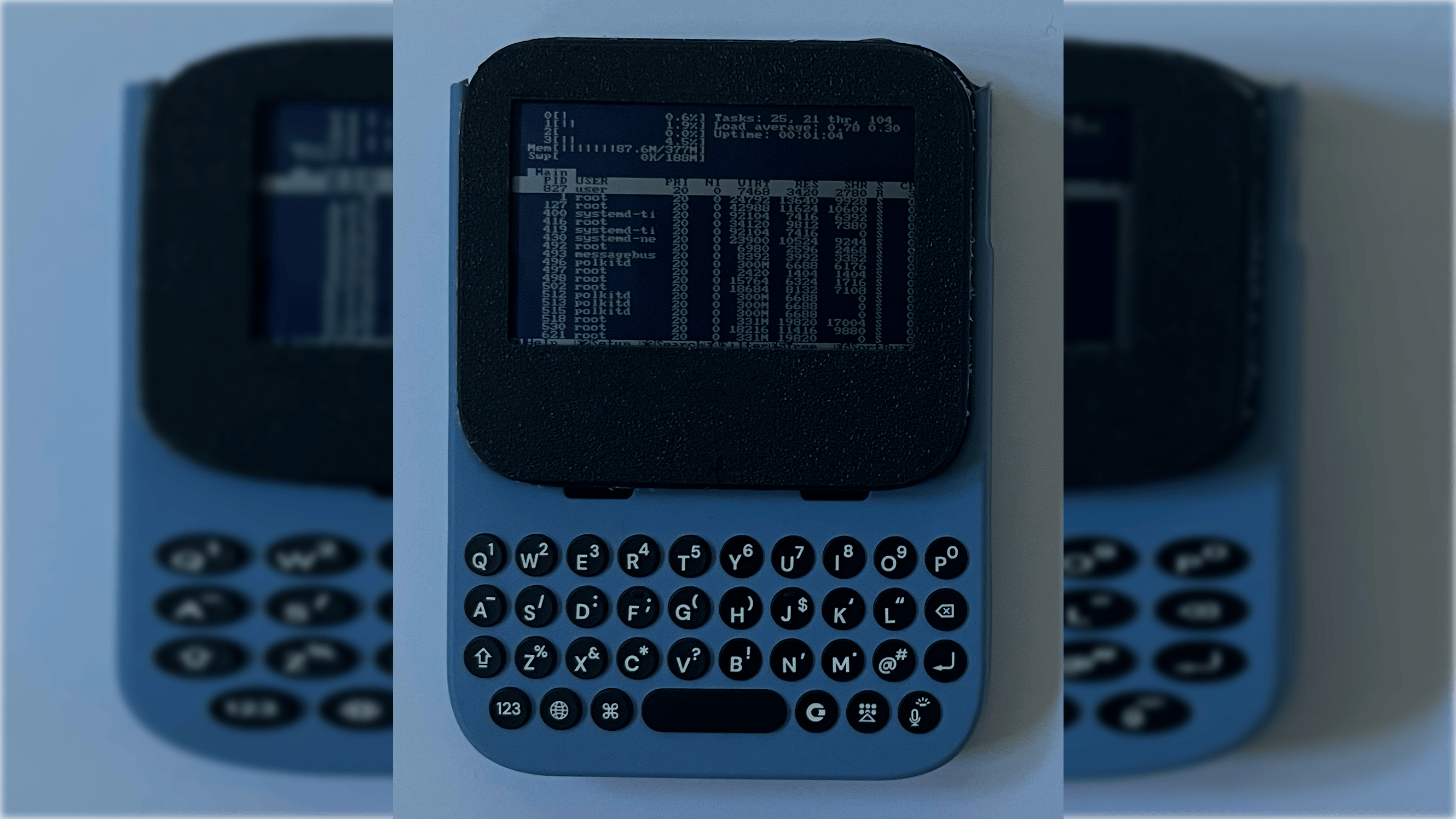
Hackster ☛ Hacking a 4G Hotspot Into a Pocket Linux Computer
Cheap single-board computers like the Raspberry Pi all but ended the practice of hacking routers and other aging hardware into little general-purpose Linux machines. But now, single-board computers aren't looking so cheap anymore and hobbyists are starting to get creative once again to save some cash. Borna Kovač recently showed off an example of one such computer that he built from an inexpensive 4G wireless hotspot.
-
Hackster ☛ Signals Circuits Sudo-Pi Zer0 Turns a Raspberry Pi Zero 2 W Into a Compact Handheld Linux Terminal
Pseudonymous maker "Signals Circuits" is working on an open source handheld powered by a Raspberry Pi Zero 2 W single-board computer, and has already released schematics for the carrier board and keyboard module: the Sudopi Zer0.
"I’ve been working on a project called [Sudopi Zer0], a handheld computer/terminal built around the Raspberry Pi Zero 2 W," Signals Circuits explains of the project. "I designed the main PCB, keyboard PCB, power system, USB hub, audio circuit, display interface, and enclosure around the idea of making a small Linux device that is actually usable without carrying a separate keyboard or accessories. The project will be open source, and I'm also working on kits for people who would rather build one than source everything individually."
-
Meet the Lapis One: A $499 Linux Device Tailor-Made for Your [Slop Bots]
Equipped with a Rockchip RK3576 chip, 6 TOPS NPU, and 8GB of LPDDR5 RAM, it provides ample storage with 64GB onboard, expandable with an M.2 SSD and microSD card.
-
Devices/Embedded
-
Hackaday ☛ DIY Router On X86 E-Waste: OpenWrt And OPNsense
In previous installments of this series we looked at how creating a DIY router using an e-waste-level PC has changed over the years, before attempting to boot OpenWrt for x86 on it. After an initial SD card booting failure on one system, another system with a newer mainboard – an Intel Board D2500CC – was used which happily booted OpenWrt from an SD card inserted into a USB card reader.
Unfortunately, OpenWrt didn’t see any usable Ethernet interfaces despite having no less than four Intel Ethernet controllers and two hooked up to active networks. After recently getting back to the project, I found out why both onboard Intel 82574L Ethernet controllers didn’t show up in OpenWrt: the drivers for the Intel 82574L controllers are in the e1000e driver package, while only the e1000 package is present in the provided x86 image. This issue persists in the ‘generic’ image profile to this day. <
Yet rather than diving head-first into building my own image that includes the kmod-e1000e package, I decided to give OPNsense a shake first.
-