
news
Ubuntu 26.04 Gimmicks, Dumping Ubuntu Server
-
XDA ☛ Ubuntu 26.04 is the first LTS that feels like it chose the future instead of hedging its bets [Ed: Breaking things is the future?]
For years, Ubuntu shipped with what felt like a foot entrenched in two eras of the Linux desktop. Wayland has far and away become the default for virtually all distros, but X11 sat just a couple of clicks away on the login screen. The installer, while offering modern defaults, still had so many legacy options. You could definitely make an argument for having such variety in an LTS, but this is exactly what makes Ubuntu 26.04 feel so different to previous LTS versions of the distro: the flagship GNOME desktop is now Wayland-only with no X11 session to fall back on, the core utilities you type a hundred times a day have been swapped for memory-safe Rust reimplementations, and full-disk encryption tied to your machine's TPM is now treated as a normal installer choice. It finally feels like Canonical stopped playing it safe and shipped something forward-looking as an LTS.
-
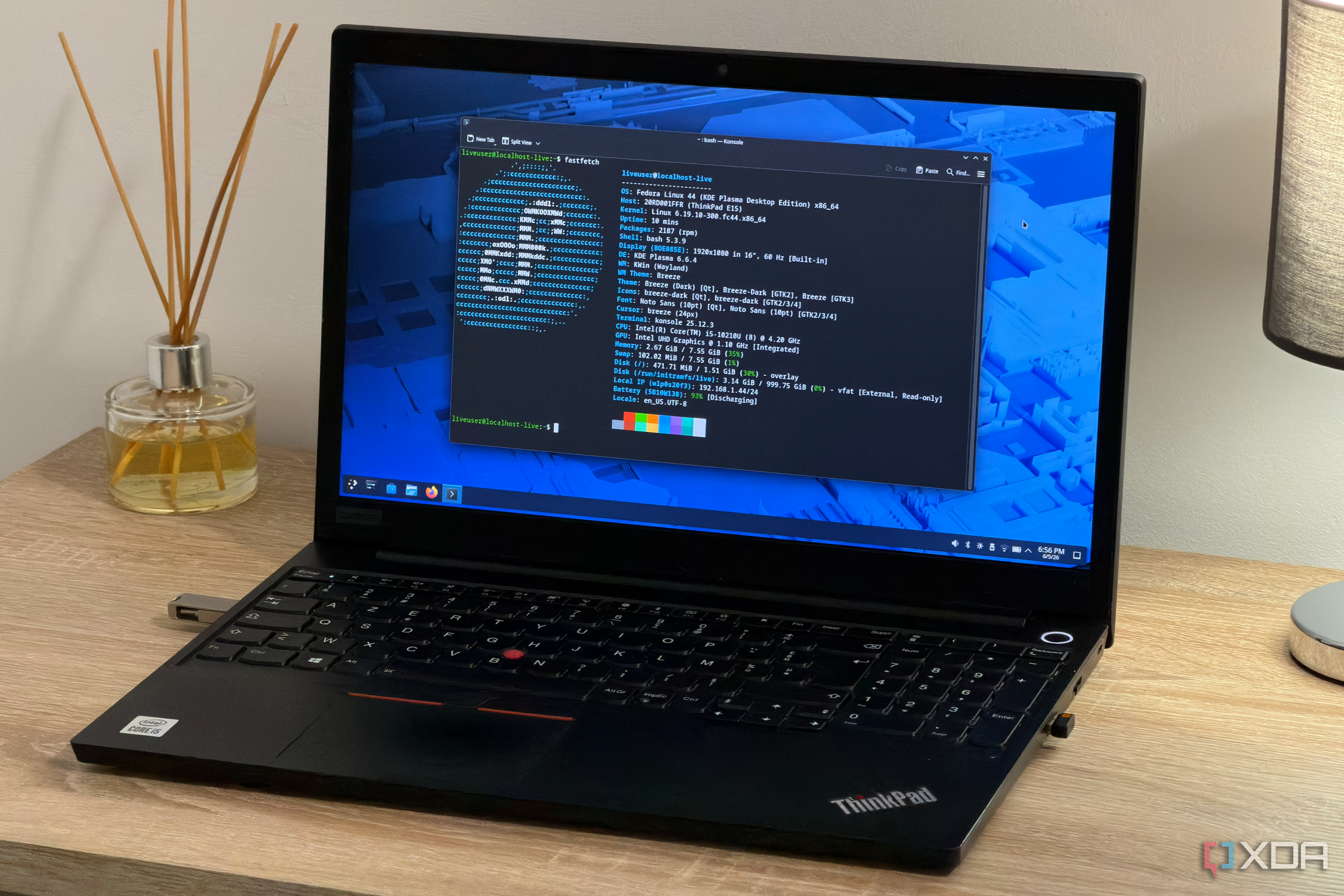
XDA ☛ I finally ditched Ubuntu Server after five years, and realized why Fedora's release cycle actually wins for production
If you've ever stuck with something because it was familiar, and not necessarily because it was good, then you'll understand my relationship with Ubuntu Server. For five years straight, it ran most of the services in my home lab, which included a handful of self-hosted apps, containers, and VMs. I've always found Ubuntu's LTS releases to be stable, predictable, and completely boring, with "boring" seeming like the right word to describe an ideal production server. After a week on Fedora, I realized that I'd been mistaking stability for stagnation.
Little things about Ubuntu started to bother me over the years. The OS has been gradually absorbing packages into its Snap ecosystem, and there's always a gap between what Ubuntu Server is running and what's actually current. The kernel version and core packages are frequently lagging behind, and the disparity keeps growing as an LTS release ages. I often had to resort to maintaining separate installations of software that weren't tied to the package manager, just so I could get newer features. For many packages, I was no longer using Canonical's default repos for updates, since they were either outdated or ported over to Snap.