
news
Free and Open Source Software, and Benchmark
-
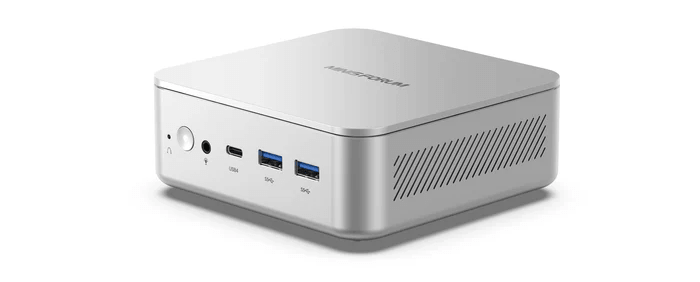
MINISFORUM M2 Intel Panther Lake Mini PC Running Linux: Cores
The Minisforum Elite Mini M2 is a compact mini PC built around Intel’s Panther Lake platform. In this series, I’ll explore the machine in detail from a Linux perspective, looking at hardware support, installation, power consumption, performance, thermals, noise, and everyday usability. I’ll also compare the M2 with a range of other mini PCs to see where it excels, where it falls short, and whether it’s a good choice for Linux users.
The M2 is powered by Intel’s Core Ultra 7 356H, a 16-core, 16-thread processor. It has dual DDR5 SODIMM slots, dual M.2 storage, Wi-Fi 7, dual 2.5GbE, and USB4. Its headline feature is local AI acceleration, with a 50 TOPS NPU and up to 90 TOPS combined NPU and GPU AI performance.
The Minisforum M2 uses Intel’s hybrid architecture, combining 4 Performance-cores, 8 Efficient-cores, and 4 Low Power Efficient-cores. The P-cores deliver the strongest single-threaded performance and are best suited to demanding foreground tasks. The E-cores add useful multi-threaded throughput, helping the chip perform well in heavily parallel workloads, while the LP E-cores are intended for light background activity and low-power operation. Unlike older Intel mobile chips with Hyper-Threading, the M2 exposes 16 cores and 16 threads, so each core maps to a single logical CPU.
Orthanc - lightweight DICOM server
Orthanc is a lightweight DICOM server designed for healthcare environments and medical research.
It provides a standalone way to store, query and manage medical imaging data, helping clinicians, researchers and developers work with DICOM workflows without needing to deploy a full PACS infrastructure.
This is free and open source software.
Chadburn - modern job scheduler for Docker environments
Chadburn is a modern job scheduler for Docker environments.
Written in Go, it’s designed as an alternative to cron and focuses on running scheduled tasks inside containers, starting new containers for jobs, and managing jobs dynamically as Docker containers are added, removed, restarted, or modified.
This is free and open source software.
Frappe HR - modern human resource management and payroll application
Frappe HR is a modern human resource management and payroll application designed to help organizations manage core people operations from a web-based system.
It covers the employee lifecycle from recruitment and onboarding through attendance, leave, expense claims, performance management, payroll, taxation, and employee self-service. The software is built on the Frappe Framework and integrates with the wider Frappe and ERPNext ecosystem.
This is free and open source software.
Presidio - data protection and de-identification SDK
Presidio is a data protection and de-identification SDK that helps developers detect and transform personally identifiable information in text, images, and structured data.
The framework is designed for privacy workflows where sensitive data needs to be identified, anonymized, redacted, masked, or otherwise protected before storage, sharing, analysis, or downstream processing.
This is free and open source software.
Whatevr - Linux-first native client for WhatsApp
Whatevr is a Linux-first native client for WhatsApp. It’s built around a background daemon that manages the WhatsApp connection, login session, local SQLite message store, media cache, notifications, and local RPC API, with a Qt/Kirigami frontend providing the main desktop interface.
The software uses the WhatsApp Web multidevice API through whatsmeow and is described by its developer as very early-stage and experimental.
This is free and open source software.
OHIF Viewer - browser-based medical imaging viewer
OHIF Viewer is a browser-based medical imaging viewer designed for clinical imaging, research, and web deployment.
It’s a configurable progressive web application that provides a zero-footprint viewing environment for medical imaging studies, with a modular architecture that lets developers tailor the viewer, integrate it into imaging workflows, and build specialized applications without maintaining a long-lived fork.
This is free and open source software.