

Language Selection

English French German Italian Portuguese Spanish

IBM and Red Hat Leftovers

Filed under
Red Hat
  • How to use Yum package Manager on Rocky Linux 8 - VITUX

    The yum and dnf package managers are used to install packages or software on your RedHat-based Linux distributions like Rocky Linux. Moreover, the ‘yum’ command is used to check security updates and binary package information. In this article, we will explore different uses of the yum command in Rocky Linux 8.

    Open the terminal and log in as the root user through the terminal.

  • CentOS Hyperscale SIG Quarterly Report for 2022Q2

    This report covers work that happened between April 5th and July 4th. For previous work, see the 2022Q1 report.

  • Irving Wladawsky-Berger: Foundation Models: AI’s Exciting New Frontier

    Over the past decade, powerful AI systems have matched or surpassed human levels of performance in a number of specific tasks such as image and speech recognition, skin cancer classification and breast cancer detection, and highly complex games like Go. These AI breakthroughs have been based on deep learning (DL), a technique loosely based on the network structure of neurons in the human brain that now dominates the field. DL systems acquire knowledge by being trained with millions to billions of texts, images and other data instead of being explicitly programmed.

    These task-specific, DL systems have generally relied on supervised learning, a training method where the data must be carefully labelled, - e.g., cat, not-cat, - thus requiring a big investment of time and money to produce a model that’s narrowly focused on a specific task and can’t be easily repurposed. The rising costs for training ever-larger, narrowly focused DL systems have prompted concerns that the technique was running out of steam.

  • Red Hat and CableLabs enable 5G and HFC convergence with multi-tenancy at the edge

    The recent implementation of the CableLabs 10G Lab environment facilitates the service provider's relentless "innovation journey" and surmounts a myriad of technical and logistical challenges while propelling the industry forward. Additionally, it embraces open and co-compatible configurations to provide a successful proof of concept (POC) and vendor collaboration.

  • Community is at the heart of Red Hat

    In an industry undergoing constant change, Red Hat’s annual community and social responsibility report is an opportunity for reflection. This is particularly true of our 2021 report, which offers a view into how throughout the pandemic (and beyond), we found new ways of collaborating and contributing to the communities around us.

More in Tux Machines

today's howtos

  • How to Change Comment Color in Vim – Fix Unreadable Blue Color

    Are you annoyed about the comment color in vim? The dark blue color of the comment is often hard to read. In this tutorial, we learn how to change the comment color in Vim. There are few methods we can use to look vim comment very readable.

  • How to Add Repository to Debian

    APT checks the health of all the packages, and dependencies of the package before installing it. APT fetches packages from one or more repositories. A repository (package source) is basically a network server. The term "package" refers to an individual file with a .deb extension that contains either all or part of an application. The normal installation comes with default repositories configured, but these contain only a few packages out of an ocean of free software available. In this tutorial, we learn how to add the package repository to Debian.

  • Making a Video of a Single Window

    I recently wanted to send someone a video of a program doing some interesting things in a single X11 window. Recording the whole desktop is easy (some readers may remember my post on Aeschylus which does just that) but it will include irrelevant (and possibly unwanted) parts of the screen, leading to unnecessarily large files. I couldn't immediately find a tool which did what I wanted on OpenBSD [1] but through a combination of xwininfo, FFmpeg, and hk I was able to put together exactly what I needed in short order. Even better, I was able to easily post-process the video to shrink its file size, speed it up, and contort it to the dimension requirements of various platforms. Here's a video straight out of the little script I put together: [...]

  • Things You Can And Can’t Do

    And it got me thinking about what you can and can’t do — what you do and don’t have control over.

  • allow-new-zones in BIND 9.16 on CentOS 8 Stream under SELinux

    We run these training systems with SELinux enabled (I wouldn’t, but my colleague likes it :-), and that’s the reason I aborted the lab: I couldn’t tell students how to solve the cause other than by disabling SELinux entirely, but there wasn’t enough time for that.

  • Will the IndieWeb Ever Become Mainstream?

    This is an interesting question, thanks for asking it, Jeremy. I do have some history with the IndieWeb, and some opinions, so let’s dive in.

    The short answer to the question is a resounding no, and it all boils down to the fact that the IndieWeb is really complicated to implement, so it will only ever appeal to developers.

  • How to Install CUPS Print Server on Ubuntu 22.04

    If your business has multiple personal computers in the network which need to print, then we need a device called a print server. Print server act intermediate between PC and printers which accept print jobs from PC and send them to respective printers. CUPS is the primary mechanism in the Unix-like operating system for printing and print services. It can allow a computer to act as a Print server. In this tutorial, we learn how to set up CUPS print server on Ubuntu 22.04.

Open Hardware: XON/XOFF and Raspberry Pi Pico

  • From XON/XOFF to Forward Incremental Search

    In the olden days of computing, software flow control with control codes XON and XOFF was a necessary feature that dumb terminals needed to support. When a terminal received more data than it could display, there needed to be a way for the terminal to tell the remote host to pause sending more data. The control code 19 was chosen for this. The control code 17 was chosen to tell the remote host to resume transmission of data.

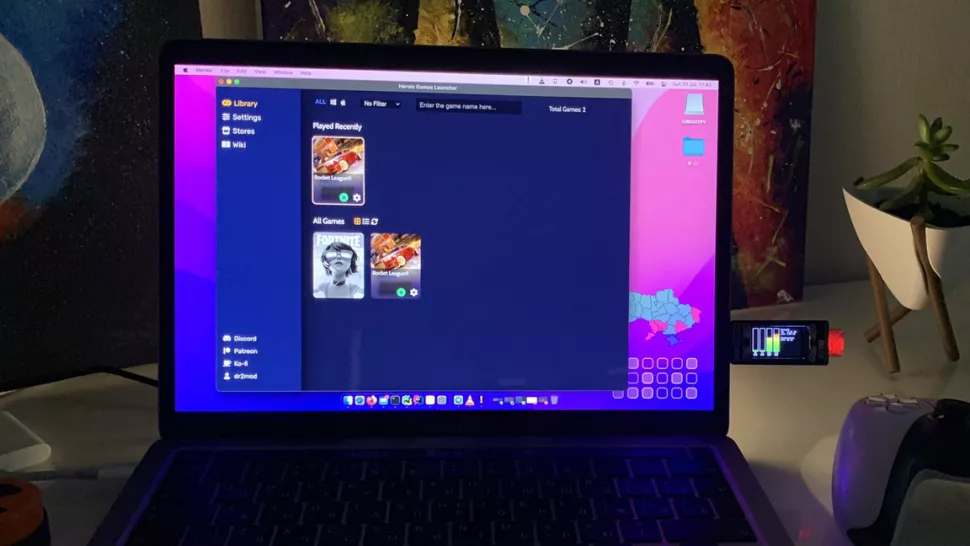
  • Raspberry Pi Pico Used in Plug and Play System Monitor | Tom's Hardware

    Dmytro Panin is at it again, creating a teeny system monitor for his MacBook from scratch with help from our favorite microcontroller, the Raspberry Pi Pico. This plug-and-play system monitor (opens in new tab) lets him keep a close eye on resource usage without having to close any windows or launch any third-party programs. The device is Pico-powered and plugs right into the MacBook to function. It has a display screen that showcases a custom GUI featuring four bar graphs that update in real-time to show the performance of different components, including the CPU, GPU, memory, and SSD usage. It makes it possible to see how hard your PC is running at a glance.

Security Leftovers

How to Apply Accent Colour in Ubuntu Desktop

A step-by-step tutorial on how to apply accent colour in Ubuntu desktop (GNOME) with tips for Kubuntu and others. Read more