

Language Selection

English French German Italian Portuguese Spanish

Microsoft Still Attacking From the Inside

Filed under
Microsoft

EEE move

  • Systemd supremo Lennart Poettering leaves Red Hat for Microsoft

    To considerable amusement in the Linux community, the infamous lead developer of systemd has a new job – at Microsoft.

    The news surfaced on a Fedora mailing list when someone found that they were unable to tag Poettering in a bug report because his Red Hat Bugzilla account was disabled, to which Poettering responded that he had created a personal account.

Microsoft's growing control of Linux

  • Microsoft's growing control of Linux

    It has recently come out that the creator of systemd (Lennart Poettering — who also created Pulse Audio), has begun working for Microsoft.

    And this is hardly the first Linux developer to join Microsoft (either as part of an acquisition, like GitHub, or otherwise). Nor is this likely to be the last Linux developer to join up… as Microsoft currently has 645 open Linux related positions.

    Want to control a piece of technology? Find the people working on said technology… and put them on your payroll. Does this give you nearly total control over that technology?

    Yes. Yes, it does.

    Microsoft controls: The largest open source code hosting on Earth, a large portion of Linux conferences, The Linux Foundation, the Open Source Initiative, and prominent Linux developers.

Lennart Poettering, the Systemd Creator, Goes to Work at MS

Microsoft hates GNU/Linux

  • Xbox Cloud Gaming looks worse on Linux — here’s why it’s bad and how to fix it

    Anyone who’s tried the Xbox Cloud Gaming beta on Linux (which is likely a small crowd, I know) may have noticed that the image quality is a little rough, even by cloud gaming standards. Now, though, community members have found a quick workaround to get better image quality, and we have an official explanation for why the hack works and why the problem exists in the first place.

Microsoft's xCloud looks terrible on Linux

  • Microsoft's xCloud looks terrible on Linux

    Linux fans are a little upset that Microsoft's xCloud game streaming looks noticeable worse when running on Linux than Windows.

    The Linux User-Agent has fuzzy edges and washed out colours. The dip in quality seems to go away if you enable "Clarity Boost", an Edge-exclusive feature that provides the optimal look and feel while playing Xbox games from the cloud.

    That's great for Linux users who switched over to Microsoft Edge when it launched on Linux last November, but Linux users are more likely to use Firefox, Chrome, or other browsers which have a really bad streaming quality.

    Of course, the thought is that Vole is doing this all deliberately and is reserving the best xCloud streaming performance for Windows machines in an attempt to attract more users to its own operating system. But that conspiracy goes tits up because using a Macintosh User-Agent string provides streaming performance similar to that on Windows.

Microsoft begins "Extinguish" phase of dealing with Open Source

  • Microsoft begins "Extinguish" phase of dealing with Open Source.

    Yesterday, we discussed Microsoft’s growing control of the Linux and Open Source world. Purchasing influence and power over large portions of the FOSS world (which, until very recently, Microsoft regarded as Enemy #1).

    I posited that these actions by Microsoft bear a striking resemblance to both the “Embrace” and “Extend” portions of the famous “Embrace, Extend, Extinguish” strategy that Microsoft has used, in the past, to defeat other competition.

    Well, it appears that the “Extinguish” phase has begun.

Lilbits: Linux laptops and handhelds...

  • Lilbits: Linux laptops and handhelds, iOS 16 beta, and Microsoft Store policy change blocks sales of some open source apps

    The thing about free and open source apps is that anyone can take the source code and make their own version of an app with few (or no) changes. Many open source licenses even allow you to redistribute your version of an app. So it’s unsurprising that app stores are sometimes litters with unofficial versions of popular apps… sometimes with “developers” charging money for apps that are normally available for free.

    In order to crack down on that, Microsoft recently updated its Microsoft Store policies to prohibit sales of open source apps that are available for free from other sources (such as the developer’s website or GitHub). But some developers of free and open source software do make their software available for free download from some locations while charging a fee for the same software when downloaded from app stores… so Microsoft has gotten some pushback.

SJVN helping the EEE

  • Get over it: Microsoft is a Linux and open source company these days [Ed: Get over it. Steven J. Vaughan-Nichols works on Microsoft payroll via LF and ZDNet]

    In 2001 then CEO Steve Ballmer declared: "Linux is a cancer." Later, Microsoft sponsored SCO's copyright attack on Linux; claimed that Linux violated unnamed Microsoft patents; and forced Linux-based Android vendors to pay for dubious patent claims. Bill Gates and Ballmer's Microsoft wanted to see Linux and open-source software (OSS) dead and buried.

    They did it because, as Microsoft's Halloween documents show, they believed "OSS poses a direct, short-term revenue and platform threat to Microsoft, particularly in server space."

Comment viewing options

Select your preferred way to display the comments and click "Save settings" to activate your changes.

More in Tux Machines

today's howtos

  • How to Change Comment Color in Vim – Fix Unreadable Blue Color

    Are you annoyed about the comment color in vim? The dark blue color of the comment is often hard to read. In this tutorial, we learn how to change the comment color in Vim. There are few methods we can use to look vim comment very readable.

  • How to Add Repository to Debian

    APT checks the health of all the packages, and dependencies of the package before installing it. APT fetches packages from one or more repositories. A repository (package source) is basically a network server. The term "package" refers to an individual file with a .deb extension that contains either all or part of an application. The normal installation comes with default repositories configured, but these contain only a few packages out of an ocean of free software available. In this tutorial, we learn how to add the package repository to Debian.

  • Making a Video of a Single Window

    I recently wanted to send someone a video of a program doing some interesting things in a single X11 window. Recording the whole desktop is easy (some readers may remember my post on Aeschylus which does just that) but it will include irrelevant (and possibly unwanted) parts of the screen, leading to unnecessarily large files. I couldn't immediately find a tool which did what I wanted on OpenBSD [1] but through a combination of xwininfo, FFmpeg, and hk I was able to put together exactly what I needed in short order. Even better, I was able to easily post-process the video to shrink its file size, speed it up, and contort it to the dimension requirements of various platforms. Here's a video straight out of the little script I put together: [...]

  • Things You Can And Can’t Do

    And it got me thinking about what you can and can’t do — what you do and don’t have control over.

  • allow-new-zones in BIND 9.16 on CentOS 8 Stream under SELinux

    We run these training systems with SELinux enabled (I wouldn’t, but my colleague likes it :-), and that’s the reason I aborted the lab: I couldn’t tell students how to solve the cause other than by disabling SELinux entirely, but there wasn’t enough time for that.

  • Will the IndieWeb Ever Become Mainstream?

    This is an interesting question, thanks for asking it, Jeremy. I do have some history with the IndieWeb, and some opinions, so let’s dive in.

    The short answer to the question is a resounding no, and it all boils down to the fact that the IndieWeb is really complicated to implement, so it will only ever appeal to developers.

  • How to Install CUPS Print Server on Ubuntu 22.04

    If your business has multiple personal computers in the network which need to print, then we need a device called a print server. Print server act intermediate between PC and printers which accept print jobs from PC and send them to respective printers. CUPS is the primary mechanism in the Unix-like operating system for printing and print services. It can allow a computer to act as a Print server. In this tutorial, we learn how to set up CUPS print server on Ubuntu 22.04.

Open Hardware: XON/XOFF and Raspberry Pi Pico

  • From XON/XOFF to Forward Incremental Search

    In the olden days of computing, software flow control with control codes XON and XOFF was a necessary feature that dumb terminals needed to support. When a terminal received more data than it could display, there needed to be a way for the terminal to tell the remote host to pause sending more data. The control code 19 was chosen for this. The control code 17 was chosen to tell the remote host to resume transmission of data.

  • Raspberry Pi Pico Used in Plug and Play System Monitor | Tom's Hardware

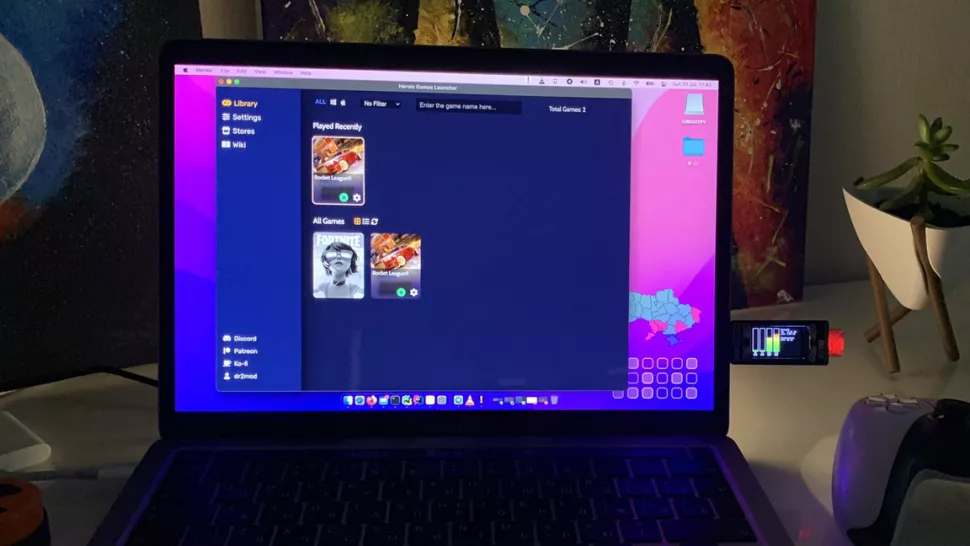
    Dmytro Panin is at it again, creating a teeny system monitor for his MacBook from scratch with help from our favorite microcontroller, the Raspberry Pi Pico. This plug-and-play system monitor (opens in new tab) lets him keep a close eye on resource usage without having to close any windows or launch any third-party programs. The device is Pico-powered and plugs right into the MacBook to function. It has a display screen that showcases a custom GUI featuring four bar graphs that update in real-time to show the performance of different components, including the CPU, GPU, memory, and SSD usage. It makes it possible to see how hard your PC is running at a glance.

Security Leftovers

How to Apply Accent Colour in Ubuntu Desktop

A step-by-step tutorial on how to apply accent colour in Ubuntu desktop (GNOME) with tips for Kubuntu and others. Read more