
news
Free and Open Source Software, and Review
-
Beelink EQi 304 Mini PC Review - BIOS
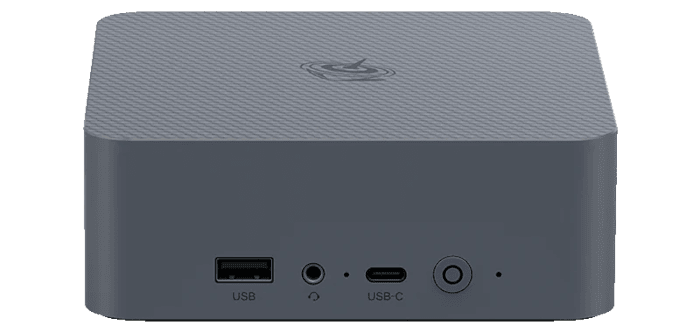
This is a series looking at the Beelink EQi Core 3 304 mini PC running Linux. In this series, I’ll put the Beelink mini PC through its paces from a Linux perspective, comparing it with other systems to see how it performs in real-world Linux use.
The Beelink EQi Core 3 304 is a recent addition to Beelink’s EQ range of compact PCs. It’s built around Intel’s Wildcat Lake Core 3 304 processor, a 5-core, 5-thread chip comprising one performance core and four low-power efficiency cores. The processor integrates Xe3-LPG graphics and currently has a CPU Mark of 11,720. The review unit comes with 16GB of LPDDR5 6400MT/s memory and 512GB of UFS 3.1 storage, giving the system a capable hardware base for everyday desktop use, office work, media playback and lighter Linux workloads.
BIOS, or Basic Input/Output System, remains one of the most important pieces of low-level software in any computer. This firmware handles the essential groundwork before the operating system takes over, initialising hardware and preparing the system to boot.
For this quick look at the Beelink EQi 304’s BIOS, I’m using a basic video capture device rather than a camera. This approach produces much cleaner screenshots and makes the interface much easier to see. Unless otherwise stated, the screenshots below show the default settings.
Rudo - small application dock
Rudo is a small application dock designed for Wayland desktops.
It provides quick access to pinned applications, tracks running windows, and offers optional autohide behaviour with hover-to-reveal.
The dock is designed primarily for the niri compositor, using its socket interface for window management. It can also work with other Wayland compositors that support the wlr-foreign-toplevel-management protocol. Rudo is built with Rust, GTK4, and layer-shell.
This is free and open source software.
FreeSql - object-relational mapper for .NET applications
FreeSql is an object-relational mapper for .NET applications. It provides APIs for querying and modifying relational databases while mapping database records to C# objects.
The ORM supports .NET Core, .NET Framework, Xamarin, and ahead-of-time compilation scenarios. It offers several development models, including direct FreeSql access, DbContext with repositories and units of work, and a simplified BaseEntity approach.
This is free and open source software.