



YaST in a YaST-less system
Submitted by Roy Schestowitz on Monday 13th of June 2022 07:29:39 PM
Filed under 
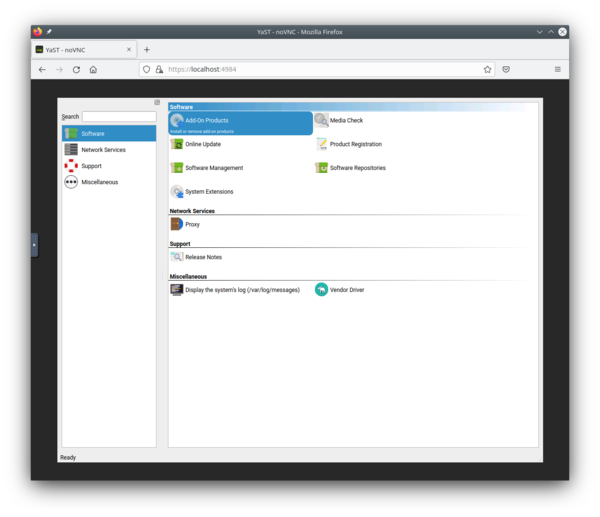
We all know how awesome YaST can be for administering your (open)SUSE system. From managing the software repositories and the installed software to adjusting the systemd services and sockets. From creating LVM logical volumes to configuring Kdump (or fadump). From inspecting the systemd journal to fine-tuning the boot loader. From configuring network interfaces to adjusting the mitigations for CPU vulnerabilities. From setting the firewall configuration to managing your subscriptions to the different SUSE products… and so much more!
But all that comes with a pretty obvious price. You must install YaST and all its dependencies in the system you want to manage. Those dependencies include the Ruby runtime, either ncurses or Qt (depending if you want the text-based or the fully graphical interface) and some other packages or libraries depending on what you want to achieve. For example, you need libzypp to install software or to manage the repositories.
What if you don’t want to pay that price? Well, we have an special offer for you! Now you can use YaST to administer your system without installing YaST or any of its dependencies. Ideal for lovers of minimal systems like the MicroOS variants of SUSE and openSUSE. All you need is a container engine like Docker or Podman… and you are using one anyways if you are using MicroOS, isn’t it?

»
-

- Login or register to post comments
 Printer-friendly version
- 3284 reads
 PDF version
More in Tux Machines
- Highlights
- Front Page
- Latest Headlines
- Archive
- Recent comments
- All-Time Popular Stories
- Hot Topics
- New Members
digiKam 7.7.0 is released
After three months of active maintenance and another bug triage, the digiKam team is proud to present version 7.7.0 of its open source digital photo manager. See below the list of most important features coming with this release.
|
Dilution and Misuse of the "Linux" Brand
|
Samsung, Red Hat to Work on Linux Drivers for Future Tech
The metaverse is expected to uproot system design as we know it, and Samsung is one of many hardware vendors re-imagining data center infrastructure in preparation for a parallel 3D world.
Samsung is working on new memory technologies that provide faster bandwidth inside hardware for data to travel between CPUs, storage and other computing resources. The company also announced it was partnering with Red Hat to ensure these technologies have Linux compatibility.
|
today's howtos
|


.svg_.png)

 Content (where original) is available under CC-BY-SA, copyrighted by original author/s.


Recent comments
1 year 11 weeks ago
1 year 11 weeks ago
1 year 11 weeks ago
1 year 11 weeks ago
1 year 11 weeks ago
1 year 11 weeks ago
1 year 11 weeks ago
1 year 11 weeks ago
1 year 11 weeks ago
1 year 11 weeks ago