



Review: Pardus 21.1
Submitted by Roy Schestowitz on Monday 21st of March 2022 01:33:04 AM
Filed under 
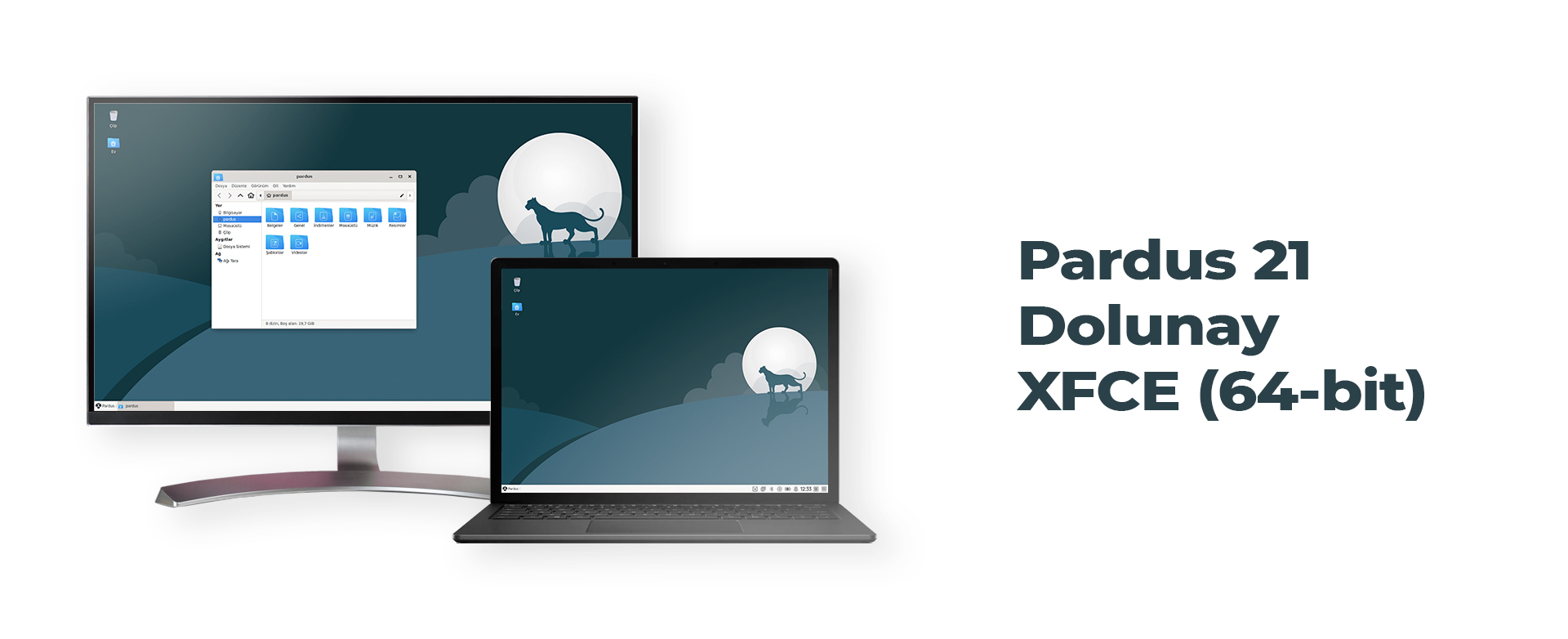
Pardus is a Debian-based Linux distribution based on Debian's Stable branch. It is developed by the Turkish Academic Network and Information Center. Pardus 21.1 is basically Debian 11.2 with a lot of customization to provide a Linux desktop for corporate environments that meets the needs of various Turkish governmental agencies.
In some ways, Pardus is like Ubuntu. The two distributions are based on different branches of Debian, Stable for Pardus and Unstable for Ubuntu, but the basic idea is similar. Both provide their own package repositories instead of relying on Debian's repositories with additional extra packages like some based-on distributions do, and both provide many configuration changes and a level of polish.
Pardus 21.1 has three versions available for download. Two of these versions are for desktop editions. One features Xfce and the other features GNOME. The third download is for servers. This review looks at the Xfce desktop version, which is the version predominantly featured on the Pardus homepage (the Xfce ISO can be downloaded directly from the homepage, but the other versions are alternate downloads that require a few extra clicks to download).

»
-

- Login or register to post comments
 Printer-friendly version
- 2071 reads
 PDF version
More in Tux Machines
- Highlights
- Front Page
- Latest Headlines
- Archive
- Recent comments
- All-Time Popular Stories
- Hot Topics
- New Members
digiKam 7.7.0 is released
After three months of active maintenance and another bug triage, the digiKam team is proud to present version 7.7.0 of its open source digital photo manager. See below the list of most important features coming with this release.
|
Dilution and Misuse of the "Linux" Brand
|
Samsung, Red Hat to Work on Linux Drivers for Future Tech
The metaverse is expected to uproot system design as we know it, and Samsung is one of many hardware vendors re-imagining data center infrastructure in preparation for a parallel 3D world.
Samsung is working on new memory technologies that provide faster bandwidth inside hardware for data to travel between CPUs, storage and other computing resources. The company also announced it was partnering with Red Hat to ensure these technologies have Linux compatibility.
|
today's howtos
|


.svg_.png)

 Content (where original) is available under CC-BY-SA, copyrighted by original author/s.


Recent comments
1 year 11 weeks ago
1 year 11 weeks ago
1 year 11 weeks ago
1 year 11 weeks ago
1 year 11 weeks ago
1 year 11 weeks ago
1 year 11 weeks ago
1 year 11 weeks ago
1 year 11 weeks ago
1 year 11 weeks ago