



today's leftovers
Submitted by Roy Schestowitz on Saturday 5th of March 2022 06:09:02 PM
Filed under 
-
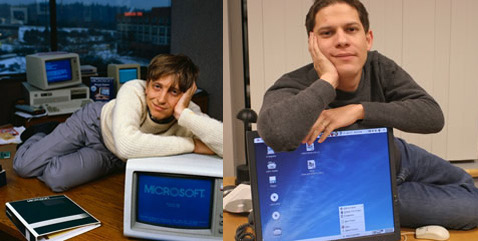
GNOME, Mono, Xamarin founder Miguel de Icaza leaves Microsoft [Ed: See the comments, e.g."Its been this way for a long time with Gnome and Mono. I have always suspected that Gnome failures as an UI is a trojan horse influence from the Embrace Extend Extinguish gang. Mono is attempts to undermine the security of linux and oss in general." Or: "I still remember when a trivial note taking application (Tomboy) written in .NET was included in Gnome 2. Dragging in the *whole* of Mono. I ran a mile from Gnome then; I realised they were either incompetent or they were corrupt. I didn't want to engage with them in either case."]
Just months after Nat Friedman quit as CEO of Microsoft-owned GitHub, his Xamarin co-founder has also ejected from the Windows giant.
Miguel De Icaza joined Microsoft when it acquired Xamarin in 2016, which marked the beginning of a change in Redmond's mobile strategy. He has spoken to The Reg before about how different Microsoft is today from its notoriously FOSS-averse past.
De Icaza has long been a pivotal figure in the areas of Linux and Linux-Microsoft interoperability. He was the original founder of the GNOME desktop project in 1997, along with Federico Mena. A couple of years later, he started Helix Code with Nat Friedman. Subsequently renamed Ximian, the company developed the GNOME email client Evolution and the Ximian Connector, which enabled Evolution to talk to Microsoft Exchange Server.
Aside from GNOME apps and its own, more polished version of GNOME, Ximian also developed Mono, an open-source version of Microsoft's .NET. Ximian got bought by Novell in 2003, and a few months later Novell also bought SUSE.
-
Veritas Releases NetBackup 10, Provides the Foundation for Autonomous Data Management [Ed: Proprietary software but at least not Windows-focused]
Veritas Technologies, a provider of multi-cloud data management software, is releasing the latest version of NetBackup powered by Cloud Scale Technology, laying the foundation for Autonomous Data Management and multi-cloud data protection at scale.
-
Upgrade Your Software Skills with the University Libraries [Ed: Teaching people UNIX, Git, and R]
The real goal here isn't to teach R, but to teach the basic concepts that all programming depends on. R in is used in this lesson because: something has to be used for examples; it's free, well-documented and runs almost everywhere; it has a large and growing user base among scientists and it has a large library of external packages available for performing diverse tasks.
-
New tools in the QML LSP collection: qml-dap, qml-dbg, and qml-lint [Ed: This is tagged "libre", but it's pushing Microsoft proprietary software]
While working on qml-lsp, I took a tangent to write a DAP implementation for QML. This ended up being a very long tangent, but it's worth it: being able to debug QML without needing Qt Creator available. The DAP protocol is the debugger equivalent to LSP: it's a cross-editor and cross-language protocol that allows debuggers to implement DAP and get support for a bunch of editors, and allows editors to implement DAP and get support for a bunch of debuggers.
-
Imply Announces Polaris, a Cloud Database Service for Modern Analytics Applications; Plus, Major Expansion for Apache Druid
-Imply, the company founded by the original creators of Apache Druid®, today unveiled at a virtual event the first milestone in Project Shapeshift, the 12-month initiative designed to solve the most pressing issues developers face when building analytics applications. The announcement includes a cloud database service built from Apache Druid and the private preview of a multi-stage query engine for Druid. Together, these innovations show how Imply delivers the most developer-friendly and capable database for analytics applications.
»
-

- Login or register to post comments
 Printer-friendly version
- 1796 reads
 PDF version
More in Tux Machines
- Highlights
- Front Page
- Latest Headlines
- Archive
- Recent comments
- All-Time Popular Stories
- Hot Topics
- New Members
digiKam 7.7.0 is released
After three months of active maintenance and another bug triage, the digiKam team is proud to present version 7.7.0 of its open source digital photo manager. See below the list of most important features coming with this release.
|
Dilution and Misuse of the "Linux" Brand
|
Samsung, Red Hat to Work on Linux Drivers for Future Tech
The metaverse is expected to uproot system design as we know it, and Samsung is one of many hardware vendors re-imagining data center infrastructure in preparation for a parallel 3D world.
Samsung is working on new memory technologies that provide faster bandwidth inside hardware for data to travel between CPUs, storage and other computing resources. The company also announced it was partnering with Red Hat to ensure these technologies have Linux compatibility.
|
today's howtos
|


.svg_.png)

 Content (where original) is available under CC-BY-SA, copyrighted by original author/s.


Recent comments
1 year 11 weeks ago
1 year 11 weeks ago
1 year 11 weeks ago
1 year 11 weeks ago
1 year 11 weeks ago
1 year 11 weeks ago
1 year 11 weeks ago
1 year 11 weeks ago
1 year 11 weeks ago
1 year 11 weeks ago