



PinePhone: trying out a Linux-based smartphone
Submitted by Roy Schestowitz on Thursday 17th of February 2022 11:52:39 PM
Filed under 

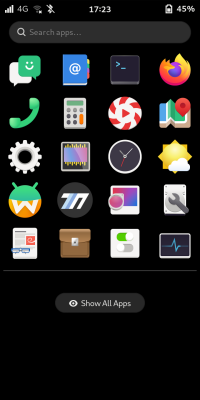
For several years, the only major options in the smartphone market have been Android and iOS. Android is an open-source operating system, but virtually all Android devices come with significant amounts of proprietary code; iOS is almost completely proprietary. Many Android phones and all iPhones have locked bootloaders, preventing the user from replacing the operating system.
Many phones are also carrier-locked, preventing the user from switching cell carriers without the approval of the one through which they purchased the phone. Few devices give the user root access without making modifications to the software and possibly voiding the warranty in the process. Overall, while the purchaser may legally own the device, in many ways it remains in the control of the manufacturer and often the carrier. Previous attempts at developing open-source smartphones have either failed or produced expensive devices.
PINE64 has been making various FOSS-friendly electronic devices for several years. The company originally made single-board computers (SBCs), and later developed devices such as laptops and tablets. One of its most popular devices, however, is the PinePhone, which is designed to promote mobile Linux distributions as an alternative to Android and iOS. The phone allows the user to install any compatible operating system, and it is not locked to a particular carrier. Instead, it is designed to give the user as much control as possible.

»
-

- Login or register to post comments
 Printer-friendly version
- 2256 reads
 PDF version
More in Tux Machines
- Highlights
- Front Page
- Latest Headlines
- Archive
- Recent comments
- All-Time Popular Stories
- Hot Topics
- New Members
digiKam 7.7.0 is released
After three months of active maintenance and another bug triage, the digiKam team is proud to present version 7.7.0 of its open source digital photo manager. See below the list of most important features coming with this release.
|
Dilution and Misuse of the "Linux" Brand
|
Samsung, Red Hat to Work on Linux Drivers for Future Tech
The metaverse is expected to uproot system design as we know it, and Samsung is one of many hardware vendors re-imagining data center infrastructure in preparation for a parallel 3D world.
Samsung is working on new memory technologies that provide faster bandwidth inside hardware for data to travel between CPUs, storage and other computing resources. The company also announced it was partnering with Red Hat to ensure these technologies have Linux compatibility.
|
today's howtos
|


 Content (where original) is available under CC-BY-SA, copyrighted by original author/s.



Recent comments
1 year 11 weeks ago
1 year 11 weeks ago
1 year 11 weeks ago
1 year 11 weeks ago
1 year 11 weeks ago
1 year 11 weeks ago
1 year 11 weeks ago
1 year 11 weeks ago
1 year 11 weeks ago
1 year 11 weeks ago