



Results from the Survey about LibreOffice Calc
Submitted by Rianne Schestowitz on Monday 18th of October 2021 11:10:01 AM
Filed under 
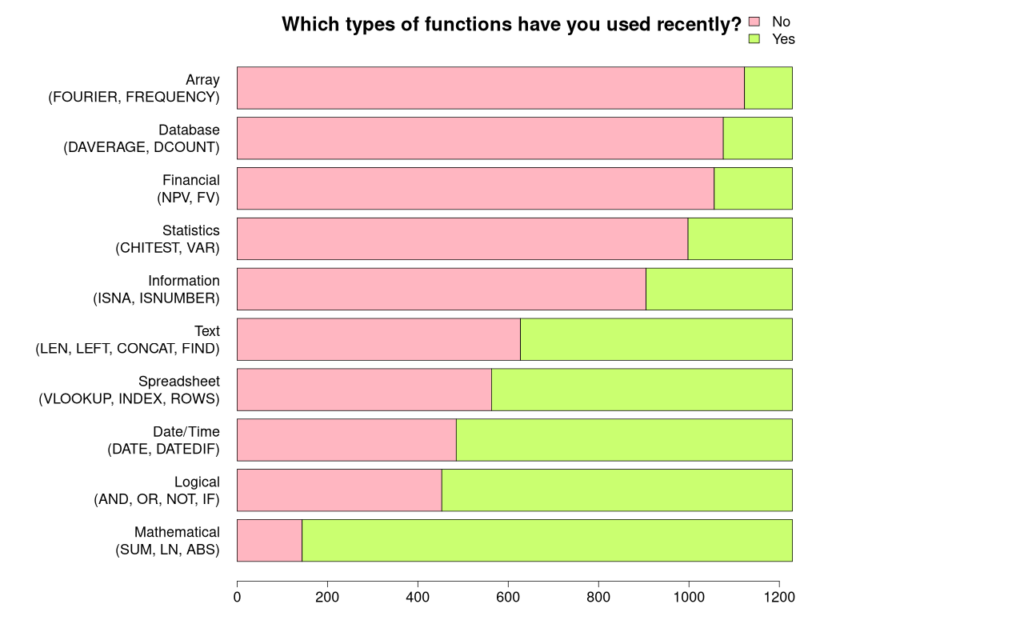
Earlier this year we run a survey on LibreOffice Calc. It was inspired by a similar questionnaire for LibreOffice Draw (see first and second blog post). The Calc survey was used to learn about how Calc is being used, what features are most important to users and where they expect to see the improvements to the software. The work was done by Maria Berg, thanks a lot for your contribution.
This blog post shows some results in detail. You may also watch the recording of the presentation at the LibreOffice conference at http:// (link will be added later)
In total 1797 people started the survey and 1229 completed all questions. Many thanks to everyone!
We started with a couple of demographic questions that demonstrated the limits of online surveys: most participants were middle age (65% between 33 and 65 years old), technology-affine (60% use Linux as operating system), and power users (45% run the application every day). We advertised the survey on our blog and social media such as Twitter (you may also follow the design team), Reddit, and Facebook. And while LibreOffice has roughly 200 millions users, most of those who are following us are technology enthusiastic.

»
-

- Login or register to post comments
 Printer-friendly version
- 3412 reads
 PDF version
More in Tux Machines
- Highlights
- Front Page
- Latest Headlines
- Archive
- Recent comments
- All-Time Popular Stories
- Hot Topics
- New Members
digiKam 7.7.0 is released
After three months of active maintenance and another bug triage, the digiKam team is proud to present version 7.7.0 of its open source digital photo manager. See below the list of most important features coming with this release.
|
Dilution and Misuse of the "Linux" Brand
|
Samsung, Red Hat to Work on Linux Drivers for Future Tech
The metaverse is expected to uproot system design as we know it, and Samsung is one of many hardware vendors re-imagining data center infrastructure in preparation for a parallel 3D world.
Samsung is working on new memory technologies that provide faster bandwidth inside hardware for data to travel between CPUs, storage and other computing resources. The company also announced it was partnering with Red Hat to ensure these technologies have Linux compatibility.
|
today's howtos
|


 Content (where original) is available under CC-BY-SA, copyrighted by original author/s.



Recent comments
1 year 11 weeks ago
1 year 11 weeks ago
1 year 11 weeks ago
1 year 11 weeks ago
1 year 11 weeks ago
1 year 11 weeks ago
1 year 11 weeks ago
1 year 11 weeks ago
1 year 11 weeks ago
1 year 11 weeks ago