



KDE's Telemetry: The Tip Of The Iceberg?
Submitted by Roy Schestowitz on Sunday 5th of September 2021 05:51:53 AM
Filed under 
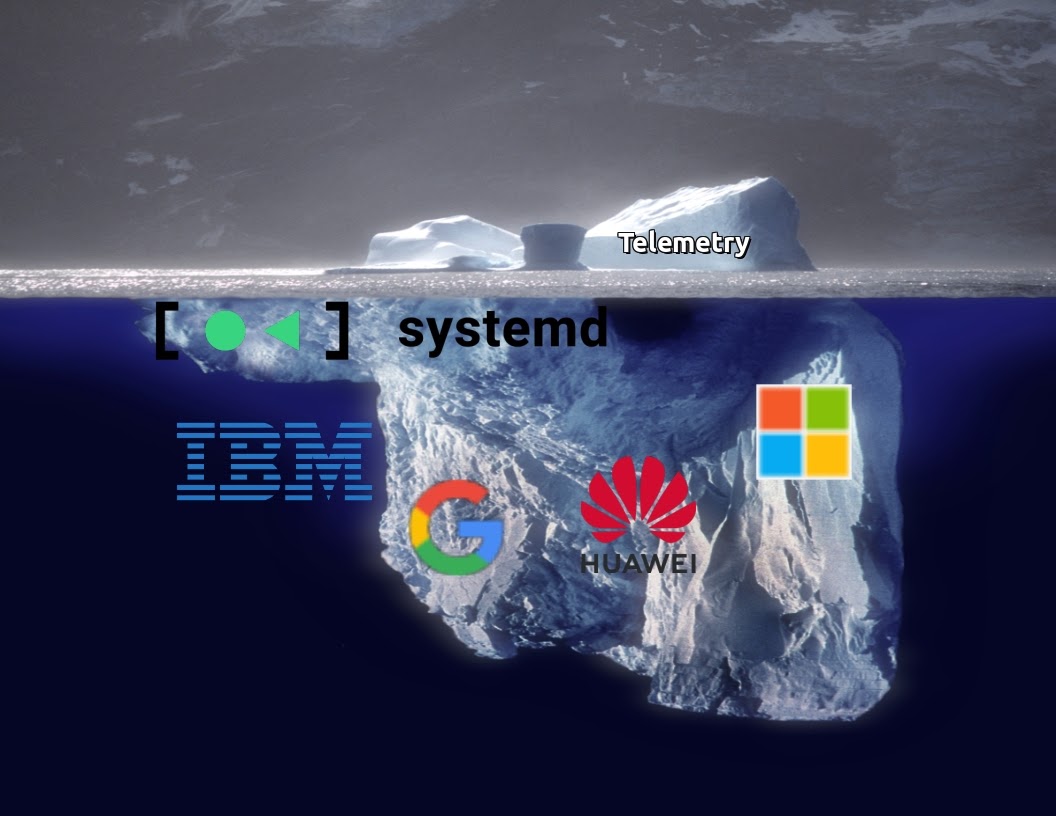
Recently, there was a debate on the PCLinuxOS forum about KDE Plasma's implementation of telemetry through KUserFeedback. While in PCLinuxOS, we can remove it without any collateral effects to the system, while other users reported that doing the same in other distros (like Debian 11) results in the complete removal of KDE Plasma! Why force such an implementation, if, as KDE's developers say, it is just an innocuous, privacy-respecting measure?
Coincidence or not, in the past years many popular Linux distributions started rolling out optional telemetry. Then it was the time of computer programs: news broke out in May regarding Audacity, a popular audio editing app, which announced it was starting the use of telemetry. The move was finally pushed back after users revolted against it.
But in Plasma's case, it is not just an app or a single distro, but an entire desktop environment, employed in several Linux distributions, that is being shipped with telemetry. While many point out that the data collection is by opt-in and entirely anonymous, others have found that, even if you don't activate telemetry, data is still collected, using computer resources, registering "apps and boot, number of times used and duration in /home/user/telemetry folder." As such, they argue that, because of the way Linux permissions work, other programs could have access to these log files. KUserFeedback's FAQs page confirms this:

»
-

- Login or register to post comments
 Printer-friendly version
- 2348 reads
 PDF version
More in Tux Machines
- Highlights
- Front Page
- Latest Headlines
- Archive
- Recent comments
- All-Time Popular Stories
- Hot Topics
- New Members
digiKam 7.7.0 is released
After three months of active maintenance and another bug triage, the digiKam team is proud to present version 7.7.0 of its open source digital photo manager. See below the list of most important features coming with this release.
|
Dilution and Misuse of the "Linux" Brand
|
Samsung, Red Hat to Work on Linux Drivers for Future Tech
The metaverse is expected to uproot system design as we know it, and Samsung is one of many hardware vendors re-imagining data center infrastructure in preparation for a parallel 3D world.
Samsung is working on new memory technologies that provide faster bandwidth inside hardware for data to travel between CPUs, storage and other computing resources. The company also announced it was partnering with Red Hat to ensure these technologies have Linux compatibility.
|
today's howtos
|


 Content (where original) is available under CC-BY-SA, copyrighted by original author/s.



Recent comments
1 year 11 weeks ago
1 year 11 weeks ago
1 year 11 weeks ago
1 year 11 weeks ago
1 year 11 weeks ago
1 year 11 weeks ago
1 year 11 weeks ago
1 year 11 weeks ago
1 year 11 weeks ago
1 year 11 weeks ago