



Loongson 3A5000 Benchmarks For These New Chinese CPUs Built On The LoongArch ISA
Submitted by Roy Schestowitz on Saturday 24th of July 2021 06:21:02 PM
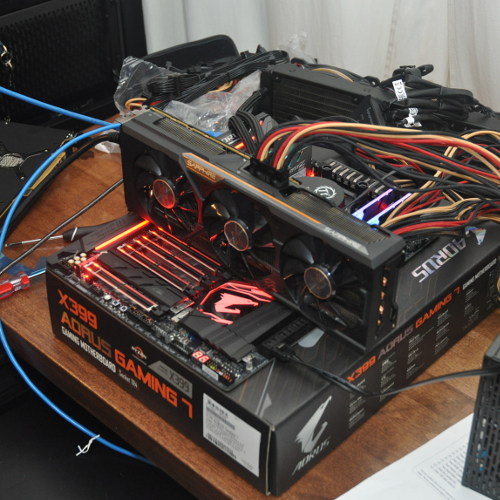
While Loongson has been known for their MIPS-based Loongson chips that are open-source friendly and have long been based on MIPS, with MIPS now being a dead-end, the Chinese company has begun producing chips using its own "LoongArch" ISA. The first Loongson 3A5000 series hardware was just announced and thanks to the company apparently using the Phoronix Test Suite and OpenBenchmarking.org we have some initial numbers.
Announced this week was the Loongson 3A5000 as their first LoongArch ISA chip that is quad-core with clock speeds up to 2.3~2.5GHz. Loongson 3A5000 offers a reported 50% performance boost over their prior MIPS-based chips while consuming less power and now also supporting DDR4-3200 memory. The Loongson 3A5000 series is intended for domestic Chinese PCs without relying on foreign IP and there is also the 3A5000LL processors intended for servers.
While the 3A5000 series was just announced, in the past few days some party in China -- likely Loongson themselves -- have begun uploading benchmark results from the Phoronix Test Suite to OpenBenchmarking.org. The past few days has seen several Loongson-3A5000 benchmarks uploaded. But going back to last month are also many Loongson 3A5000 benchmarks in general.

Also: Loongson's first LoongArch processors - 3A5000 for computers, 3C5000L for servers - CNX Software
»
-

- Login or register to post comments
 Printer-friendly version
- 3295 reads
 PDF version
More in Tux Machines
- Highlights
- Front Page
- Latest Headlines
- Archive
- Recent comments
- All-Time Popular Stories
- Hot Topics
- New Members
digiKam 7.7.0 is released
After three months of active maintenance and another bug triage, the digiKam team is proud to present version 7.7.0 of its open source digital photo manager. See below the list of most important features coming with this release.
|
Dilution and Misuse of the "Linux" Brand
|
Samsung, Red Hat to Work on Linux Drivers for Future Tech
The metaverse is expected to uproot system design as we know it, and Samsung is one of many hardware vendors re-imagining data center infrastructure in preparation for a parallel 3D world.
Samsung is working on new memory technologies that provide faster bandwidth inside hardware for data to travel between CPUs, storage and other computing resources. The company also announced it was partnering with Red Hat to ensure these technologies have Linux compatibility.
|
today's howtos
|


.svg_.png)

 Content (where original) is available under CC-BY-SA, copyrighted by original author/s.


Recent comments
1 year 11 weeks ago
1 year 11 weeks ago
1 year 11 weeks ago
1 year 11 weeks ago
1 year 11 weeks ago
1 year 11 weeks ago
1 year 11 weeks ago
1 year 11 weeks ago
1 year 11 weeks ago
1 year 11 weeks ago