



North Korea Uses Linux But Open Source Is Dying Here: Here’s Why!
Submitted by Roy Schestowitz on Tuesday 29th of June 2021 12:23:12 AM
Filed under 

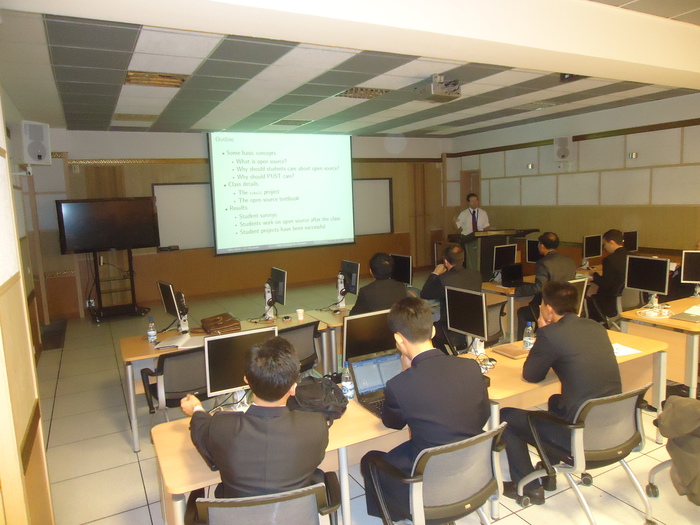
The Open-source software model has existed for years now, and we have seen communities develop uncountable software. One example is Linux which is either directly or indirectly used in almost every device on the planet. All of this is great, but have you ever wondered if open-source exists in countries like North Korea? If yes, then what kind of process do the North Koreans follow?
Mike Izbicki, one of the contributors, shares his experience teaching open-source software in North Korea. He taught a class of master’s students about how to contribute to open-source software.
[...]
“The patches submitted for this class were the first-ever open-source contributions to come from North Korea; unfortunately, they were also the last,” Mike added. This is because former US President Donald Trump banned Americans from traveling to North Korea in 2017. North Korea does have a closed-source Linux distribution called the RedStar OS, and its wallpapers were recently extracted from the ISO.
It is also very unfortunate to see a country unable to contribute to open-source due to laws restriction. If it was not due to the restrictions, we might’ve got some bright minds with their valuable contributions to open-source communities. What are your thoughts on this? Let us know in the comments section below.

»
-

- Login or register to post comments
 Printer-friendly version
- 2993 reads
 PDF version
More in Tux Machines
- Highlights
- Front Page
- Latest Headlines
- Archive
- Recent comments
- All-Time Popular Stories
- Hot Topics
- New Members
digiKam 7.7.0 is released
After three months of active maintenance and another bug triage, the digiKam team is proud to present version 7.7.0 of its open source digital photo manager. See below the list of most important features coming with this release.
|
Dilution and Misuse of the "Linux" Brand
|
Samsung, Red Hat to Work on Linux Drivers for Future Tech
The metaverse is expected to uproot system design as we know it, and Samsung is one of many hardware vendors re-imagining data center infrastructure in preparation for a parallel 3D world.
Samsung is working on new memory technologies that provide faster bandwidth inside hardware for data to travel between CPUs, storage and other computing resources. The company also announced it was partnering with Red Hat to ensure these technologies have Linux compatibility.
|
today's howtos
|


.svg_.png)

 Content (where original) is available under CC-BY-SA, copyrighted by original author/s.


Recent comments
1 year 11 weeks ago
1 year 11 weeks ago
1 year 11 weeks ago
1 year 11 weeks ago
1 year 11 weeks ago
1 year 11 weeks ago
1 year 11 weeks ago
1 year 11 weeks ago
1 year 11 weeks ago
1 year 11 weeks ago