



Modern Lightweight Linux Distro Showdown: Who is the Champion?
Submitted by Roy Schestowitz on Thursday 29th of April 2021 09:48:59 PM
Filed under 

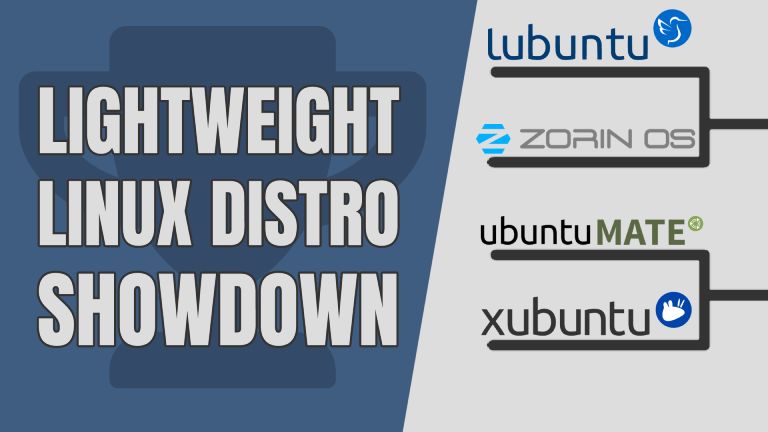
As a Linux user, I was recently in search of a Linux distribution (distro) that is lightweight and runs efficiently on a virtual machine or a physical machine using minimal resources. In the end, only 1 would be chosen as the lightweight Linux distribution of choice. It would have to be good enough to deploy as a daily-driver on my main machine. So, I began the online search and found many articles recommending copious distros which claim to check the boxes for the aforementioned requirements. Needless to say, the number of returned results was staggering.
The Long List of Contenders
The distros which were recommended most commonly have been compiled into a list of contenders as shown below. Whenever possible, the most recent stable release of each distro was chosen. The values provided for the “RAM” and “Disk Space” columns are the preferred/recommended system requirement values (not the minimum system requirement values).
[...]
After installing each of these distros on a virtual machine and getting to know more about them (especially at an idle state), the following comparison is being made. The difference of CPU usage at an idle state amongst the distros is negligible. When we start to look at RAM utilization and hard disk space, the clear stand-out is Lubuntu. The LXQt desktop really puts the Qt framework in a whole new light (pun alert) of being lean and efficient, especially in terms of memory usage at idle.

»
-

- Login or register to post comments
 Printer-friendly version
- 3396 reads
 PDF version
More in Tux Machines
- Highlights
- Front Page
- Latest Headlines
- Archive
- Recent comments
- All-Time Popular Stories
- Hot Topics
- New Members
digiKam 7.7.0 is released
After three months of active maintenance and another bug triage, the digiKam team is proud to present version 7.7.0 of its open source digital photo manager. See below the list of most important features coming with this release.
|
Dilution and Misuse of the "Linux" Brand
|
Samsung, Red Hat to Work on Linux Drivers for Future Tech
The metaverse is expected to uproot system design as we know it, and Samsung is one of many hardware vendors re-imagining data center infrastructure in preparation for a parallel 3D world.
Samsung is working on new memory technologies that provide faster bandwidth inside hardware for data to travel between CPUs, storage and other computing resources. The company also announced it was partnering with Red Hat to ensure these technologies have Linux compatibility.
|
today's howtos
|


.svg_.png)

 Content (where original) is available under CC-BY-SA, copyrighted by original author/s.


Recent comments
1 year 11 weeks ago
1 year 11 weeks ago
1 year 11 weeks ago
1 year 11 weeks ago
1 year 11 weeks ago
1 year 11 weeks ago
1 year 11 weeks ago
1 year 11 weeks ago
1 year 11 weeks ago
1 year 11 weeks ago