



Programming Leftovers and HowTos
Submitted by Roy Schestowitz on Thursday 29th of April 2021 04:13:34 PM
Filed under 
-
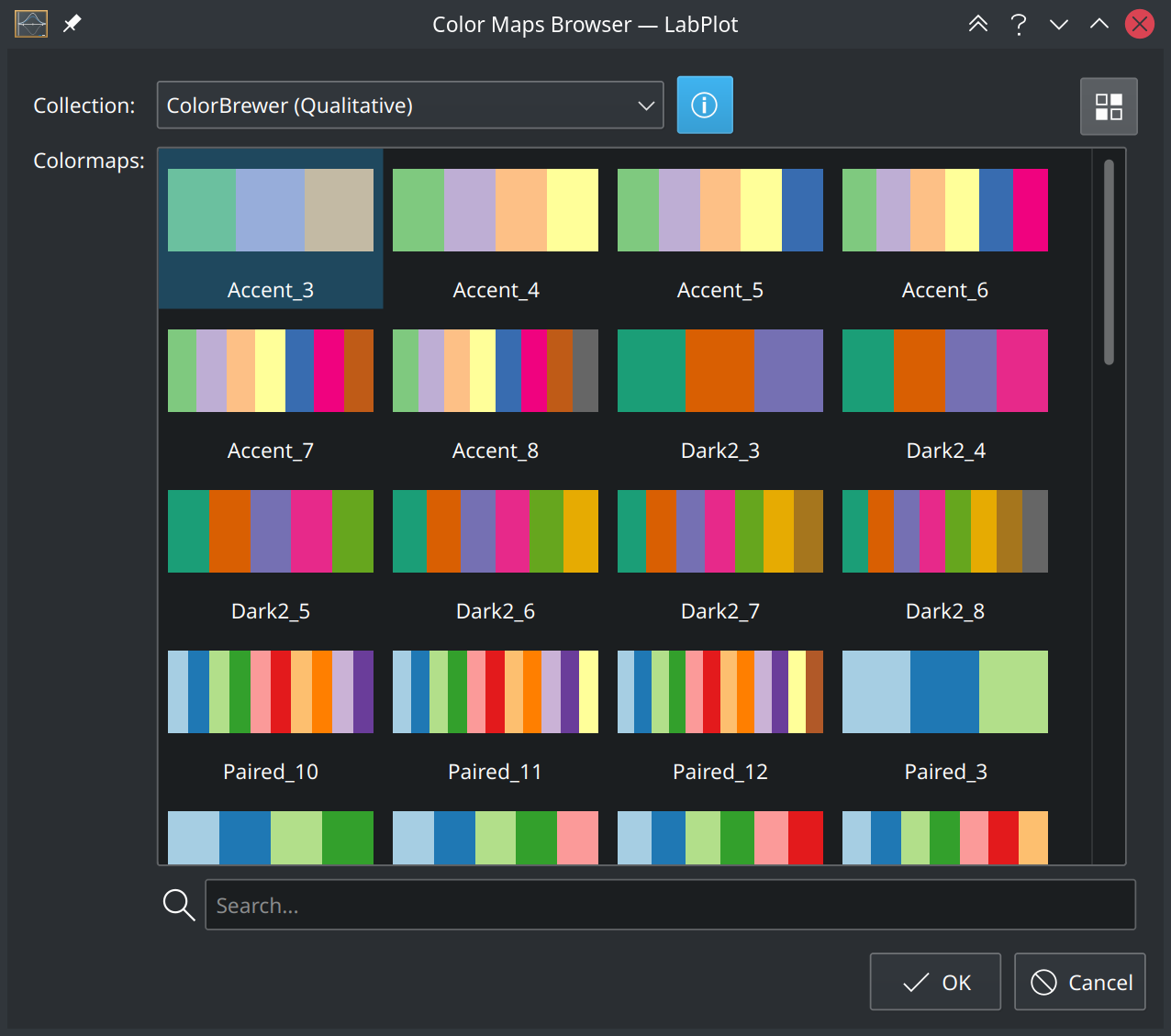
Color Maps and Conditional Formatting
When visualizing the data, mapping of values to colors is one of essential steps. There is an extensive discussion in the literature about the proper selection of colors (see e.g. the publications mentioned here), and there are multiple publicly available collections of color maps that are designed to deliver best results in scientific visualization applications. For the coming release 2.9 we added some of the well-known collections to LabPlot.
-
Pete Zaitcev: Swift in 2021
A developer meet-up for OpenStack, known as PTG, occurred a week ago. I attended the Swift track, where somewhat to my surprise we had two new contributors show up.
I got into a habit of telling people that I did not want Swift to end like AFS: develop great software and dead, with nobody using it. Today I looked it up, and what do you know: OpenAFS made a release in June 2020 (and apparently they also screwed up and had to post an emergency release in October).
-
Discover Bottlenecks on QNX
QNX is commonly the operating system of choice, when it comes to developing on embedded systems. However, the performance limits are exceeded quickly, especially if you’re working on low-end hardware. As a result, you’ll likely need to perform an investigation to find the bottlenecks that contribute to reaching these limits, in order to configure your application to fit the requirements of your system.
There are many reasons why an application might be slow. Any number of bottlenecks could be causing the delays. In our experience, file reads and writes have been relevant factors, due to bandwidth limitations.
-
Network, learn and get inspired together - DEV/DES DAYS 2021
The last year has been a roller coaster! As everything continues to be virtual, we wanted to create something special to bring people together and escape the reality.
-
Rustup 1.24.0 release incident report for 2021-04-27
On 2021-04-27 at 15:09 UTC we released a new version of Rustup (1.24.0). At 15:23 UTC we received a report that we had introduced a regression in the part of the code which is responsible for proxying the rustfmt and cargo-fmt portions of Rust toolchains. At 15:27 UTC we had confirmed and identified the cause of the problem, and while we worked on a fix, we reverted the released Rustup to version 1.23.1 - an action completed by 15:56 UTC.
This means that for approximately 47 minutes, CI jobs which used the code formatting features of Rust toolchains may have had spurious failures, and users who upgraded will have had to revert to 1.23.1. The revert process is designed to be as easy as upgrading was, meaning that users should not have had lingering issues.
-
Automatic load balancing for PMD threads in Open vSwitch with DPDK - Red Hat Developer
This article is about the poll mode driver (PMD) automatic load balance feature in Open vSwitch with a Data Plane Development Kit data path (OVS-DPDK). The feature has existed for a while but we’ve recently added new user parameters in Open vSwitch 2.15. Now is a good time to take a look at this feature in OVS-DPDK.
When you are finished reading this article, you will understand the problem the PMD auto load balance feature addresses and the user parameters required to operate it. Then, you can try it out for yourself.
-
Enhance application security by rotating 3scale access tokens
In Red Hat 3scale API Management, access tokens allow authentication against the 3scale APIs. An access token can provide read and write access to the Billing, Account Management, and Analytics APIs. Therefore, ensuring you are handling access tokens carefully is paramount.
This article explains how to enhance security by making access tokens ephemeral. By the end of the article, you will be able to set up 3scale to perform access token rotation. An external webhook listener service performs the actual token revocation. The rotation takes place automatically after a specific event triggers a webhook.
-
KDE Activities: How To
-
Everything You Need to Know About IP Addresses on Ubuntu
Don’t know how to find your system's IP address in Ubuntu? No problem. In this guide, we’ve covered everything related to IP addresses in Ubuntu for you. Apart from learning about IP addresses, we'll also discuss how to find your system IP address along with a guide on setting a static IP address in Ubuntu.
»
-

- Login or register to post comments
 Printer-friendly version
- 3477 reads
 PDF version
More in Tux Machines
- Highlights
- Front Page
- Latest Headlines
- Archive
- Recent comments
- All-Time Popular Stories
- Hot Topics
- New Members
digiKam 7.7.0 is released
After three months of active maintenance and another bug triage, the digiKam team is proud to present version 7.7.0 of its open source digital photo manager. See below the list of most important features coming with this release.
|
Dilution and Misuse of the "Linux" Brand
|
Samsung, Red Hat to Work on Linux Drivers for Future Tech
The metaverse is expected to uproot system design as we know it, and Samsung is one of many hardware vendors re-imagining data center infrastructure in preparation for a parallel 3D world.
Samsung is working on new memory technologies that provide faster bandwidth inside hardware for data to travel between CPUs, storage and other computing resources. The company also announced it was partnering with Red Hat to ensure these technologies have Linux compatibility.
|
today's howtos
|


.svg_.png)

 Content (where original) is available under CC-BY-SA, copyrighted by original author/s.


Recent comments
1 year 11 weeks ago
1 year 11 weeks ago
1 year 11 weeks ago
1 year 11 weeks ago
1 year 11 weeks ago
1 year 11 weeks ago
1 year 11 weeks ago
1 year 11 weeks ago
1 year 11 weeks ago
1 year 11 weeks ago