



Kernel: Mesa, AMD, and Bootlin
Submitted by Roy Schestowitz on Sunday 11th of April 2021 11:09:44 PM
Filed under 
-
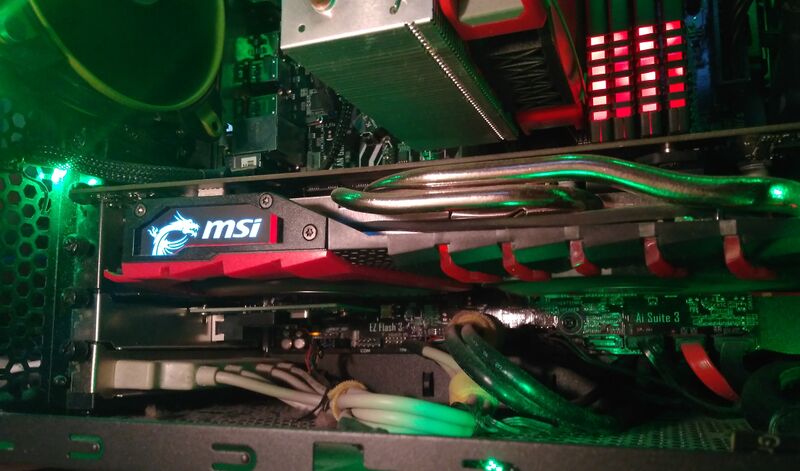
The Mesa RADV Vulkan Driver Will Soon Have An Option That Boosts Performance 30%+ On RDNA2 GPUs By Rendering Less
Those who have the very latest Radeon RX 6000 series graphics cards from AMD will get the option of doing fewer fragment shader invocations per pixel rendered in Vulkan games when Mesa 21.1 is released come May. This can provide a huge performance-boost, or nearly none at all, depending on the game or workload. The new Mesa option requires variable rate shading support in hardware, so it is only for those who have a shiny new GPU from AMD.
[...]
The RX 6000 series graphics cards ("RDNA2") from AMD are currently the only cards cards with the required hardware support. It is simply not possible to implement this on older graphics cards from AMD.
Those lucky enough to have the shiny new and supported graphics hardware will be able to run Vulkan applications with a new RADV_FORCE_VRS= variable that can take the arguments 2x2, 1x2 and 2x1.
-
Linux 5.13 Will Stop Restricting CPU Power Metrics Access For AMD Energy Driver - Phoronix
Following the PLATYPUS discovery last year that CPU energy information could be used for possible side channel attacks, the Intel RAPL counters were not only restricted to root but the "amd_energy" driver for exposing CPU energy information on supported Zen series CPUs was also dialed back to root-only in the name of security. Linux 5.13 is introducing a new mechanism so AMD CPUs will be able to still read the energy counters even if not operating as root.
Linux hardware monitoring subsystem (HWMON) maintainer Guenter Roeck authored a change to the AMD_Energy driver and went ahead and committed it on Friday to his hwmon-next tree ahead of the Linux 5.13 merge window opening up later in April. The restricting of energy counters to root privileges as a result of the side-channel attack is "annoying" and so he slightly modified the behavior of the driver. As PLATYPUS relies on quick and accurate energy readings, the approach is to make it.... slightly less accurate.
-
LTP: Linux Test Project, Bootlin contributions
The Linux Test Project is a project that develops and maintains a large test suite that helps validating the reliability, robustness and stability of the Linux kernel and related features. LTP has been mainly developed by companies such as IBM, Cisco, Fujitsu, SUSE, RedHat, with a focus on desktop distributions.
On the embedded side, both the openembedded-core Yocto layer and Buildroot have packages that allow to use LTP on embedded targets. However, for a recent project, we practically tried to run the full LTP test suite on an i.MX8 based platform running a Linux system built with Yocto. It turned out that LTP was apparently not very often tested on Busybox-based embedded systems, and we faced a number of issues. In addition to reporting various bugs/issues to the upstream LTP project, we also contributed a number of fixes and improvements
»
-

- Login or register to post comments
 Printer-friendly version
- 1821 reads
 PDF version
More in Tux Machines
- Highlights
- Front Page
- Latest Headlines
- Archive
- Recent comments
- All-Time Popular Stories
- Hot Topics
- New Members
digiKam 7.7.0 is released
After three months of active maintenance and another bug triage, the digiKam team is proud to present version 7.7.0 of its open source digital photo manager. See below the list of most important features coming with this release.
|
Dilution and Misuse of the "Linux" Brand
|
Samsung, Red Hat to Work on Linux Drivers for Future Tech
The metaverse is expected to uproot system design as we know it, and Samsung is one of many hardware vendors re-imagining data center infrastructure in preparation for a parallel 3D world.
Samsung is working on new memory technologies that provide faster bandwidth inside hardware for data to travel between CPUs, storage and other computing resources. The company also announced it was partnering with Red Hat to ensure these technologies have Linux compatibility.
|
today's howtos
|


.svg_.png)

 Content (where original) is available under CC-BY-SA, copyrighted by original author/s.


Recent comments
1 year 11 weeks ago
1 year 11 weeks ago
1 year 11 weeks ago
1 year 11 weeks ago
1 year 11 weeks ago
1 year 11 weeks ago
1 year 11 weeks ago
1 year 11 weeks ago
1 year 11 weeks ago
1 year 11 weeks ago