



GnuPG 2.3.0 Is Released With New Default Public Key Algorithms, A New Key Daemon And More
Submitted by Roy Schestowitz on Sunday 11th of April 2021 03:38:16 PM
Filed under 

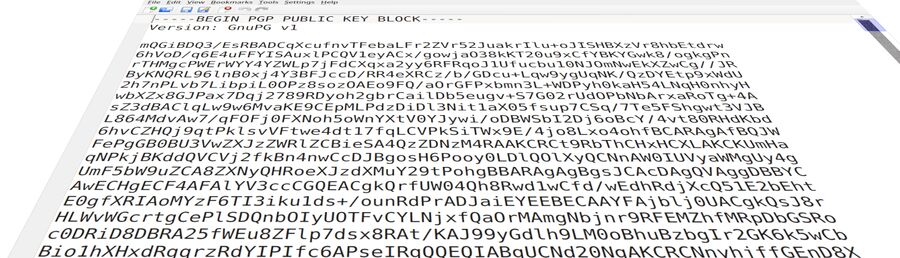
GnuPG is the de-facto standard for encrypted e-mail, and to some degree encrypted instant messages, within the free software world. Most FOSS e-mail software has built-in support or plugins for it. It is also used to sign software releases, ISO images for GNU/Linux distributions and a whole lot more. Nobody outside the FOSS community uses it or cares about it, which is a bit sad.
GnuPG 2.3.0 has quite a few improvements over previous versions. It now comes with a still experimental key database daemon that uses a SQLite database to store the keys. It can be enabled by adding use-keyboxd to $HOME/.gnupg/gpg.conf. There is a new separate configuration file for it called $HOME/.gnupg/gpgsm.conf. This daemon makes key look-ups much faster.
There's also a new tpm2d daemon for physically binding keys to a machine. You can read more about it in a blog post on gnupg.org titled Using a TPM with GnuPG 2.3. Most newer laptops in the upper price range come with a TPM module. Desktop computers tend to come with a empty motherboard header where one can be installed, so this is mostly useful if you have a fairly new high-end laptop or you are willing to buy a TPM module.
New GnuPG keys are now, by default, created with the ed25519/cv25519 public key algorithms. Similarly, AES is now the new last resort cipher preference instead of 3DES.

»
-

- Login or register to post comments
 Printer-friendly version
- 2377 reads
 PDF version
More in Tux Machines
- Highlights
- Front Page
- Latest Headlines
- Archive
- Recent comments
- All-Time Popular Stories
- Hot Topics
- New Members
digiKam 7.7.0 is released
After three months of active maintenance and another bug triage, the digiKam team is proud to present version 7.7.0 of its open source digital photo manager. See below the list of most important features coming with this release.
|
Dilution and Misuse of the "Linux" Brand
|
Samsung, Red Hat to Work on Linux Drivers for Future Tech
The metaverse is expected to uproot system design as we know it, and Samsung is one of many hardware vendors re-imagining data center infrastructure in preparation for a parallel 3D world.
Samsung is working on new memory technologies that provide faster bandwidth inside hardware for data to travel between CPUs, storage and other computing resources. The company also announced it was partnering with Red Hat to ensure these technologies have Linux compatibility.
|
today's howtos
|


.svg_.png)

 Content (where original) is available under CC-BY-SA, copyrighted by original author/s.


Recent comments
1 year 11 weeks ago
1 year 11 weeks ago
1 year 11 weeks ago
1 year 11 weeks ago
1 year 11 weeks ago
1 year 11 weeks ago
1 year 11 weeks ago
1 year 11 weeks ago
1 year 11 weeks ago
1 year 11 weeks ago