



Hardware: Raspberry Pi, RISC-V, STMicroelectronics
Submitted by Roy Schestowitz on Friday 9th of April 2021 11:04:03 AM
Filed under 
-
DIY Raspberry Pi Compute Module 4 NAS supports up to four drives
This carrier board design is actually derived from the official Raspberry Pi CM4 IO board with only the interfaces needed for the NAS to make it smaller and fit within the width of a standard 3.5″ hard drive. It was also made as simple as possible because it was Mebs’ first PCB design.
This leaves the board with Gigabit Ethernet, one HDMI port, a USB 2.0 port, the PCIe 2.0 socket, as well as some headers for power (board and SATA), a small I2C OLED display, temperature sensor, GPIOs, and fan control.
-
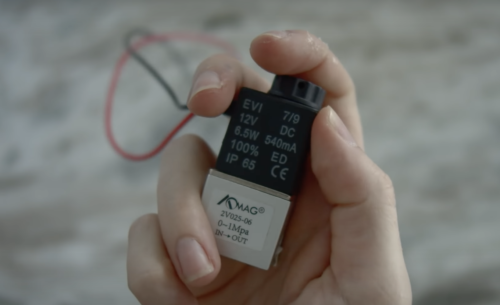
Raspberry Pi automatically refills your water bottle
-
Allwinner plans to release Linux capable RISC-V SOC this year
Searching for more info about their new H313 SOC I found old news from August 2020, where Allwinner announce the development of AP SOC with RISC-V and praising Open Source Hardware and the open ISA of RISC-V.
They say in this announcement that they will have AP (application processor) SOC with RISC-V in 2021!
-
STMicroelectronics releases Cellular IoT Discovery Kit
STMicroelectronics B-L462E-CELL1 Discovery kit brings together the critical hardware and software building blocks to quickly develop power-conscious Cellular IoT devices that connect to the Internet through LTE-Cat M and NB-IoT networks.
»
-

- Login or register to post comments
 Printer-friendly version
- 2576 reads
 PDF version
More in Tux Machines
- Highlights
- Front Page
- Latest Headlines
- Archive
- Recent comments
- All-Time Popular Stories
- Hot Topics
- New Members
digiKam 7.7.0 is released
After three months of active maintenance and another bug triage, the digiKam team is proud to present version 7.7.0 of its open source digital photo manager. See below the list of most important features coming with this release.
|
Dilution and Misuse of the "Linux" Brand
|
Samsung, Red Hat to Work on Linux Drivers for Future Tech
The metaverse is expected to uproot system design as we know it, and Samsung is one of many hardware vendors re-imagining data center infrastructure in preparation for a parallel 3D world.
Samsung is working on new memory technologies that provide faster bandwidth inside hardware for data to travel between CPUs, storage and other computing resources. The company also announced it was partnering with Red Hat to ensure these technologies have Linux compatibility.
|
today's howtos
|


.svg_.png)

 Content (where original) is available under CC-BY-SA, copyrighted by original author/s.


Recent comments
1 year 11 weeks ago
1 year 11 weeks ago
1 year 11 weeks ago
1 year 11 weeks ago
1 year 11 weeks ago
1 year 11 weeks ago
1 year 11 weeks ago
1 year 11 weeks ago
1 year 11 weeks ago
1 year 11 weeks ago