



Proprietary Software and Security
Submitted by Roy Schestowitz on Tuesday 6th of April 2021 02:55:40 PM
Filed under 
-
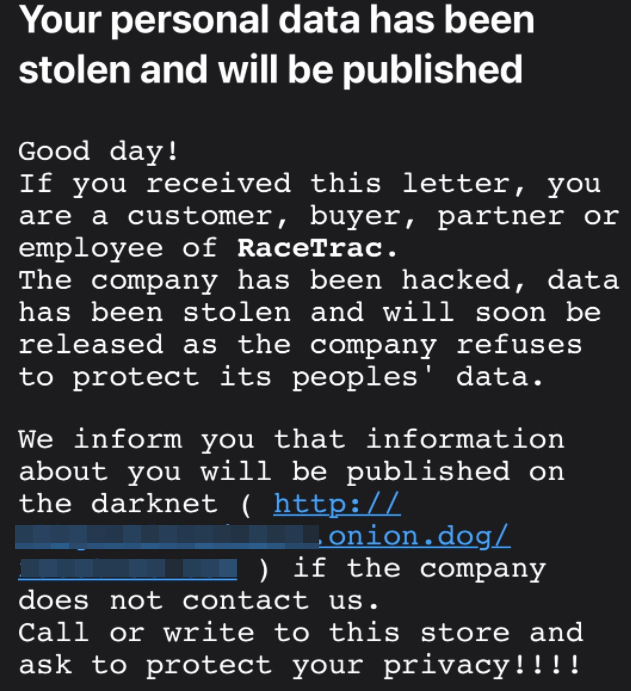
Ransom Gangs Emailing Victim Customers for Leverage - Krebs on Security
-
Once again, someone tampered with an entire drinking water supply via the [Internet]
The wildest part is that in both cases, these municipalities left themselves wide open to tampering — they installed the remote access software themselves so employees could log in to monitor the systems! That’s what Travnichek was hired to do in Kansas, and authorities aren’t even accusing him of “hacking” the system in their indictment. He simply “logged in remotely” months after he left the job, began shutting things down, and is now facing up to 20 years in prison.
-
Brown University hit by cyberattack, some systems still offline
The Ivy League school’s IT staff said the attack focused on the university’s Windows-based devices and asked faculty and staff to switch to computers running other operating systems, smartphones, or tablets.
-
As ransomware stalks the manufacturing sector, victims are still keeping quiet
The ransomware attack would cost Norsk Hydro, which employs 35,000 people and has roughly 200 factories around the world, between $90 million and $110 million as production in some factories halted for weeks.
Yet Molland and his team did something unusual for a large industrial organization disrupted by [attackers]: They told the public what happened in vivid detail, releasing video interviews in which plant employees described switching to manual operations.
Two years later, Norsk Hydro’s transparency remains an outlier in a manufacturing sector that is increasingly dogged by ransomware during the coronavirus pandemic. Of 500 manufacturing sector employees in the U.S., Germany and Japan surveyed by security firm Trend Micro, 61% said they had experienced cybersecurity incidents, with many of those cases causing system outages.
-
FBI alert on Egregor ransomware highlighted affiliate cybercrime model
In its advisory, the bureau said that attackers can rent Egregor as a ransomware-as-a-service malware, and that it relies on other hacking tools as part of an affiliate model. Egregor frequently comes packaged with penetration testing and exploit tools including Cobalt Strike, Qakbot and software known as Advanced IP Scanner and AdFind, the FBI said.
The federal government’s warning roughly coincided with a consensus from cybersecurity researchers and private sector firms that the specialists who launch ransomware attacks are a much more concentrated lot than widely understood.
Egregor is one of a number of strains classified as ransomware-as-a-service, meaning users can pay a fee to enlist the malicious code for their crime sprees.
-
Apple Caves to Russia and Begins Showing Russian Government-Approved Apps During iPhone Setup
After reportedly calling the requirements of a new Russian law a security threat and threatening to pull out of the country, Apple caved and decided to let Russia have its way, saying it would allow users to install government-approved Russian apps during iPhone setup. In recent days, we’ve gotten a first glimpse of what that looks like.
-
iPhone Setup Process in Russia Now Includes List of Suggested Russian Developed Apps
Apple agreed to display the list of apps to comply with a law established by Russia's Ministry of Digital Affairs. The law requires software to be preinstalled on all devices sold in Russia, including smartphones, tablets, desktops, and smart TVs.
»
-

- Login or register to post comments
 Printer-friendly version
- 2048 reads
 PDF version
More in Tux Machines
- Highlights
- Front Page
- Latest Headlines
- Archive
- Recent comments
- All-Time Popular Stories
- Hot Topics
- New Members
digiKam 7.7.0 is released
After three months of active maintenance and another bug triage, the digiKam team is proud to present version 7.7.0 of its open source digital photo manager. See below the list of most important features coming with this release.
|
Dilution and Misuse of the "Linux" Brand
|
Samsung, Red Hat to Work on Linux Drivers for Future Tech
The metaverse is expected to uproot system design as we know it, and Samsung is one of many hardware vendors re-imagining data center infrastructure in preparation for a parallel 3D world.
Samsung is working on new memory technologies that provide faster bandwidth inside hardware for data to travel between CPUs, storage and other computing resources. The company also announced it was partnering with Red Hat to ensure these technologies have Linux compatibility.
|
today's howtos
|


.svg_.png)

 Content (where original) is available under CC-BY-SA, copyrighted by original author/s.


Recent comments
1 year 11 weeks ago
1 year 11 weeks ago
1 year 11 weeks ago
1 year 11 weeks ago
1 year 11 weeks ago
1 year 11 weeks ago
1 year 11 weeks ago
1 year 11 weeks ago
1 year 11 weeks ago
1 year 11 weeks ago