



Review of KDE-Based JingOS 0.8
Submitted by Rianne Schestowitz on Thursday 1st of April 2021 02:06:35 AM
Filed under 


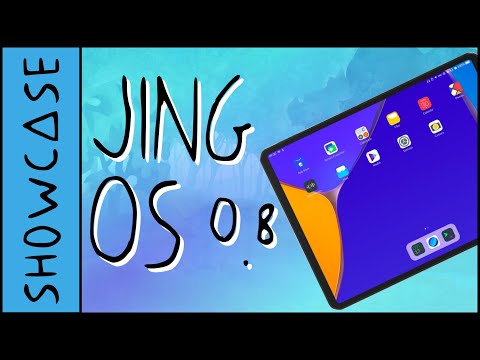
There's something that worrys me: it seems like much of JingOS code is not currently open source. Some applications are – mostly those that are taking from KDE and re-skinned – but the shell itself isn't. Maybe I just could not find the source code, but I think they did not yet upload it at all.
Update: Current repository is: https://github.com/JingOS-team/JingOS
According to the devs, all code should be here from later today.
There were also some licensing issues with original KDE files. Apparently some of the gestures files credits are not given, plus some other licensing technicality which I did not understand. However, the KDE eV Board is in contact with JingOS, so I'd expect these issues to be ironed out eventually.
Now, this is just a preliminary review, as the product only came out today. I wished to do a more in-depth review, but JingOS provided to be an environment not very friendly to different hardware compared to the one it's tested for: no way to change screen resolution (which is wrong by default)? no way to change the keyboard layout? I've also had issues installing third party applications, such as the screen recorder. The one I managed to install (SimpleScreenRecorder) did not work, as JingOS uses Wayland.
The v1.0 will be released in June, and by then we should also have the first all-jing device (the JingPad). Hopefully, I'll be able to get a clearer idea of what JingOS is or will be by then.

»
-

- Login or register to post comments
 Printer-friendly version
- 3441 reads
 PDF version
More in Tux Machines
- Highlights
- Front Page
- Latest Headlines
- Archive
- Recent comments
- All-Time Popular Stories
- Hot Topics
- New Members
digiKam 7.7.0 is released
After three months of active maintenance and another bug triage, the digiKam team is proud to present version 7.7.0 of its open source digital photo manager. See below the list of most important features coming with this release.
|
Dilution and Misuse of the "Linux" Brand
|
Samsung, Red Hat to Work on Linux Drivers for Future Tech
The metaverse is expected to uproot system design as we know it, and Samsung is one of many hardware vendors re-imagining data center infrastructure in preparation for a parallel 3D world.
Samsung is working on new memory technologies that provide faster bandwidth inside hardware for data to travel between CPUs, storage and other computing resources. The company also announced it was partnering with Red Hat to ensure these technologies have Linux compatibility.
|
today's howtos
|


.svg_.png)

 Content (where original) is available under CC-BY-SA, copyrighted by original author/s.


Recent comments
1 year 11 weeks ago
1 year 11 weeks ago
1 year 11 weeks ago
1 year 11 weeks ago
1 year 11 weeks ago
1 year 11 weeks ago
1 year 11 weeks ago
1 year 11 weeks ago
1 year 11 weeks ago
1 year 11 weeks ago