



today's leftovers
Submitted by Roy Schestowitz on Saturday 27th of March 2021 05:21:13 PM
Filed under 
-
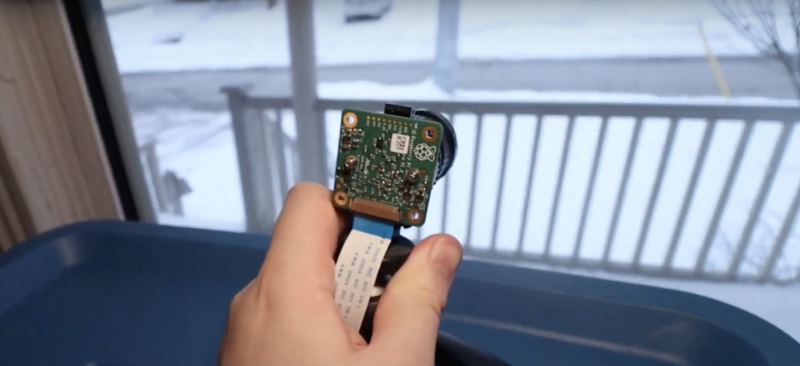
Raspberry Pi dog detector (and dopamine booster)
-
Linux's hardware monitoring can lie to you
At a minimum, this tells me that straightforward interpretations of hwmon values may be misleading because you need to look at other hwmon values for context. More generally, hwmon values are only as trustworthy as the combination of the hardware and the driver reporting them and clearly some combinations don't report useful values. Common tools, like lm_sensors, may not cover corner cases (such as the PWM duty cycle being 0), so looking at their output may mislead you about the state of your hardware. In the end, nothing beats actually looking at things in person, which is a little bit alarming in these work from home times when that's a bit difficult.
-
Compile times, and why "the obvious" might not be so
One thing which got me thinking the other day was seeing a post where someone was complaining about build times. Apparently they can be really long and annoying. I got the impression they were starting from scratch every time, and wondered why anyone would do that. Then I started thinking about this double-edged sword of things taken for granted and figured "because nobody bothered to tell them about it".
So, in that vein, I am going to describe something that happens all the time when I work on stuff, and it seems completely ordinary and boring to me, but might well seem like magic to someone who hasn't seen it yet. It's not magic, though. It's just another way of doing stuff.
-
Opensource from an author point of view
Hi, today's article will be a bit different than what you are used to. I am currently writing about my experience as an open source author and "project manager". I recently created a project that, while being extremely small, have seen some people getting involved at various level. I didn't know what it was to be in this position.
Having to deal with multiple people contributing to a project I started for myself on one architecture with a limited set of features is surprisingly hard. I don't say it's boring and that no one should ever do it, but I think I wasn't really prepare to handle this.
I made my best to integrate people wishes while keeping the helm of the project in the right direction, but I had to ask myself many questions.
-
A Year in the Life of a Compiler Fuzzing Campaign
In the summer of 2020, we described our work fuzzing the Solidity compiler, solc. So now we’d like to revisit this project, since fuzzing campaigns tend to “saturate,” finding fewer new results over time. Did Solidity fuzzing run out of gas? Is fuzzing a high-stakes project worthwhile, especially if it has its own active and effective fuzzing effort?
The first bugs from that fuzzing campaign were submitted in February of 2020 using an afl variant. Since then, we’ve submitted 74 reports. Sixty-seven have been confirmed as bugs, and 66 of those have been fixed. Seven were duplicates or not considered to be true bugs.
-
CrateDB takes distributed SQL DB fully open source with release of v4.5
Crate.io has pushed out CrateDB 4.5, the latest version of its clustered SQL database for developers building machine data applications. With this release, the product is also now fully open source with all enterprise features of the database available under the Apache 2.0 license.
Detailing the changes on its blog, Crate.io said it will no longer implement its Enterprise License, under which organisations paid for commercial use of the product. Instead, the complete set of CrateDB features will be available in a single open source version licensed under Apache 2.0.
-
We Open-Sourced our Encryption Software: Here's Why
People spent an incredible amount of time and resources protecting their intellectual property from "thought thieves". An idea was born, and kept safely hidden from the world until slapped with a patent.
But ideas are not a finite resource that should be locked away. When ideas are left to grow in the dark, they cannot flourish.
While profits may be available in the short term, inhibiting widespread access to unique insights and original code can kill our potential for future growth - not just for inidividual projects but for industries at large.
»
-

- Login or register to post comments
 Printer-friendly version
- 3043 reads
 PDF version
More in Tux Machines
- Highlights
- Front Page
- Latest Headlines
- Archive
- Recent comments
- All-Time Popular Stories
- Hot Topics
- New Members
digiKam 7.7.0 is released
After three months of active maintenance and another bug triage, the digiKam team is proud to present version 7.7.0 of its open source digital photo manager. See below the list of most important features coming with this release.
|
Dilution and Misuse of the "Linux" Brand
|
Samsung, Red Hat to Work on Linux Drivers for Future Tech
The metaverse is expected to uproot system design as we know it, and Samsung is one of many hardware vendors re-imagining data center infrastructure in preparation for a parallel 3D world.
Samsung is working on new memory technologies that provide faster bandwidth inside hardware for data to travel between CPUs, storage and other computing resources. The company also announced it was partnering with Red Hat to ensure these technologies have Linux compatibility.
|
today's howtos
|


.svg_.png)

 Content (where original) is available under CC-BY-SA, copyrighted by original author/s.


Recent comments
1 year 11 weeks ago
1 year 11 weeks ago
1 year 11 weeks ago
1 year 11 weeks ago
1 year 11 weeks ago
1 year 11 weeks ago
1 year 11 weeks ago
1 year 11 weeks ago
1 year 11 weeks ago
1 year 11 weeks ago