



GNOME Desktop/GTK: Work by Matthias Clasen, 2FA and GNOME Latam 2021
Submitted by Roy Schestowitz on Wednesday 24th of March 2021 04:55:16 AM
Filed under 
-
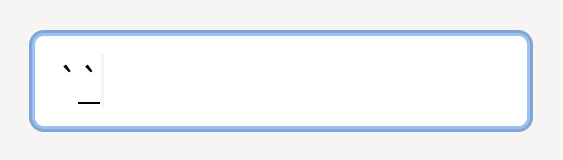
Matthias Clasen: Input, revisited
My last update talked about better visual feedback for Compose sequences in GTK’s input methods. I did not explicitly mention dead keys back then, but historically, X11 has treated dead keys and Compose sequences in exactly the same way.
-
Bringing FIDO2 device support to sandboxes
Hardening user logins with 2FA is becoming must-feature of Web services; most of the services I use daily (such as GitLab instances) are already enabling it. Although it’s a bit cumbersome to enter secondary factor manually, using hardware tokens (such as FIDO2 authenticators) simplifies the process to a single tap, also making the entire authentication more secure based on public key cryptography.
On the client side, major browsers provide built-in support for hardware tokens (at least CTAP1), though sandboxed applications cannot benefit from this without allowing direct access to the host hardware. To improve the situation, we had several discussions in forums last year and somehow reached a rough consensus: we need a proxy for those authenticator devices.
-
Julita Inca Chiroque: GNOME Latam 2021
Today, we have “celebrated” a year of the lock-down in the UK. It is also been a year that I was not able to travel to anywhere to celebrate with the GNOME community all the advances that this organization has been done for years in pro-FLOSS.
»
-

- Login or register to post comments
 Printer-friendly version
- 2723 reads
 PDF version
More in Tux Machines
- Highlights
- Front Page
- Latest Headlines
- Archive
- Recent comments
- All-Time Popular Stories
- Hot Topics
- New Members
digiKam 7.7.0 is released
After three months of active maintenance and another bug triage, the digiKam team is proud to present version 7.7.0 of its open source digital photo manager. See below the list of most important features coming with this release.
|
Dilution and Misuse of the "Linux" Brand
|
Samsung, Red Hat to Work on Linux Drivers for Future Tech
The metaverse is expected to uproot system design as we know it, and Samsung is one of many hardware vendors re-imagining data center infrastructure in preparation for a parallel 3D world.
Samsung is working on new memory technologies that provide faster bandwidth inside hardware for data to travel between CPUs, storage and other computing resources. The company also announced it was partnering with Red Hat to ensure these technologies have Linux compatibility.
|
today's howtos
|


.svg_.png)

 Content (where original) is available under CC-BY-SA, copyrighted by original author/s.


Recent comments
1 year 11 weeks ago
1 year 11 weeks ago
1 year 11 weeks ago
1 year 11 weeks ago
1 year 11 weeks ago
1 year 11 weeks ago
1 year 11 weeks ago
1 year 11 weeks ago
1 year 11 weeks ago
1 year 11 weeks ago