



How to install Linux in 3 steps
Submitted by Roy Schestowitz on Tuesday 16th of February 2021 10:05:31 AM
Filed under 

In 2021, there are more reasons why people love Linux than ever before. In this series, I'll share 21 different reasons to use Linux. Here's how to install Linux.
Installing an operating system (OS) is always daunting. It's something of a puzzle to most people: Installing an OS can't happen from inside the OS because it either hasn't been installed, or it's about to be replaced by a different one, so how does it happen? And worse yet, it usually involves confusing questions about hard drive formats, install destinations, time zones, user names, passwords, and a bunch of other stuff that you just don't normally think about. Linux distributions know this, and so they've worked diligently over the years to reduce the time you spend in the OS installer down to the absolute minimum.
[...]
When you boot from a Linux install DVD or thumb drive, you're placed into a minimal operating environment designed to run one or more useful applications. The installer is the primary application, but because Linux is such a flexible system, you can usually also run standard desktop applications to get a feel for what the OS is like before you commit to installing it.
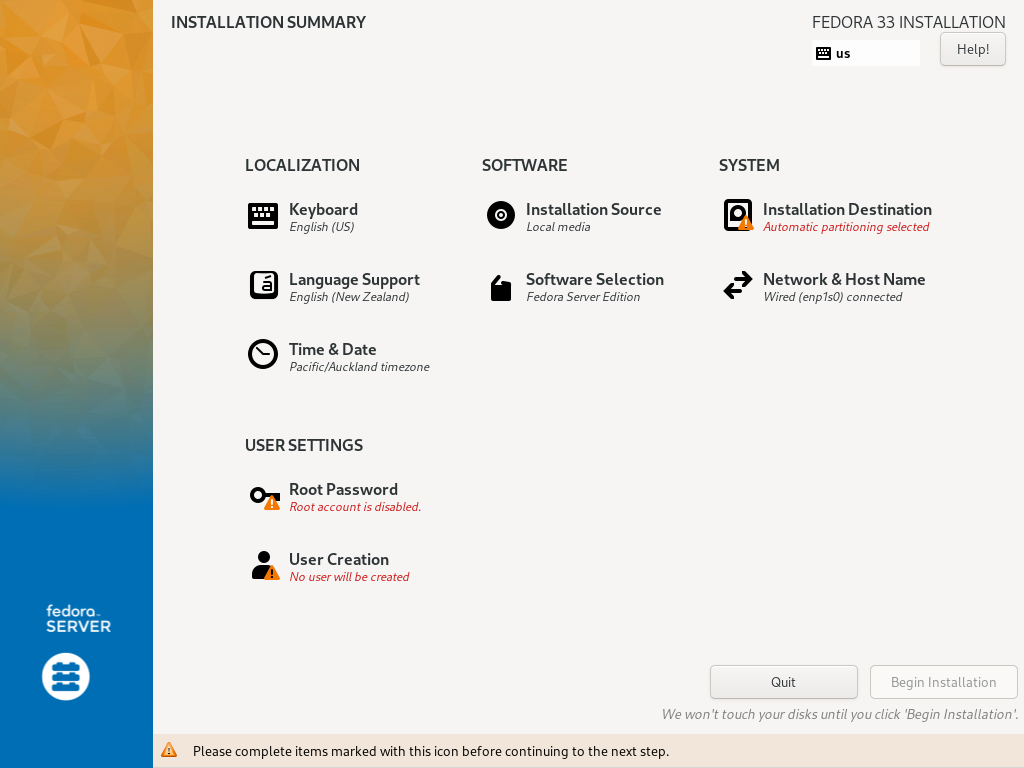
Different Linux distributions have different installer interfaces. Here are two examples:
Fedora Linux has a flexible installer (called Anaconda) capable of complex system configuration.

»
-

- Login or register to post comments
 Printer-friendly version
- 1472 reads
 PDF version
More in Tux Machines
- Highlights
- Front Page
- Latest Headlines
- Archive
- Recent comments
- All-Time Popular Stories
- Hot Topics
- New Members
digiKam 7.7.0 is released
After three months of active maintenance and another bug triage, the digiKam team is proud to present version 7.7.0 of its open source digital photo manager. See below the list of most important features coming with this release.
|
Dilution and Misuse of the "Linux" Brand
|
Samsung, Red Hat to Work on Linux Drivers for Future Tech
The metaverse is expected to uproot system design as we know it, and Samsung is one of many hardware vendors re-imagining data center infrastructure in preparation for a parallel 3D world.
Samsung is working on new memory technologies that provide faster bandwidth inside hardware for data to travel between CPUs, storage and other computing resources. The company also announced it was partnering with Red Hat to ensure these technologies have Linux compatibility.
|
today's howtos
|


.svg_.png)

 Content (where original) is available under CC-BY-SA, copyrighted by original author/s.


Recent comments
1 year 11 weeks ago
1 year 11 weeks ago
1 year 11 weeks ago
1 year 11 weeks ago
1 year 11 weeks ago
1 year 11 weeks ago
1 year 11 weeks ago
1 year 11 weeks ago
1 year 11 weeks ago
1 year 11 weeks ago