



IBM/Red Hat Leftovers
Submitted by Roy Schestowitz on Monday 8th of February 2021 09:02:12 PM
Filed under 
-
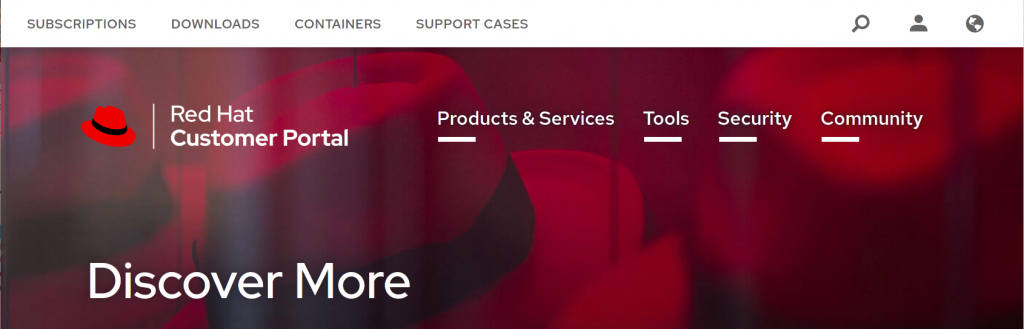
Miroslav Suchý: How to activate no-cost RHEL subscription
Click on the “Register” button and follow the process. It is one screen only and you will be done within a minute.
Now navigate to developers.redhat.com and log in using your Red Hat account.
From the top menu choose Linux -> Download RHEL. That will get you to Download Page. You can download the ISO image. Or you can Set Up AWS EC2 Instance. Or you can use any other way. Your no-cost subscription is already active.
-
Deploying Kubernetes Operators with Operator Lifecycle Manager bundles
This article shows an example of using the Operator Lifecycle Manager (OLM) bundle deployment architecture to deploy a Red Hat OpenShift or other Kubernetes Operator. You will learn how to use OLM and the Operator SDK (both components of the Kubernetes Operator Framework) together to deploy an Operator.
-
DISA Has Released the Red Hat Enterprise Linux 8 STIG
Cybersecurity continues to be a focal point for government agencies as they continue to develop IT strategies that include the deployment of new and existing workloads into cloud-based environments. At the same time, threats to these services, and the data that they process, continue to evolve with new exploits appearing on a regular basis. To maintain the performance and availability of applications and data, configurations that limit the ability for exploits to be successful must be in place.
Red Hat has a long history of working with government and defense agencies to configure Red Hat Enterprise Linux (RHEL) to meet certain rigorous requirements that aim to protect systems from malicious activity. This work includes development of SELinux, establishing Identity Management standards, and the development and publication of several security configuration profiles used by various industries.
We are pleased to announce that, in collaboration with Red Hat, the Defense Information Systems Agency (DISA) has published a Secure Technical Implementation Guide (STIG) for RHEL 8. The STIG consists of more than 300 security controls including configuration settings that map to new features that were included in RHEL 8.
-
IBM Cloud Now: IBM Cloud Schematics Updates, New Billing Model, and 10% Off Bare Metal Servers
-
IBM Advance Toolchain for Linux on Power 14.0-2 released!
A new update release for the 14.0 series of the IBM® Advance Toolchain for Linux on Power is now available.
[...]
The IBM Advance Toolchain for Linux on Power is a set of open source development tools (compiler, debugger and profiling tools) and runtime libraries that allow users to take leading edge advantage of IBM’s latest POWER® hardware features on Linux®.
-
Feeling Insecure About The Weak Security At Most IBM i Shops - IT Jungle [Ed: When the "trade press" indoctrinates people into thinking they must always use products with back doors and then buy some proprietary stuff to "add" security]
It is always a wonder to us that, in this day and age, every IBM i shop, which is by definition running mission critical workloads, is not using high availability clustering of systems in their datacenter, disaster recovery and failover of some type or another to a remote site, and supplemental security to lock down those parts of the system that are not, by default within the IBM i platform, locked down.
It’s a bit of a mystery. Of the 120,000 to 150,000 unique customers running IBM i platforms in the world, maybe 20,000 have some sort of HA/DR and maybe 10,000 have supplemental security. We want to understand why, after decades or exit point security as well as security add-ons to cover the Integrated File System, a variant of the OS/2 High Performance File System that IBM brought onto the platform to make it speak ASCII and SMD way back in 1995. We wanted to get a better understanding of the security situation, with somewhere between 6.7 percent and 8.3 percent of the installed base having security add-ons for exit points and IFS, so we had a chat with Tony Perera, co-founder and president of Trinity Guard, who has a long and complex history in the IT sector and who can give us some insight.
Perera, who is from Sri Lanka, started his career at IBM developing the Employee Trust Fund System for that country, which is akin to the applications that run the Social Security Administration here in the United States. He then went on to be a programmer analyst at United Overseas Bank and at application developer FISERV, including porting a Unix-based banking system to OS/400. In July 1999, Perera joined PentaSafe and was one of the key developers of the set of security products the company had, which were acquired by NetIQ, which was acquired by Attachmate, which was acquired by Novell, which were finally spun put into Micro Focus. Back in the day PentaSafe had three employees and were doing security products for OS/400, but today, Trinity Guard is a 15-person company, with a dozen of them – including Perera – working in programming, QA, product management, and such and only three of them working on sales. Perera has seen security from the side of the customer and from the side of the vendor, and offers some good perspective why security add-ons are not ubiquitous in the IBM i realm, but why they should be.
»
-

- Login or register to post comments
 Printer-friendly version
- 4702 reads
 PDF version
More in Tux Machines
- Highlights
- Front Page
- Latest Headlines
- Archive
- Recent comments
- All-Time Popular Stories
- Hot Topics
- New Members
digiKam 7.7.0 is released
After three months of active maintenance and another bug triage, the digiKam team is proud to present version 7.7.0 of its open source digital photo manager. See below the list of most important features coming with this release.
|
Dilution and Misuse of the "Linux" Brand
|
Samsung, Red Hat to Work on Linux Drivers for Future Tech
The metaverse is expected to uproot system design as we know it, and Samsung is one of many hardware vendors re-imagining data center infrastructure in preparation for a parallel 3D world.
Samsung is working on new memory technologies that provide faster bandwidth inside hardware for data to travel between CPUs, storage and other computing resources. The company also announced it was partnering with Red Hat to ensure these technologies have Linux compatibility.
|
today's howtos
|


 Content (where original) is available under CC-BY-SA, copyrighted by original author/s.



Recent comments
1 year 11 weeks ago
1 year 11 weeks ago
1 year 11 weeks ago
1 year 11 weeks ago
1 year 11 weeks ago
1 year 11 weeks ago
1 year 11 weeks ago
1 year 11 weeks ago
1 year 11 weeks ago
1 year 11 weeks ago