



Celebrating the FSF’s 35th anniversary: Stories from the Licensing and Compliance Lab
Submitted by Roy Schestowitz on Saturday 16th of January 2021 12:58:43 AM
Filed under 
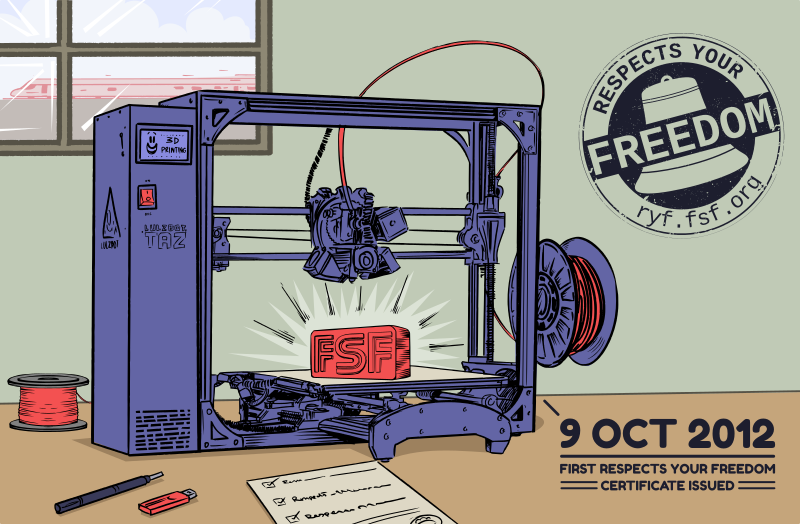
Since 2001, the Free Software Foundation (FSF) Licensing and Compliance Lab has provided the legal muscle to defend free software, and has supported software users, programmers, legal professionals, and activists who want their software to remain free. FSF representatives had done copyleft enforcement before this, but the founding of the Lab was a big step toward formalizing and organizing this work. You may have already read licensing and compliance manager Donald Robertson’s comprehensive accounting of the current functions of the team, but today, following our thirty-fifth anniversary celebration, we’re taking a look back at the role this team has played over the course of the FSF’s thirty-five year-long history, and some milestones along the way.
Like the other accounts written for this series, which focused on the campaigns team and the tech team's histories, this is far from a complete story of the FSF’s licensing work: there are important milestones that we were barely able to touch upon, and important people involved whose stories and voices aren’t represented here. It’s also possible that some details may have been missed or lost to time.

»
-

- Login or register to post comments
 Printer-friendly version
- 2885 reads
 PDF version
More in Tux Machines
- Highlights
- Front Page
- Latest Headlines
- Archive
- Recent comments
- All-Time Popular Stories
- Hot Topics
- New Members
digiKam 7.7.0 is released
After three months of active maintenance and another bug triage, the digiKam team is proud to present version 7.7.0 of its open source digital photo manager. See below the list of most important features coming with this release.
|
Dilution and Misuse of the "Linux" Brand
|
Samsung, Red Hat to Work on Linux Drivers for Future Tech
The metaverse is expected to uproot system design as we know it, and Samsung is one of many hardware vendors re-imagining data center infrastructure in preparation for a parallel 3D world.
Samsung is working on new memory technologies that provide faster bandwidth inside hardware for data to travel between CPUs, storage and other computing resources. The company also announced it was partnering with Red Hat to ensure these technologies have Linux compatibility.
|
today's howtos
|


.svg_.png)

 Content (where original) is available under CC-BY-SA, copyrighted by original author/s.


Recent comments
1 year 11 weeks ago
1 year 11 weeks ago
1 year 11 weeks ago
1 year 11 weeks ago
1 year 11 weeks ago
1 year 11 weeks ago
1 year 11 weeks ago
1 year 11 weeks ago
1 year 11 weeks ago
1 year 11 weeks ago