



Sailfish OS Pallas-Yllästunturi is now available
Submitted by Roy Schestowitz on Tuesday 13th of October 2020 12:33:13 PM
Filed under 


Finnish Lapland has the cleanest air in the world and Pallas-Yllästunturi National Park in Lapland is Finland’s most popular national park. The landscape of Pallastunturi Fells has been chosen as one of Finland’s national landscapes. The park’s location north of the Arctic Circle means that it experiences the typical weather and natural phenomena associated with seasonal changes. On clear evenings and nights, planets, stars and the northern lights may be visible in the sky.
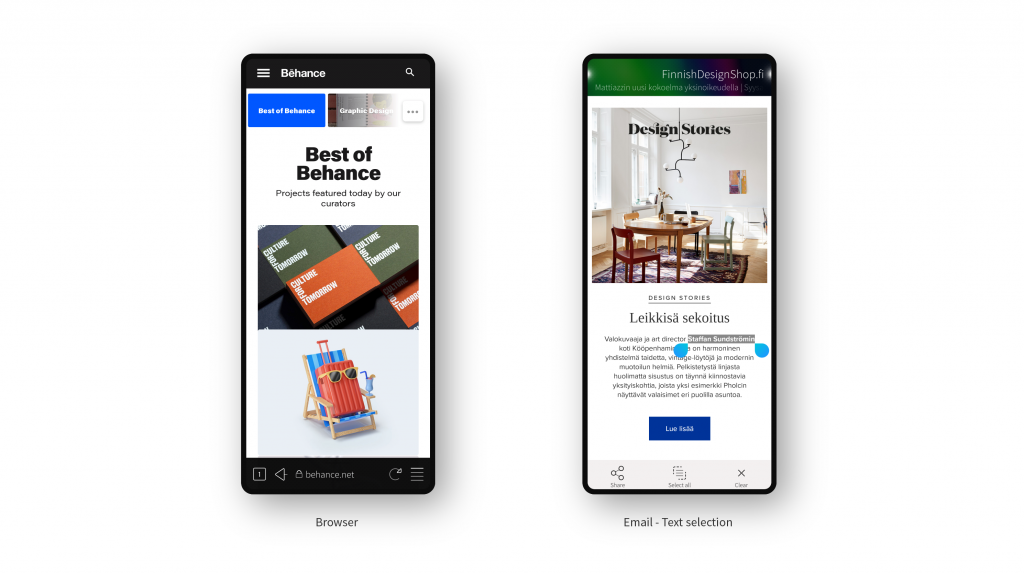
The 3.4 Pallas-Yllästunturi release includes several updates that enhance the experience on-device, enable new possibilities for developers, and incorporate new features for our corporate customers. Several improvements in this release were developed in collaboration with Open Mobile Platform for Aurora OS. Jolla appreciates the collaborative efforts of its partners and community in making Sailfish OS even better.
[...]
We’ve included experimental support for the Rust programming language in this release. This addition is related to the upcoming browser upgrades, but we will experiment with using Rust in other areas as well. We welcome and appreciate all comments from the community about the behaviour and use of this addition and encourage you to share your experiences on the forum.
In preparation for future needs we are also releasing experimental support for 64-bit hardware (aarch64). This experiment is aimed at potential upcoming devices and is not currently used by any existing hardware. It should be noted by our development community that we do not consider the aarch64 ABI stable yet. Recompiling applications might be needed later when the 64-bit architecture becomes officially supported.
We invite our partners and community to take this into use where devices support it (e.g. HW ports) and to share your feedback via our forum (https://forum.sailfishos.org/).
We’ve also updated our Notification API so that the interface now includes progress information that can be displayed on the Events view.

»
-

- Login or register to post comments
 Printer-friendly version
- 5165 reads
 PDF version
More in Tux Machines
- Highlights
- Front Page
- Latest Headlines
- Archive
- Recent comments
- All-Time Popular Stories
- Hot Topics
- New Members
digiKam 7.7.0 is released
After three months of active maintenance and another bug triage, the digiKam team is proud to present version 7.7.0 of its open source digital photo manager. See below the list of most important features coming with this release.
|
Dilution and Misuse of the "Linux" Brand
|
Samsung, Red Hat to Work on Linux Drivers for Future Tech
The metaverse is expected to uproot system design as we know it, and Samsung is one of many hardware vendors re-imagining data center infrastructure in preparation for a parallel 3D world.
Samsung is working on new memory technologies that provide faster bandwidth inside hardware for data to travel between CPUs, storage and other computing resources. The company also announced it was partnering with Red Hat to ensure these technologies have Linux compatibility.
|
today's howtos
|


 Content (where original) is available under CC-BY-SA, copyrighted by original author/s.



Sailfish OS 3.4 Released With Experimental Rust Support
Sailfish OS 3.4 Released With Experimental Rust Support, Finally Eyeing 64-bit ARM - Phoronix
"Linux Smartphones" on Sailfish OS 3.4
Sailfish OS 3.4 brings multi-user support, browser improvements, and more - Linux Smartphones