



Happy St Patrick’s Day, IFSO AGM and meeting sock puppets
Submitted by Roy Schestowitz on Tuesday 29th of October 2019 02:06:43 AM
Filed under 

When discussions took place in the FSFE community about the decision to abolish elections, approximately 15 people participated, with about 10 people against democracy and only about 5 people speaking up in favour.
Looking at those numbers is deceptive: of the 10 people speaking against elections, all were in what other people perceive as the cabal, a group of 27 people who have full membership, over and above the fellows. Cabal people hadn't lost anything in the constitutional change. The 5 people speaking in favour of democracy where not members of the cabal, they were ordinary members of the 1500-strong fellowship. In such circumstances, is it fair to extrapolate the voice of those 5 people and consider it to be representative of the majority of 1500 fellows? Or do we accept the more simplistic 10 against 5? The more simplistic case, where it is not obvious to outsiders that the 10 people are cabal members, is one of those fake community situations.
Imagine if every participant in that conversation had to state in their email signature whether they were cabal or fellow, or even better, if the emails could be colour-coded by membership class. Would it be easier to see the correlation between the vested interests and the opinions?
In any case, the more outspoken members of the cabal tried to intimidate the fellows, trying to discredit them with personal attacks and calling some of them sock puppets. As fellowship representative, I simply emailed some of these people personally asking "can you please tell me if you are a sock-puppet or a fellow?"
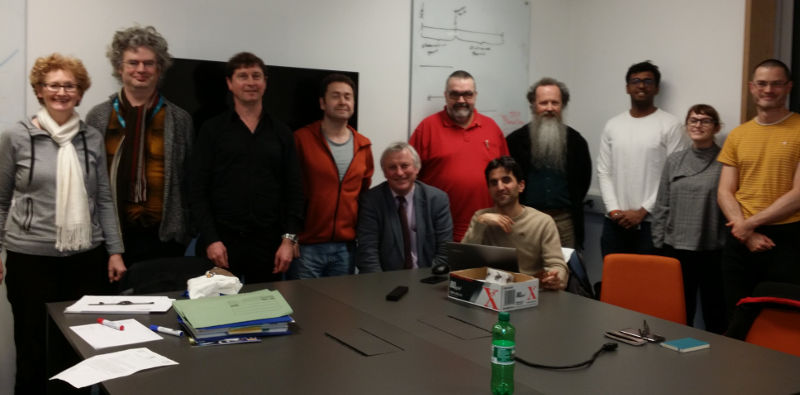
What I found was surprising: not only were they real people, one of them lives just around the corner from my home in Dublin. Stefan and I met for burgers late in 2018 and helped put things into motion to reboot the IFSO.
One fellow told me he (or she?) was not using their real name because the FSFE cabal censors discussions about governance issues, blocking people from the mailing lists or moderating their posts. But they are still a real person making real contributions to the organization. Another fellow observed that one member of the cabal, Cryptie, doesn't use her real name and asked why should anybody else?

»
-

- Login or register to post comments
 Printer-friendly version
- 3406 reads
 PDF version
More in Tux Machines
- Highlights
- Front Page
- Latest Headlines
- Archive
- Recent comments
- All-Time Popular Stories
- Hot Topics
- New Members
digiKam 7.7.0 is released
After three months of active maintenance and another bug triage, the digiKam team is proud to present version 7.7.0 of its open source digital photo manager. See below the list of most important features coming with this release.
|
Dilution and Misuse of the "Linux" Brand
|
Samsung, Red Hat to Work on Linux Drivers for Future Tech
The metaverse is expected to uproot system design as we know it, and Samsung is one of many hardware vendors re-imagining data center infrastructure in preparation for a parallel 3D world.
Samsung is working on new memory technologies that provide faster bandwidth inside hardware for data to travel between CPUs, storage and other computing resources. The company also announced it was partnering with Red Hat to ensure these technologies have Linux compatibility.
|
today's howtos
|


.svg_.png)

 Content (where original) is available under CC-BY-SA, copyrighted by original author/s.


Recent comments
1 year 11 weeks ago
1 year 11 weeks ago
1 year 11 weeks ago
1 year 11 weeks ago
1 year 11 weeks ago
1 year 11 weeks ago
1 year 11 weeks ago
1 year 11 weeks ago
1 year 11 weeks ago
1 year 11 weeks ago