
news
Kernel Space: Nvidia Vera CPU, LWN on Linux, and Slop
-
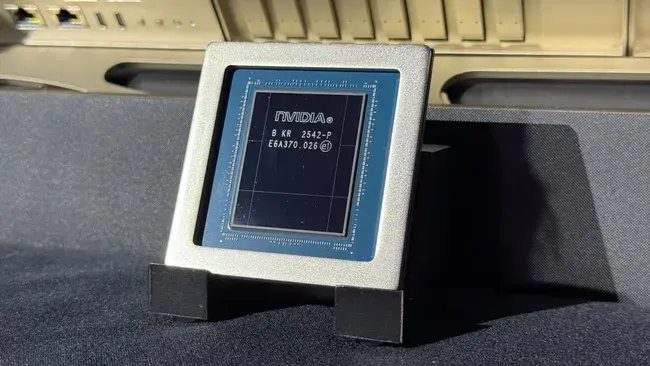
Tom's Hardware ☛ Nvidia offers restricted access to Vera CPU in first round of Linux benchmarks - 88-core monster competes with or beats Epyc and Xeon in selected tests
NVIDIA's new server CPU doesn't win outright in most tests, but it's running very close to AMD's EPYC, which is incredible for a first-generation custom server core from NVIDIA.
-
Extreme Tech ☛ Nvidia Vera CPU Competes With AMD Epyc and Intel Xeon in Early Linux Tests
The Linux specialists over at Phoronix have conducted the first tests of Nvidia's Vera CPU, comparing it to Intel's Xeon CPUs and AMD's Epyc chips. Early performance results suggest it's plenty powerful, although power draw was high. The benchmarks were selected by Nvidia; however, we'll want to see less-biased test results to draw a firm conclusion.
Vera is equipped with 88 Olympus ARM cores and supports 176 simultaneous threads. It supports up to 1.5 TB of LPDDR5X memory with up to 1.2 TB/s of bandwidth. That's impressive on paper, and it may be that real-world performance backs it up.
-
Klara ☛ Managing Cache and Direct IO for Databases on ZFS
Database workloads behave very differently from traditional file storage, requiring specialized caching and I/O strategies to maintain performance and consistency. This article explores how Direct IO works in OpenZFS, how it interacts with the ARC and database buffer caches, and when bypassing the filesystem cache can improve latency, throughput, and NVMe performance for database workloads.
-
LWN ☛ Interview session with Jonathan Corbet
The 'Linux' Foundation will be hosting a
live interview with LWN co-founder Jonathan Corbet. The event will
take place on Tuesday, June 2 at 8:00AM Pacific daylight time (UTC-7).
Registration is open for those who would like to attend.
-
LWN ☛ Andrew Morton's 2004 OLS keynote
I recently presented a brief tribute to Andrew Morton at the 2026 Linux Storage, Filesystem, Memory
Management, and BPF Summit; it included a suggestion that reading (or
re-reading) his 2004 Ottawa Linux Symposium keynote would be instructive.
This talk, given immediately after the Kernel
Summit session that decided to fundamentally change the kernel's
development model, tells a lot about how the kernel project got to where it
is today. The text of that speech was hosted on Groklaw, and has since
been replaced by crypto spam, which is rather less useful. In the hopes of
preserving this seminal moment, the transcript has been rescued thanks to the
Wayback Machine and is presented here.
-
ZDNet ☛ Rust will save Linux from AI, says Greg Kroah-Hartman
Now that doesn't mean Linux stable kernel maintainer Greg Kroah-Hartman thinks Rust is magic.
-
Yahoo News ☛ Linux Foundation Announces DNS-AID Project to Advance Decentralized AI Agent Discovery [Ed: Misuse of the Linux brand to sell and abuse people with slop]