
news
Distributions and Operating Systems: CachyOS, Qubes OS, Tails OS, TrueNAS
-
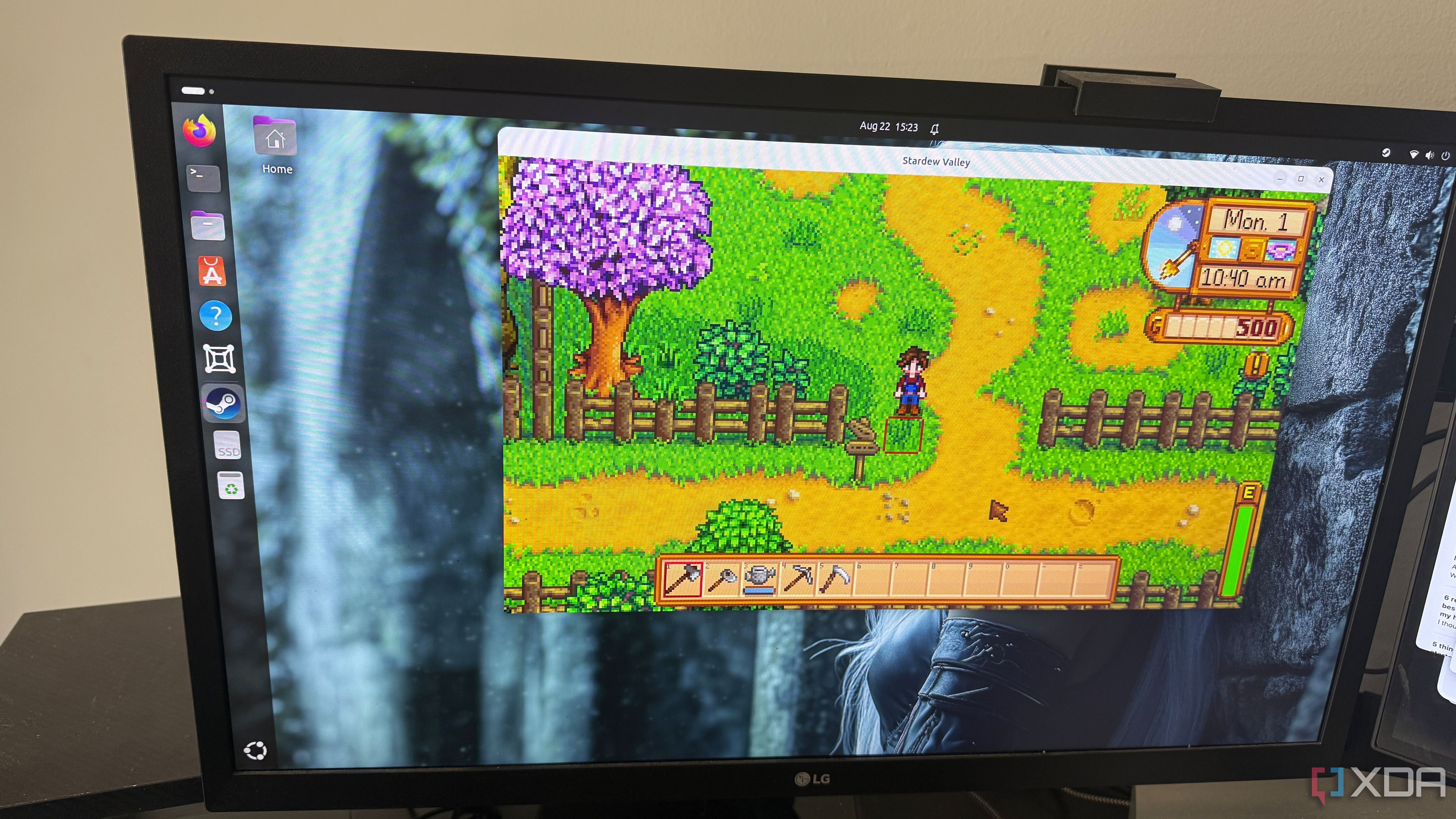
XDA ☛ 6 Linux distros that prove you don’t need Windows for gaming
Linux adoption by gamers has been growing rapidly over the last few years, and while a lot of that growth could be attributed to the missteps of Microsoft with the Windows platform, the distros themselves have to be given some credit. Valve put in a ton of legwork with the Proton compatibility layer, and combine that with the great work that has been done on Mesa and Vulkan, and many distros have genuine viability for gaming. Bazzite has become the standard in recent months (for good reason), but these 6 others have sneakily become easy to recommend.
-
XDA ☛ CachyOS proves Arch derivatives can actually improve on the original
Every product or app has its fanbase, and every fanbase has its purists. In the Linux community, Arch Linux is known for being one of the lightest, most bleeding-edge distros you can get, and its fans can sometimes be what you'd consider purists, insisting that the vanilla Arch experience is the way to go, despite its many variations.
And while yes, to a certain extent, some Arch variations make changes that aren't necessary as the default, one in particular as emerged as one of the best Linux experiences around. CachyOS, which I've covered before, is a very compelling Arch Linux variant, and it's arguably proven that Arch Linux variants can do more than just add unnecessary fluff. Sometimes, they can make things even better.
-
XDA ☛ This Linux distro is the most secure desktop I've ever used, and the most frustrating
I’ve used a lot of “secure” operating systems, but most of them feel like regular Linux with a few extra locks on the doors. Qubes OS is different because it treats your whole desktop like a set of separate rooms, each with its own key. That design changes how you browse, how you work, and how you think about risk. It also changes how often you mutter “why is this so complicated” under your breath.
Qubes OS is the closest thing to a truly defensive daily driver I’ve ever run, but it demands patience and planning to earn that payoff. The security gains are real, and they show up in the parts of computing we tend to hand-wave. At the same time, the friction is not an edge case, it’s the operating model. If you want the benefits without the frustration, you have to embrace what Qubes is trying to do.
-
HowTo Geek ☛ Why I keep a "privacy-hardened" Linux distro USB on my keychain
Imagine an operating system that forgets everything you did once you shut down your computer. One that not only erases all traces of your activity, but also protects your privacy online. That's exactly what Tails is meant to be.
How the Tails OS works
Instead of running it off a hard drive or SSD like Windows or macOS normally do, Tails is an operating system that runs entirely off a USB stick. It's a portable system that you can carry in your pocket. A USB drive with Tails loaded on it can plug into any computer and boot into the Tails OS instead of that computer's regular operating system. It's also completely free and open-source.
-
XDA ☛ TrueNAS is free, so why would anyone pay for a NAS OS?
HexOS has been doing the rounds recently thanks to a spate of updates which have brought it ever closer to its 1.0 milestone. The first "Powered by TrueNAS" operating system, HexOS is essentially a wrapper for TrueNAS with a friendlier user interface and a focus on typical users. TrueNAS is aimed at more technical users, whereas HexOS aims to put it in the same conversation as Unraid or OpenMediaVault.
Time has value, and TrueNAS isn't exactly the easiest operating system to understand for a newcomer. The UI is quite clunky, containers can be confusing, and even shares can prove to be a difficult task when it comes to setting up NFS or SMB permissions.
As a result, a $199 HexOS license or a $129 Unraid lifetime license isn't really competing against "free" in the sense you may think it typically would. Instead, it's competing against the hours you'll spend reading documentation, watching YouTube tutorials, scrolling through forum posts, and troubleshooting errors. For some people, that time is genuinely enjoyable, and if that's you, just know that I feel the same way. It's why I still have a separate TrueNAS instance running, too. But for many users, those hours represent time stolen from family, hobbies, or work.