
news
The FOSS Force Interview With Richard Stallman
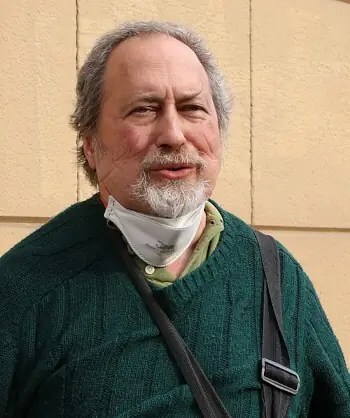
Richard Stallman needs no introduction, especially for an audience that reads FOSS Force. Without him, the free software movement would at the very least be much different, and the four software freedoms would possibly still be waiting for someone to give voice to them. There would also be no GPL, the first general-purpose copyleft license, written long before there was such a thing as open source. Speaking of that, without Stallman there would also likely be no open source, although I’m pretty sure that he wouldn’t see that as such a bad thing.
[...]
Richard M. Stallman: When I announced the GNU Project in late 1983, IBM PCs and clones were widespread. Their users were not yet a majority of people, even in the US, but they were no longer unusual. Therefore, experience with nonfree software and how it restricted the user was no longer unusual. However, most users had been taught to regard being under the power of software companies as normal and legitimate, so even when this screwed them, it rarely occurred to them that things could be otherwise. Few had encountered the pre-GNU free software, so they did not know what users had lost.
[...]
RMS: Around the end of 1992, I heard that Torvalds had freed Linux. I asked a friend to look at it for me and report. He told me that it had two practical drawbacks: it followed the design and interfaces of AT&T’s version of Unix (System V) rather than the superior Berkeley version, and it was nonportable (thus running only on PC clones). I decided to move ahead with the GNU HURD, which I expected would be much better, and soon.
However, HURD development ran into difficulties. For instance, our debugger — GDB — needed to be extended to handle multi-threaded programs well, and this went slowly because the GDB developers tended to focus on the Unix platforms that real users used rather than on the HURD and the Mach microkernel. By 1994 I decided we should support the development of a GNU/Linux variant that would follow our ethical principles. So I had the FSF fund development of Debian GNU/Linux.
[...]
I have to address this by criticizing that terminology. The term “artificial intelligence” is the basis of a marketing hype campaign. I define “intelligence” as the ability to know or understand, at least within some domain. Such software does exist, for limited domains. However, when people talk about “using AI,” they are generally referring to large language models. Those have no intelligence. They play with arranging words into text, but they do not understand the meaning of their textual inputs, nor the meaning of their textual responses.