



The many derivatives of the CP/M operating system
Submitted by Roy Schestowitz on Thursday 4th of August 2022 03:17:27 PM
Filed under
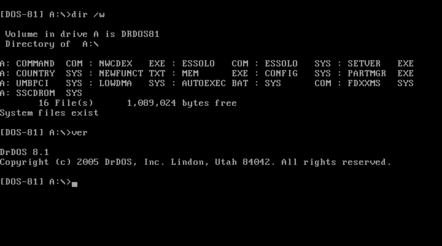
Its new licence says that "CP/M and its derivatives" are free for anyone to modify and redistribute. But which derivatives?
The original Intel 8080 version of CP/M had a relatively brief reign: it appeared in 1974, just seven years before the IBM PC launched with PC DOS. The PC, and its many clones running MS-DOS, rapidly outsold and replaced CP/M.
But still, CP/M was, for a while, the industry-standard microcomputer OS, making Digital Research a powerful and important company. Wealthy companies that lose dominance over a market they formerly controlled don't tend to just give up. Digital Research put a substantial R&D effort into expanding and enhancing CP/M, creating a large family of OSes. It had some significant wins and big sales. Some of those products are still in use. All those products are arguably "CP/M derivatives", and as such, Bryan Sparks' 2001 edict might have just open-sourced them all.
»
-

- Login or register to post comments
 Printer-friendly version
- 398 reads
 PDF version
More in Tux Machines
- Highlights
- Front Page
- Latest Headlines
- Archive
- Recent comments
- All-Time Popular Stories
- Hot Topics
- New Members
today's howtos
| Open Hardware: XON/XOFF and Raspberry Pi Pico
|
Security Leftovers
| How to Apply Accent Colour in Ubuntu Desktop
A step-by-step tutorial on how to apply accent colour in Ubuntu desktop (GNOME) with tips for Kubuntu and others.
|


 This section of TuxMachines will no longer have new stories in it (with some caveats, including this post). To see the latest stories go to


.svg_.png)

 Content (where original) is available under CC-BY-SA, copyrighted by original author/s.



Recent comments
2 days 8 hours ago
2 days 12 hours ago
2 days 12 hours ago
3 days 19 hours ago
3 days 20 hours ago
3 days 21 hours ago
3 days 21 hours ago
3 days 22 hours ago
4 days 28 min ago
4 days 2 hours ago