Language Selection

English French German Italian Portuguese Spanish

Programming Leftovers

Filed under
Development

  • Analyze Your Amazon Data with Python - Earthly Blog

    How much have you spent on Amazon? Well, that’s a kind of interesting question to find an answer to. And it’s the type of question I like to answer using Python.

  • Is raku Dan RubberSonic? – Physics::Journey

    Raku is a great software language that draws on the scripting heritage of perl. The newly minted raku Dan modules provide Data ANalytics (geddit?) capabilities to raku for data science and engineering use cases. (Intro slides & demo video here). This is one in an occasional series of blog posts that seek to explore the whys & wherefores of raku Dan.

    I you want to check out more, warts and all, visit /r/rakulang at Reddit and ask away!

  • IntelliJ vs. Eclipse: Which is Better for Beginners?

    IDEs come in every shape and size and may often cater to multiple programming languages. However, some of these environments might have a language for which they are famous. That said, Java programmers often compare IntelliJ vs. Eclipse to find the better choice for beginners.

    Java is a pure object-oriented language, and both IntelliJ IDEA and Eclipse fulfill their purpose perfectly. Choosing to work with one over the other might seem like a choice that varies on the user’s comfort. Some may like tools that prove as a challenge but have better functionalities, while others want simple interfaces. So, let’s explore!

  • RStudio 2022.07.0: What’s New

    This post highlights some of the improvements in the latest RStudio IDE release 2022.07.0, code-named “Spotted Wakerobin”.

  • simstudy updated to version 0.5.0

    A new version of simstudy is available on CRAN. There are two major enhancements and several new features. In the “major” category, I would include (1) changes to survival data generation that accommodate hazard ratios that can change over time, as well as competing risks, and (2) the addition of functions to allow users to sample from existing data sets with replacement to generate “synthetic” data will real life distribution properties. Other less monumental, but important, changes were made: updates to functions genFormula and genMarkov, and two added utility functions, survGetParams and survParamPlot. (I did describe the survival data generation functions in two recent posts, here and here.)

  • Robin Donatello Talks About Growing an R Community at a State University

    Growing a user base for R at a university can be challenging at the best of times, especially when dealing with the silos that are present in the university system. Robin Donatello with the Chico R Users Group talks about how this issue became both easier and harder to deal with due to the pandemic.

More in Tux Machines

today's howtos

  • How to Change Comment Color in Vim – Fix Unreadable Blue Color

    Are you annoyed about the comment color in vim? The dark blue color of the comment is often hard to read. In this tutorial, we learn how to change the comment color in Vim. There are few methods we can use to look vim comment very readable.

  • How to Add Repository to Debian

    APT checks the health of all the packages, and dependencies of the package before installing it. APT fetches packages from one or more repositories. A repository (package source) is basically a network server. The term "package" refers to an individual file with a .deb extension that contains either all or part of an application. The normal installation comes with default repositories configured, but these contain only a few packages out of an ocean of free software available. In this tutorial, we learn how to add the package repository to Debian.

  • Making a Video of a Single Window

    I recently wanted to send someone a video of a program doing some interesting things in a single X11 window. Recording the whole desktop is easy (some readers may remember my post on Aeschylus which does just that) but it will include irrelevant (and possibly unwanted) parts of the screen, leading to unnecessarily large files. I couldn't immediately find a tool which did what I wanted on OpenBSD [1] but through a combination of xwininfo, FFmpeg, and hk I was able to put together exactly what I needed in short order. Even better, I was able to easily post-process the video to shrink its file size, speed it up, and contort it to the dimension requirements of various platforms. Here's a video straight out of the little script I put together: [...]

  • Things You Can And Can’t Do

    And it got me thinking about what you can and can’t do — what you do and don’t have control over.

  • allow-new-zones in BIND 9.16 on CentOS 8 Stream under SELinux

    We run these training systems with SELinux enabled (I wouldn’t, but my colleague likes it :-), and that’s the reason I aborted the lab: I couldn’t tell students how to solve the cause other than by disabling SELinux entirely, but there wasn’t enough time for that.

  • Will the IndieWeb Ever Become Mainstream?

    This is an interesting question, thanks for asking it, Jeremy. I do have some history with the IndieWeb, and some opinions, so let’s dive in.

    The short answer to the question is a resounding no, and it all boils down to the fact that the IndieWeb is really complicated to implement, so it will only ever appeal to developers.

  • How to Install CUPS Print Server on Ubuntu 22.04

    If your business has multiple personal computers in the network which need to print, then we need a device called a print server. Print server act intermediate between PC and printers which accept print jobs from PC and send them to respective printers. CUPS is the primary mechanism in the Unix-like operating system for printing and print services. It can allow a computer to act as a Print server. In this tutorial, we learn how to set up CUPS print server on Ubuntu 22.04.

Open Hardware: XON/XOFF and Raspberry Pi Pico

  • From XON/XOFF to Forward Incremental Search

    In the olden days of computing, software flow control with control codes XON and XOFF was a necessary feature that dumb terminals needed to support. When a terminal received more data than it could display, there needed to be a way for the terminal to tell the remote host to pause sending more data. The control code 19 was chosen for this. The control code 17 was chosen to tell the remote host to resume transmission of data.

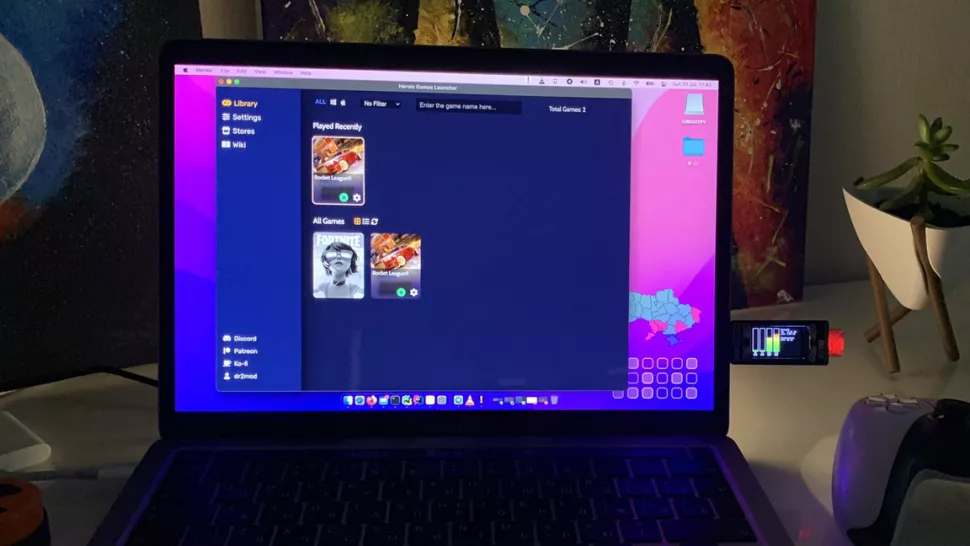
  • Raspberry Pi Pico Used in Plug and Play System Monitor | Tom's Hardware

    Dmytro Panin is at it again, creating a teeny system monitor for his MacBook from scratch with help from our favorite microcontroller, the Raspberry Pi Pico. This plug-and-play system monitor (opens in new tab) lets him keep a close eye on resource usage without having to close any windows or launch any third-party programs. The device is Pico-powered and plugs right into the MacBook to function. It has a display screen that showcases a custom GUI featuring four bar graphs that update in real-time to show the performance of different components, including the CPU, GPU, memory, and SSD usage. It makes it possible to see how hard your PC is running at a glance.

Security Leftovers

How to Apply Accent Colour in Ubuntu Desktop

A step-by-step tutorial on how to apply accent colour in Ubuntu desktop (GNOME) with tips for Kubuntu and others. Read more