



Devices: Arduino, Fairphone, and x86 Alternative to Raspberry Pi 4
Submitted by Roy Schestowitz on Sunday 24th of July 2022 12:22:13 AM
Filed under

-
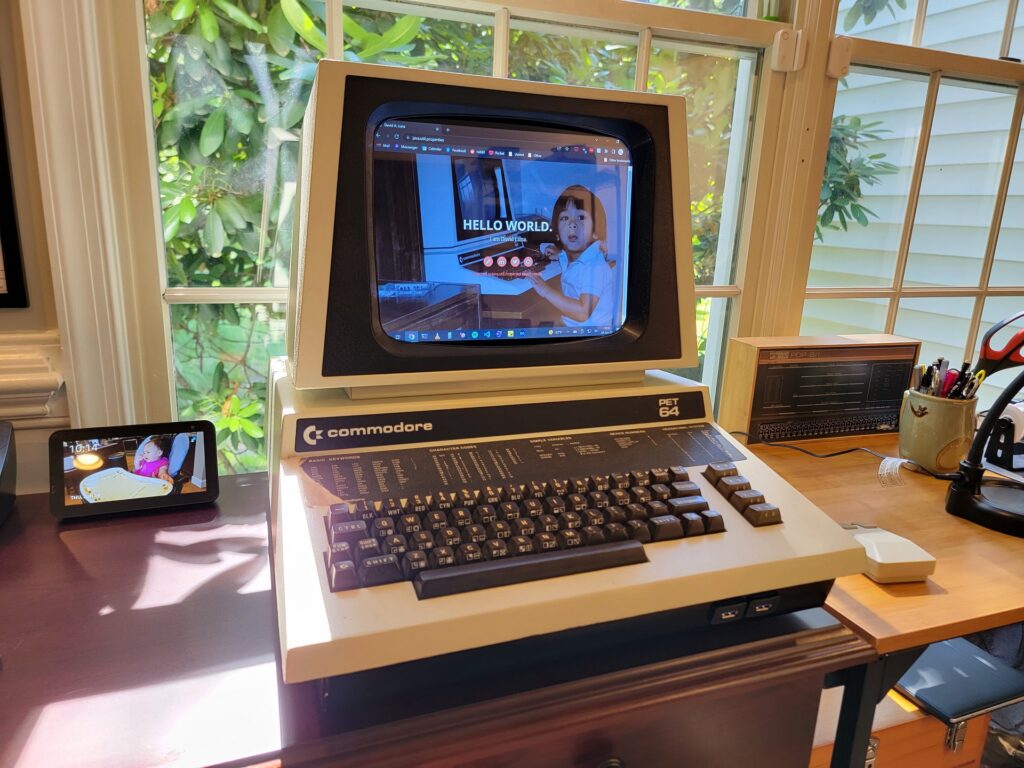
Converting a Commodore PET into a USB docking station | Arduino Blog
The Commodore 64 is one of the most iconic computers of all time and it is Commodore’s best known model. But Commodore made many other well-loved models, including the VIC-20, the Amiga, and the PET. The Commodore PET 64, which Commodore released late in the model range’s life for educational use, was Dave Luna’s first computer. Sadly, it bit the dust sometime in the ‘90s and Luna was never able to revive it. In 2005, he attempted to convert it into a PC, but never completed the project. Older and wiser, Luna was finally able to give the PET new life as a docking station.
Docking stations come in many forms with many different purposes, but the general idea is always to expand a laptop’s (or tablet’s) capabilities. In this case, it turns the connected laptop into a desktop experience with a dedicated screen and a full tactile keyboard. The keyboard wasn’t actually very good in the Commodore PET 64, but Luna has plans to upgrade it with a MechBoard64 to keep the original look with modern high-quality mechanical keyswitches. As it stands, the PET 64’s keyboard connects to the docked laptop and a 12” TFT LCD screen (in place of the PET 64’s original CRT monitor) acts as a second monitor for the laptop.
-
Soil Moisture Sensor with Arduino Uno
To measure the water level of a pot plant, analog soil moisture sensor is good to use as its implant inside the soil to measure the level. It is good to use in an irrigation system and plants watering system
-
Five years of responsible gold
For the past five years, Fairphone has been an active participant in a broad coalition within the Dutch gold sector aimed at ensuring greater respect for human rights, the environment and biodiversity in the gold value chain. This “gold covenant” was spearheaded by the Dutch Ministry of Foreign Affairs and co-signed by a variety of groups with an interest in the gold sector, including HIVOS/Stop Child Labour, Philips, Closing the Loop, and the Dutch Gold and Silver Federation (FGZ), as well as other parties like trade unions, importers and recyclers. Fairphone chaired the Gold Agreement task force on improving artisanal gold mining and responsible supply during the duration of the initiative. In June, this covenant came to an end; now comes the time to apply the lessons learned and make responsible gold the norm.
-
Business card-sized SBC ships with Intel Core Tiger Lake or AMD Ryzen V2000 processor - CNX Software
We’ve already written about the UP 4000 SBC as a more powerful x86 alternative to Raspberry Pi 4, but if it still does not cut it, AAEON de next-TGU8 or de next-V2K8 should as the business card-sized single board computers are equipped with respectively an Intel Tiger Lake processor up to a Core i7-1185G7E, or and AMD Ryzen Embedded V2000 SoC up to Ryzen Embedded V2516.
But the comparison stops at the size, as both SBCs offer sets of features different from the usual Raspberry Pi form factor with notably up to 16GB RAM, SATA and NVMe storage, dual Ethernet (1x 2.5GbE, 1x Gigabit Ethernet), dual 4K display output via HDMI and eDP, some USB 3.2 ports, as well as serial and I/O interfaces via headers.
»
-

- Login or register to post comments
 Printer-friendly version
- 1774 reads
 PDF version
More in Tux Machines
- Highlights
- Front Page
- Latest Headlines
- Archive
- Recent comments
- All-Time Popular Stories
- Hot Topics
- New Members
today's howtos
| Open Hardware: XON/XOFF and Raspberry Pi Pico
|
Security Leftovers
| How to Apply Accent Colour in Ubuntu Desktop
A step-by-step tutorial on how to apply accent colour in Ubuntu desktop (GNOME) with tips for Kubuntu and others.
|


 This section of TuxMachines will no longer have new stories in it (with some caveats, including this post). To see the latest stories go to


 Content (where original) is available under CC-BY-SA, copyrighted by original author/s.



Recent comments
2 days 5 hours ago
2 days 9 hours ago
2 days 9 hours ago
3 days 16 hours ago
3 days 17 hours ago
3 days 18 hours ago
3 days 18 hours ago
3 days 19 hours ago
3 days 21 hours ago
3 days 23 hours ago