



macOS vs. Linux: 5 Key Differences You Should Know
Submitted by Roy Schestowitz on Thursday 21st of July 2022 03:54:30 PM
Filed under



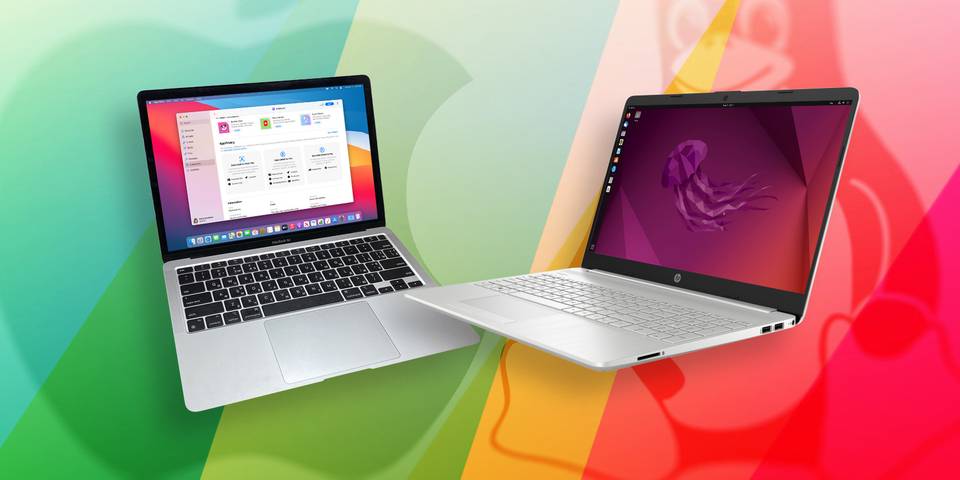
Much as these two operating systems have in common, they are unique in their own ways. Let's take a look at some key differences between macOS and Linux.
Brief History of macOS and Linux
The main parts of macOS and Linux are the kernel, core utilities, the GUI or desktop environment, and applications.
macOS is based on a BSD Unix kernel known as Darwin which is open-source. The other parts of macOS (for example, the GUI and core applications) are closed-source and proprietary. Apple builds and maintains these software systems and they come as part of your Mac device.
Apple adopted Unix into macOS in the early 2000s. Prior to that, macOS was based on a non-Unix operating system.
Linux on the other hand started out as a personal project and as a clone of the Unix operating system in the early 90s by Linus Torvalds. Strictly speaking, Linux is just the kernel. The operating system itself is made up of core parts such as the GNU utilities, and desktop environments such as GNOME, KDE, etc.

»
-

- Login or register to post comments
 Printer-friendly version
- 1526 reads
 PDF version
More in Tux Machines
- Highlights
- Front Page
- Latest Headlines
- Archive
- Recent comments
- All-Time Popular Stories
- Hot Topics
- New Members
today's howtos
| Open Hardware: XON/XOFF and Raspberry Pi Pico
|
Security Leftovers
| How to Apply Accent Colour in Ubuntu Desktop
A step-by-step tutorial on how to apply accent colour in Ubuntu desktop (GNOME) with tips for Kubuntu and others.
|

 This section of TuxMachines will no longer have new stories in it (with some caveats, including this post). To see the latest stories go to


 Content (where original) is available under CC-BY-SA, copyrighted by original author/s.



Recent comments
2 days 5 hours ago
2 days 9 hours ago
2 days 9 hours ago
3 days 16 hours ago
3 days 17 hours ago
3 days 18 hours ago
3 days 18 hours ago
3 days 19 hours ago
3 days 21 hours ago
3 days 23 hours ago