Language Selection

English French German Italian Portuguese Spanish

today's leftovers

Filed under
Misc

  • wxWidgets 3.2 update may need manual intervention

    wxWidgets 3.2 provides a Qt frontend in addition to the GTK3 one, so packages have been renamed from wxgtk- to wxwidgets-. The GTK2 frontend is no longer provided. If you have wxgtk2 installed, the upgrade will fail with

  • Why CP/M didn't have directory separators, and what if it had got them?

    CP/M did not support subdirectories, so it did not have a directory separator.

  • Weird Flex, but OK: Now you can officially turn these PCs, Macs into Chromebooks

    Google on Thursday officially released Chrome OS Flex, which aims to bring the web giant's mega-browser operating system to a wider range of systems.

    Flex was unveiled in February as a version of Chrome OS that could run on any modern-ish Intel or AMD (sorry, not Arm) processor. Since that debut, the number of devices certified to run Chrome OS Flex has almost doubled, from some 250 to more than 400, according to Google.

    Among certified models are several MacBook Air devices, Microsoft Surface, ASUS, Acer, and Lenovo machines along with a laundry list of Dell machines. Google plans to continually certify older devices for Flex.

    To get the Chrome OS experience – which, as the name suggests, involves doing pretty much everything on your desktop through the Chrome browser – you would need to buy a Chromebook with it installed, or go through a bit of a convoluted process to put the OS on a system. Chrome OS Flex is supposed to make that easy, and work on a range of non-Chromebooks.

  • Chromecast Connect

    It has been a while studying and working with the Chromecast Protocol. This protocol is proprietary, and officially only the Chrome browser, Android, and iOS platforms support casting to a Chromecast-enabled device.
    Now, Chromium is open source, and so is Android, but we would not want anything to do with Android for obvious reasons, not to mention this feature may be tucked away in Google Play Services.
    So we settle with Chromium which is written in C++. Thankfully almost all of the hard work was done by many other open source projects, notably Node CastV2. Not only this project provides a simple implementation for the Chromecast protocol but also a written explanation of the underlying stuff and how things actually work.
    All I need to figure out is how to implement that is C.

Google releases Chrome OS Flex for PCs and Macs

How to switch Crostini from Debian to Ubuntu

  • How to switch your ChromeOS Linux container from Debian to Ubuntu

    Linux on ChromeOS, a.k.a. Crostini, has been out of beta and available for quite some time. Users that want to leverage the flexibility and power of a Linux environment have access to a Linux terminal that opens the door to a plethora of executable packages that aren’t readily available on ChromeOS proper. Whether you’re looking to install an alternative browser or install powerful app development software, Linux on ChromeOS makes that chore a breeze.

    By default, the Linux container on ChromeOS runs the stable and secure distro known as Debian. More specifically, Debian 11 or “Bullseye.” While Debian offers many of the tools that Linux users are looking for, other distros offer up more flexibility and access to a wider range of packages without the need to add extra repositories.

Comment viewing options

Select your preferred way to display the comments and click "Save settings" to activate your changes.

More in Tux Machines

today's howtos

  • How to Change Comment Color in Vim – Fix Unreadable Blue Color

    Are you annoyed about the comment color in vim? The dark blue color of the comment is often hard to read. In this tutorial, we learn how to change the comment color in Vim. There are few methods we can use to look vim comment very readable.

  • How to Add Repository to Debian

    APT checks the health of all the packages, and dependencies of the package before installing it. APT fetches packages from one or more repositories. A repository (package source) is basically a network server. The term "package" refers to an individual file with a .deb extension that contains either all or part of an application. The normal installation comes with default repositories configured, but these contain only a few packages out of an ocean of free software available. In this tutorial, we learn how to add the package repository to Debian.

  • Making a Video of a Single Window

    I recently wanted to send someone a video of a program doing some interesting things in a single X11 window. Recording the whole desktop is easy (some readers may remember my post on Aeschylus which does just that) but it will include irrelevant (and possibly unwanted) parts of the screen, leading to unnecessarily large files. I couldn't immediately find a tool which did what I wanted on OpenBSD [1] but through a combination of xwininfo, FFmpeg, and hk I was able to put together exactly what I needed in short order. Even better, I was able to easily post-process the video to shrink its file size, speed it up, and contort it to the dimension requirements of various platforms. Here's a video straight out of the little script I put together: [...]

  • Things You Can And Can’t Do

    And it got me thinking about what you can and can’t do — what you do and don’t have control over.

  • allow-new-zones in BIND 9.16 on CentOS 8 Stream under SELinux

    We run these training systems with SELinux enabled (I wouldn’t, but my colleague likes it :-), and that’s the reason I aborted the lab: I couldn’t tell students how to solve the cause other than by disabling SELinux entirely, but there wasn’t enough time for that.

  • Will the IndieWeb Ever Become Mainstream?

    This is an interesting question, thanks for asking it, Jeremy. I do have some history with the IndieWeb, and some opinions, so let’s dive in.

    The short answer to the question is a resounding no, and it all boils down to the fact that the IndieWeb is really complicated to implement, so it will only ever appeal to developers.

  • How to Install CUPS Print Server on Ubuntu 22.04

    If your business has multiple personal computers in the network which need to print, then we need a device called a print server. Print server act intermediate between PC and printers which accept print jobs from PC and send them to respective printers. CUPS is the primary mechanism in the Unix-like operating system for printing and print services. It can allow a computer to act as a Print server. In this tutorial, we learn how to set up CUPS print server on Ubuntu 22.04.

Open Hardware: XON/XOFF and Raspberry Pi Pico

  • From XON/XOFF to Forward Incremental Search

    In the olden days of computing, software flow control with control codes XON and XOFF was a necessary feature that dumb terminals needed to support. When a terminal received more data than it could display, there needed to be a way for the terminal to tell the remote host to pause sending more data. The control code 19 was chosen for this. The control code 17 was chosen to tell the remote host to resume transmission of data.

  • Raspberry Pi Pico Used in Plug and Play System Monitor | Tom's Hardware

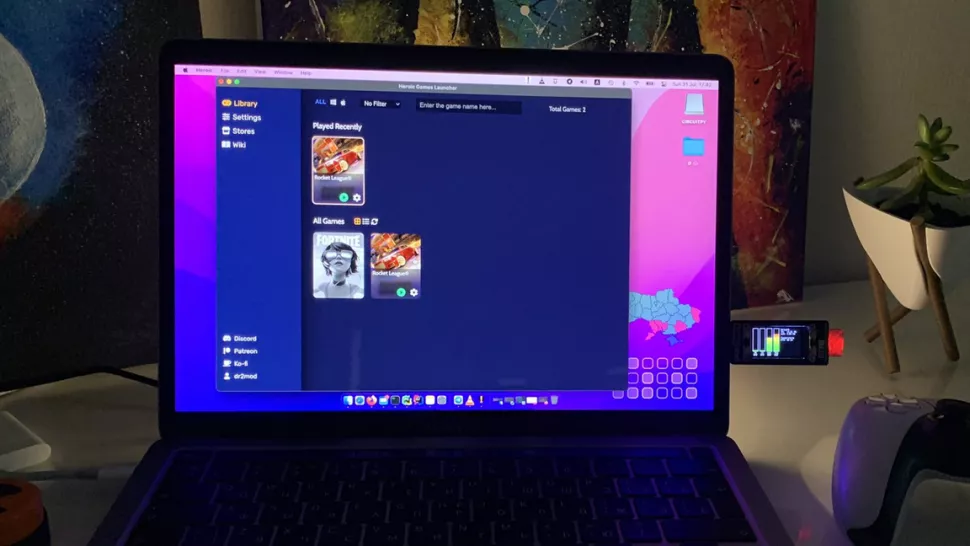
    Dmytro Panin is at it again, creating a teeny system monitor for his MacBook from scratch with help from our favorite microcontroller, the Raspberry Pi Pico. This plug-and-play system monitor (opens in new tab) lets him keep a close eye on resource usage without having to close any windows or launch any third-party programs. The device is Pico-powered and plugs right into the MacBook to function. It has a display screen that showcases a custom GUI featuring four bar graphs that update in real-time to show the performance of different components, including the CPU, GPU, memory, and SSD usage. It makes it possible to see how hard your PC is running at a glance.

Security Leftovers

How to Apply Accent Colour in Ubuntu Desktop

A step-by-step tutorial on how to apply accent colour in Ubuntu desktop (GNOME) with tips for Kubuntu and others. Read more