Language Selection

English French German Italian Portuguese Spanish

Open Hardware: Radio, Compute Module 4, and More

Filed under
Hardware

  • Reverse-engineering the Apollo spacecraft's FM radio

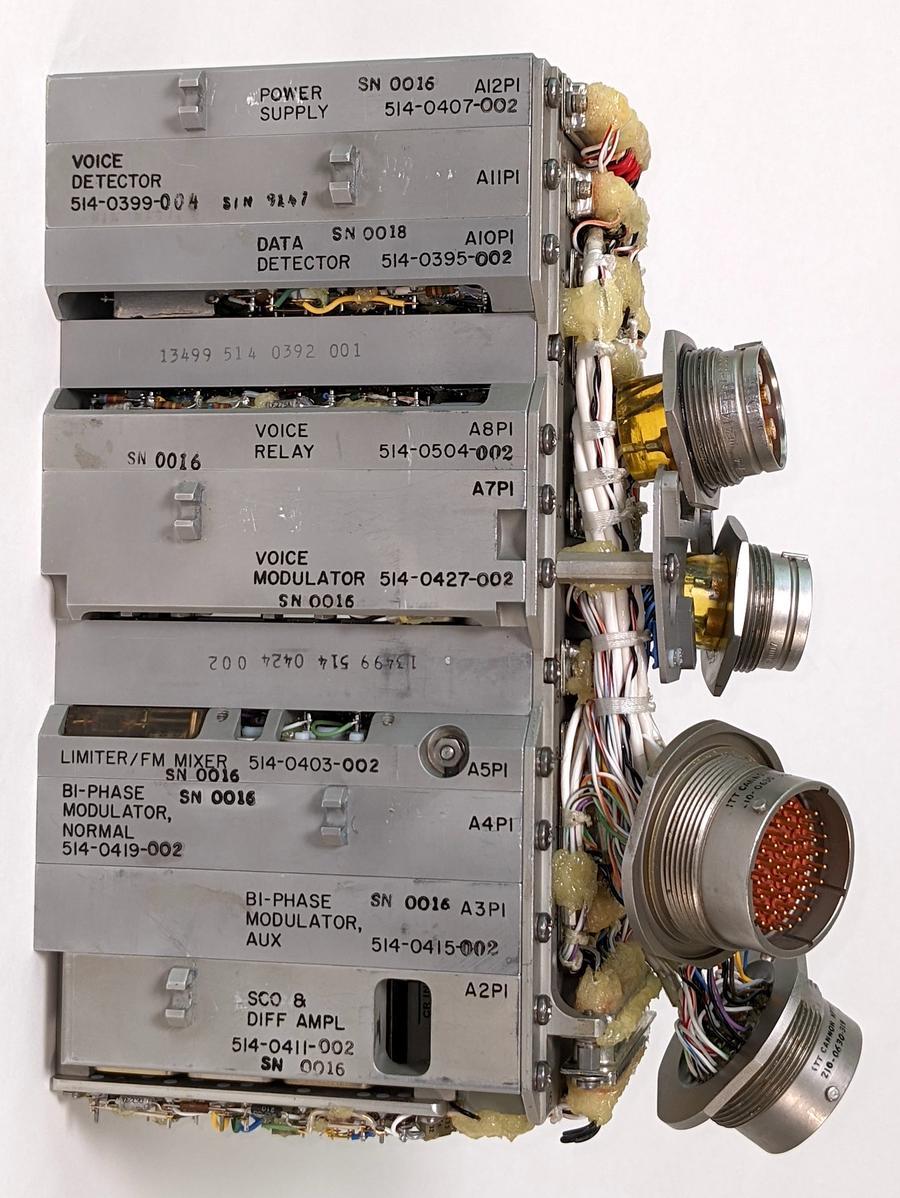
    Many systems worked together for communication, but I'm focusing on a single module: the voice detector inside the premodulation processor that performed the FM demodulation. The block diagram below shows the operation of the voice detector; I've grayed out the data detector.6 The input contains the voice signal and the data signal at different frequencies; a band-pass filter (green) separates out the voice signal at 30 kilohertz. Next, the blue triangle7 demodulates the FM signal using a "clipper discriminator" circuit. The cyan triangle is an amplifier, producing the "up voice" output signal (red), so-called because it had been transmitted "up" from a ground station. I'll explain this circuitry in detail below.

  • PTP and IEEE-1588 hardware timestamping on the Raspberry Pi CM4

    PTP is more prevalent in HFT (High Frequency Trading) in finance, scientific research, and distributed databases that need highly accurate timings.

    But with a tiny Compute Module 4 able to control hardware timestamps—plus the plethora of available high-quality GPS HATs for the Pi—maybe highly-accurate time could be more democratized!

  • Hackaday Podcast 176: Freezing Warm Water, Hacking Lenses, Hearing Data, And Watching YouTube On A PET

    It’s podcast time again, and this week Editor-in-Chief Elliot Williams sat down with Staff Writer Dan Maloney to review the best hacks on the planet, and a few from off. We’ll find out how best to capture lightning, debate the merits of freezing water — or ice cream — when it’s warm, and see if we can find out what R2D2 was really talking about with all those bleeps and bloops. Once we decode that, it’ll be time to find out what Tom Nardi was up to while the boss was away with his hidden message in episode 174, and how analog-encoded digital data survives the podcast production and publication chain. But surely you can’t watch a YouTube video on a Commodore PET, can you? As it turns out, that’s not a problem, and neither apparently is 3D printing a new ear.

More in Tux Machines

today's howtos

  • How to Change Comment Color in Vim – Fix Unreadable Blue Color

    Are you annoyed about the comment color in vim? The dark blue color of the comment is often hard to read. In this tutorial, we learn how to change the comment color in Vim. There are few methods we can use to look vim comment very readable.

  • How to Add Repository to Debian

    APT checks the health of all the packages, and dependencies of the package before installing it. APT fetches packages from one or more repositories. A repository (package source) is basically a network server. The term "package" refers to an individual file with a .deb extension that contains either all or part of an application. The normal installation comes with default repositories configured, but these contain only a few packages out of an ocean of free software available. In this tutorial, we learn how to add the package repository to Debian.

  • Making a Video of a Single Window

    I recently wanted to send someone a video of a program doing some interesting things in a single X11 window. Recording the whole desktop is easy (some readers may remember my post on Aeschylus which does just that) but it will include irrelevant (and possibly unwanted) parts of the screen, leading to unnecessarily large files. I couldn't immediately find a tool which did what I wanted on OpenBSD [1] but through a combination of xwininfo, FFmpeg, and hk I was able to put together exactly what I needed in short order. Even better, I was able to easily post-process the video to shrink its file size, speed it up, and contort it to the dimension requirements of various platforms. Here's a video straight out of the little script I put together: [...]

  • Things You Can And Can’t Do

    And it got me thinking about what you can and can’t do — what you do and don’t have control over.

  • allow-new-zones in BIND 9.16 on CentOS 8 Stream under SELinux

    We run these training systems with SELinux enabled (I wouldn’t, but my colleague likes it :-), and that’s the reason I aborted the lab: I couldn’t tell students how to solve the cause other than by disabling SELinux entirely, but there wasn’t enough time for that.

  • Will the IndieWeb Ever Become Mainstream?

    This is an interesting question, thanks for asking it, Jeremy. I do have some history with the IndieWeb, and some opinions, so let’s dive in.

    The short answer to the question is a resounding no, and it all boils down to the fact that the IndieWeb is really complicated to implement, so it will only ever appeal to developers.

  • How to Install CUPS Print Server on Ubuntu 22.04

    If your business has multiple personal computers in the network which need to print, then we need a device called a print server. Print server act intermediate between PC and printers which accept print jobs from PC and send them to respective printers. CUPS is the primary mechanism in the Unix-like operating system for printing and print services. It can allow a computer to act as a Print server. In this tutorial, we learn how to set up CUPS print server on Ubuntu 22.04.

Open Hardware: XON/XOFF and Raspberry Pi Pico

  • From XON/XOFF to Forward Incremental Search

    In the olden days of computing, software flow control with control codes XON and XOFF was a necessary feature that dumb terminals needed to support. When a terminal received more data than it could display, there needed to be a way for the terminal to tell the remote host to pause sending more data. The control code 19 was chosen for this. The control code 17 was chosen to tell the remote host to resume transmission of data.

  • Raspberry Pi Pico Used in Plug and Play System Monitor | Tom's Hardware

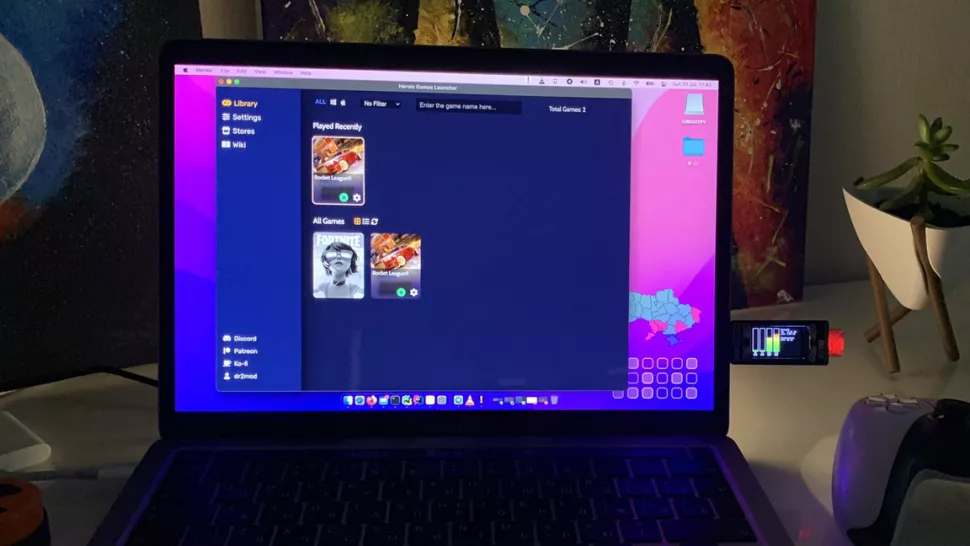
    Dmytro Panin is at it again, creating a teeny system monitor for his MacBook from scratch with help from our favorite microcontroller, the Raspberry Pi Pico. This plug-and-play system monitor (opens in new tab) lets him keep a close eye on resource usage without having to close any windows or launch any third-party programs. The device is Pico-powered and plugs right into the MacBook to function. It has a display screen that showcases a custom GUI featuring four bar graphs that update in real-time to show the performance of different components, including the CPU, GPU, memory, and SSD usage. It makes it possible to see how hard your PC is running at a glance.

Security Leftovers

How to Apply Accent Colour in Ubuntu Desktop

A step-by-step tutorial on how to apply accent colour in Ubuntu desktop (GNOME) with tips for Kubuntu and others. Read more