



today's howtos
Submitted by Roy Schestowitz on Thursday 23rd of June 2022 09:20:34 AM
Filed under 
-
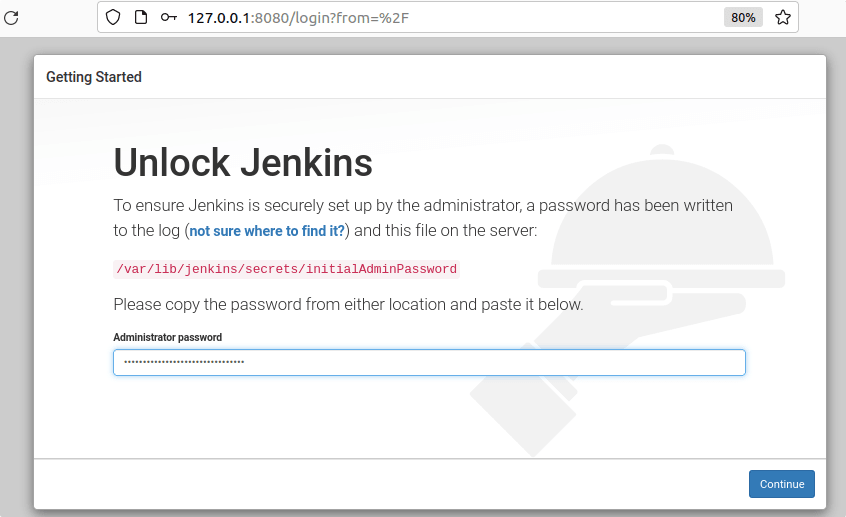
How to Install Jenkins on Ubuntu 22.04 or 20.04 Linux - Linux Shout
Learn the steps and commands to install Jenkins software on Ubuntu 22.04 LTS Jammy JellyFish or 20.04 Focal Fossa Linux.
Jenkins is a software common in the field of professional software development. When more than one developer is working on a software project, it becomes confusing when all of their changes are put together. To solve this Jenkins comes in to picture. Jenkins is a Continuous Integration System (CI system) programmed in Java, which is used in agile software development: It ensures that small code changes are always immediately tested and imported into the software. Jenkins was first known as Hudson but after some dispute, all developers involved in this (open source) project decided to rename it to Jenkins.
Hence, in a few words, Jenkins is an open-source project that helps software developers in development by automating various aspects of software app coding such as building, testing, and deploying…
-
How to Install SUSE Linux Enterprise Server 15 SP4
SUSE Enterprise Linux Server (SLES) is a modern and modular Linux distribution that was developed mainly for servers and mainframes. It focuses on supporting production workloads and is typically used by large organizations to host and run applications.
SUSE also supports traditional IT environments and is also available for desktop/workstation lovers as SUSE Enterprise Linux Desktop (SLED). Check out the release notes for more information about SLES 15 SP4.
SUSE Enterprise Linux Server provides a 60-day Evaluation that allows you to get patches and updates.
In this guide, we will demonstrate how to install SUSE Enterprise Linux Server 15 SP4.
-
How to Use Grep to Extract Emails from a File in Linux
If you have once crossed paths with data entry and extraction tasks either as a freelancing virtual assistant or for a personal/work project, you have understood the importance of data organization and management. The Linux operating system always transforms its users into data specialists.
An important piece of data that is irreplaceable in both personal and work projects is the email address. It uniquely identifies and links specific user information within a data management system.
Using an email address as a primary data reference point meets the following objectives.
-
How to Watch a Growing Size of a File in Linux
Linux operating system distributions are masters at solving computing riddles. These operating system distributions do not entertain computing myths. Therefore, its open-source attribute makes all Linux OS activities transparent to its users.
This article guide will try to uncover the possibility of monitoring the growing size of a file in a Linux operating system environment.
»
-

- Login or register to post comments
 Printer-friendly version
- 4139 reads
 PDF version
More in Tux Machines
- Highlights
- Front Page
- Latest Headlines
- Archive
- Recent comments
- All-Time Popular Stories
- Hot Topics
- New Members
digiKam 7.7.0 is released
After three months of active maintenance and another bug triage, the digiKam team is proud to present version 7.7.0 of its open source digital photo manager. See below the list of most important features coming with this release.
|
Dilution and Misuse of the "Linux" Brand
|
Samsung, Red Hat to Work on Linux Drivers for Future Tech
The metaverse is expected to uproot system design as we know it, and Samsung is one of many hardware vendors re-imagining data center infrastructure in preparation for a parallel 3D world.
Samsung is working on new memory technologies that provide faster bandwidth inside hardware for data to travel between CPUs, storage and other computing resources. The company also announced it was partnering with Red Hat to ensure these technologies have Linux compatibility.
|
today's howtos
|


 Content (where original) is available under CC-BY-SA, copyrighted by original author/s.



Recent comments
1 year 11 weeks ago
1 year 11 weeks ago
1 year 11 weeks ago
1 year 11 weeks ago
1 year 11 weeks ago
1 year 11 weeks ago
1 year 11 weeks ago
1 year 11 weeks ago
1 year 11 weeks ago
1 year 11 weeks ago