



Hardware, Modding, and Programming
Submitted by Roy Schestowitz on Monday 13th of June 2022 03:58:59 PM
Filed under 

-
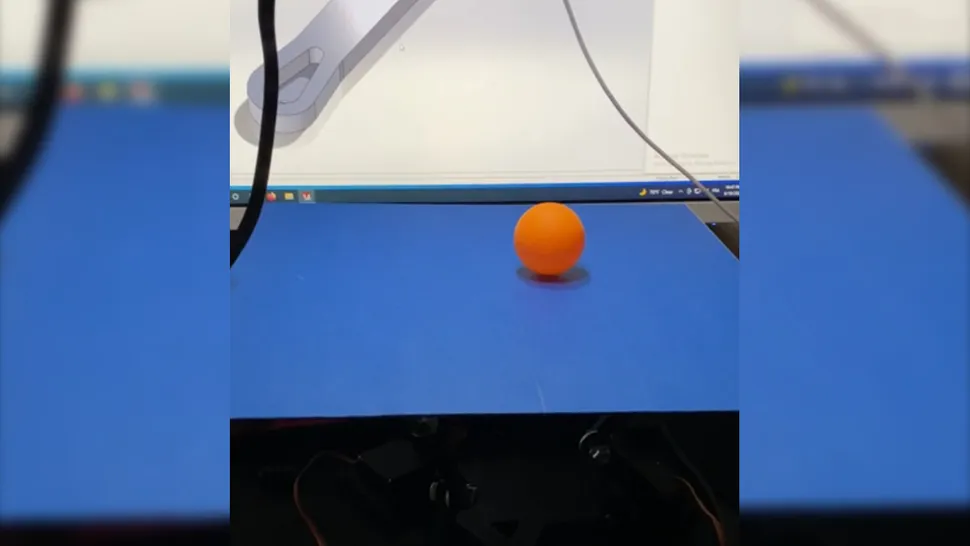
Raspberry Pi Keeps Ball From Falling Off Plate Using AI | Tom's Hardware
Finding the right angle to approach a Raspberry Pi project can be tricky. Still, maker and developer Parisiancyclist, as he’s known on Reddit, has found a happy balance with this mesmerizing ball on a plate project (opens in new tab). With the help of a Raspberry Pi, it automatically tilts a plate as needed to prevent a ball from falling over the edge.
According to Parisiancyclist, the project took roughly a week and a half to develop from scratch. He not only developed the physical plate tilting apparatus but also coded the project to use AI to evaluate the ball’s location and determine how much to angle the plate to keep it from falling off.
-
Using the U-Boot Extension Board Manager - BeagleBone Boards Example - Bootlin's blog
As explained in the first two blog posts, the BeagleBone boards are supported by a wide number of extension boards, called capes.
When such a cape is plugged in, the description of the devices connected to the board should be updated accordingly. As the available hardware is described by a Device Tree, the added devices on the cape should be described using a Device Tree Overlay, as described in the first blog post.
-
Avnet introduces SMARC module based on NXP’s i.MX 8M processor
Avnet has launched the SM2S-IMX8ULP which is compliant with the Smart Mobility Architecture (SMARC) 2.1.1 standard form factor. The scalable device integrates the i.MX 8M Arm processor architecture from NXP and runs on Linux, Android and Microsoft Azure Sphere.
The SM2S-IMX8ULP SMARC 2.1.1 has the option to integrate the dual or single core ARM Cortex-A35 processor (up to 1GHz), the Arm Cortex-M33 real-time core (up to 216MHz) and the Vivante GC NanoUlta 3D GPU. The Vivante GPU can support OpenGL ES (1.0, 2.0, 3.1), Vulkan and OpenCL 1.2.
-
Forlinx introduces Renesas RZ/G2L system-on-module and development board - CNX Software
Renesas RZ/G2L or RZ/V2L Cortex-A55/M33 processors have found their way into several system-on-modules and single board computers recently with the likes of Geniatech AHAURA board, Avnet RZBoard, or ARIES Embedded MSRZG2UL OSM module among others.
Forlinx Embedded has joined the fray with the Renesas RZ/G2L-based FET-G2LD-C system-on-module, and a corresponding OK-G2LD-C development board with plenty of I/Os including dual Gigabit Ethernet, RS485 and CAN Bus interfaces, built-in WiFi and Bluetooth, plus an optional EC20 4G mini PCIe module.
-
Qt Online Installer and Installer Framework 4.4.0 released
Qt Online Installer and Installer Framework 4.4.0 were released today.
»
-

- Login or register to post comments
 Printer-friendly version
- 1583 reads
 PDF version
More in Tux Machines
- Highlights
- Front Page
- Latest Headlines
- Archive
- Recent comments
- All-Time Popular Stories
- Hot Topics
- New Members
digiKam 7.7.0 is released
After three months of active maintenance and another bug triage, the digiKam team is proud to present version 7.7.0 of its open source digital photo manager. See below the list of most important features coming with this release.
|
Dilution and Misuse of the "Linux" Brand
|
Samsung, Red Hat to Work on Linux Drivers for Future Tech
The metaverse is expected to uproot system design as we know it, and Samsung is one of many hardware vendors re-imagining data center infrastructure in preparation for a parallel 3D world.
Samsung is working on new memory technologies that provide faster bandwidth inside hardware for data to travel between CPUs, storage and other computing resources. The company also announced it was partnering with Red Hat to ensure these technologies have Linux compatibility.
|
today's howtos
|


 Content (where original) is available under CC-BY-SA, copyrighted by original author/s.



Recent comments
1 year 11 weeks ago
1 year 11 weeks ago
1 year 11 weeks ago
1 year 11 weeks ago
1 year 11 weeks ago
1 year 11 weeks ago
1 year 11 weeks ago
1 year 11 weeks ago
1 year 11 weeks ago
1 year 11 weeks ago