



5 surprising things I do with Linux
Submitted by Rianne Schestowitz on Wednesday 11th of May 2022 02:40:36 PM
Filed under 
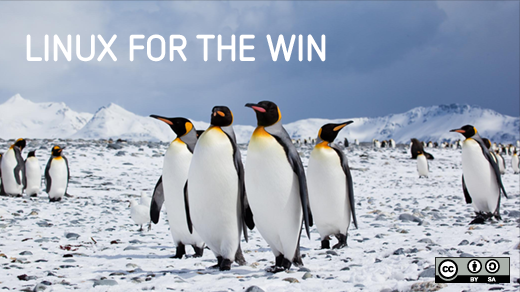
OK, I admit Linux on servers isn't at all surprising. In fact, to people who know of Linux but don't use Linux themselves, a data center is usually the first thing that pops into their heads when "Linux" is mentioned. The problem with that assumption is that it can make it seem obvious that Linux ought to be great on the server, as if Linux doesn't even have to try. It's a flattering sentiment, but the fact is that Linux is great on servers because there's a monumental effort across global development teams to make Linux especially effective at what it does.
It isn't by chance that Linux is the robust operating system that powers most of the internet, most of the cloud, nearly all the supercomputers in existence, and more. Linux isn't stagnate, and while it has a rich history behind it, it's not so steeped in tradition that it fails to progress. New technologies are being developed all the time, and Linux is a part of that progress. Modern Linux adapts to growing demands from a changing world to make it possible for systems administrators to provide networked services to people all over the world.
It's not everything Linux can do, but it's no small feat, either.

»
-

- Login or register to post comments
 Printer-friendly version
- 1262 reads
 PDF version
More in Tux Machines
- Highlights
- Front Page
- Latest Headlines
- Archive
- Recent comments
- All-Time Popular Stories
- Hot Topics
- New Members
digiKam 7.7.0 is released
After three months of active maintenance and another bug triage, the digiKam team is proud to present version 7.7.0 of its open source digital photo manager. See below the list of most important features coming with this release.
|
Dilution and Misuse of the "Linux" Brand
|
Samsung, Red Hat to Work on Linux Drivers for Future Tech
The metaverse is expected to uproot system design as we know it, and Samsung is one of many hardware vendors re-imagining data center infrastructure in preparation for a parallel 3D world.
Samsung is working on new memory technologies that provide faster bandwidth inside hardware for data to travel between CPUs, storage and other computing resources. The company also announced it was partnering with Red Hat to ensure these technologies have Linux compatibility.
|
today's howtos
|


 Content (where original) is available under CC-BY-SA, copyrighted by original author/s.



Recent comments
1 year 11 weeks ago
1 year 11 weeks ago
1 year 11 weeks ago
1 year 11 weeks ago
1 year 11 weeks ago
1 year 11 weeks ago
1 year 11 weeks ago
1 year 11 weeks ago
1 year 11 weeks ago
1 year 11 weeks ago