



Cameras: It’s Complicated
Submitted by Roy Schestowitz on Monday 9th of May 2022 04:43:35 PM
Filed under 
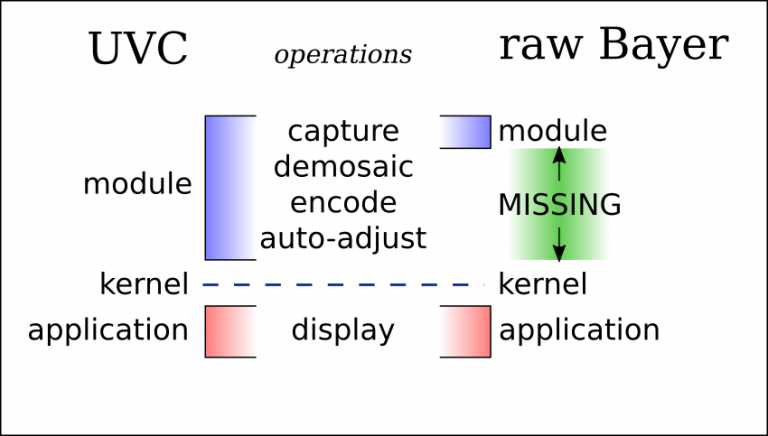
Two years before I started working on cameras for the Librem 5, I thought the work would go something like this: first, write a driver, then maybe calibrate the colors, connect to the camera support infrastructure, and bam! PureOS users on the phone would then do teleconferences with Jitsi or snap selfies with Cheese, just like they can on laptops.
The title of this blog post already gives away what happened. I wrote a driver and connected it up, yet teleconferences remain in the future. In fact, our version of Megapixels is the only app that can shoot photos on the Librem 5 today, and that’s because it received special attention. How come? Aren’t cameras pretty simple in the end? Light in, pixels out. That’s pretty plug-and-play!
Well actually, no. Cameras can be made of a multitude of components, and light sensors are just one piece of the puzzle. There are cameras that output raw light values, but the whole module also includes mechanical parts like a flash light, focus motor, or one for zoom, or maybe active image stabilization actuators. There are also Image Signals Processors (ISPs) which can do a multitude of tasks, like debayering, denoising, lens correction, color balance, color conversions, and more.

Also: Bee Motion ESP32-S2 PIR motion sensor offers GPIOs, over a year of battery life - CNX Software
»
-

- Login or register to post comments
 Printer-friendly version
- 1570 reads
 PDF version
More in Tux Machines
- Highlights
- Front Page
- Latest Headlines
- Archive
- Recent comments
- All-Time Popular Stories
- Hot Topics
- New Members
digiKam 7.7.0 is released
After three months of active maintenance and another bug triage, the digiKam team is proud to present version 7.7.0 of its open source digital photo manager. See below the list of most important features coming with this release.
|
Dilution and Misuse of the "Linux" Brand
|
Samsung, Red Hat to Work on Linux Drivers for Future Tech
The metaverse is expected to uproot system design as we know it, and Samsung is one of many hardware vendors re-imagining data center infrastructure in preparation for a parallel 3D world.
Samsung is working on new memory technologies that provide faster bandwidth inside hardware for data to travel between CPUs, storage and other computing resources. The company also announced it was partnering with Red Hat to ensure these technologies have Linux compatibility.
|
today's howtos
|


 Content (where original) is available under CC-BY-SA, copyrighted by original author/s.



Recent comments
1 year 11 weeks ago
1 year 11 weeks ago
1 year 11 weeks ago
1 year 11 weeks ago
1 year 11 weeks ago
1 year 11 weeks ago
1 year 11 weeks ago
1 year 11 weeks ago
1 year 11 weeks ago
1 year 11 weeks ago