



Free Software: mdSilo, Greenwash, and Magda
Submitted by Roy Schestowitz on Sunday 8th of May 2022 09:41:23 PM
Filed under 
-
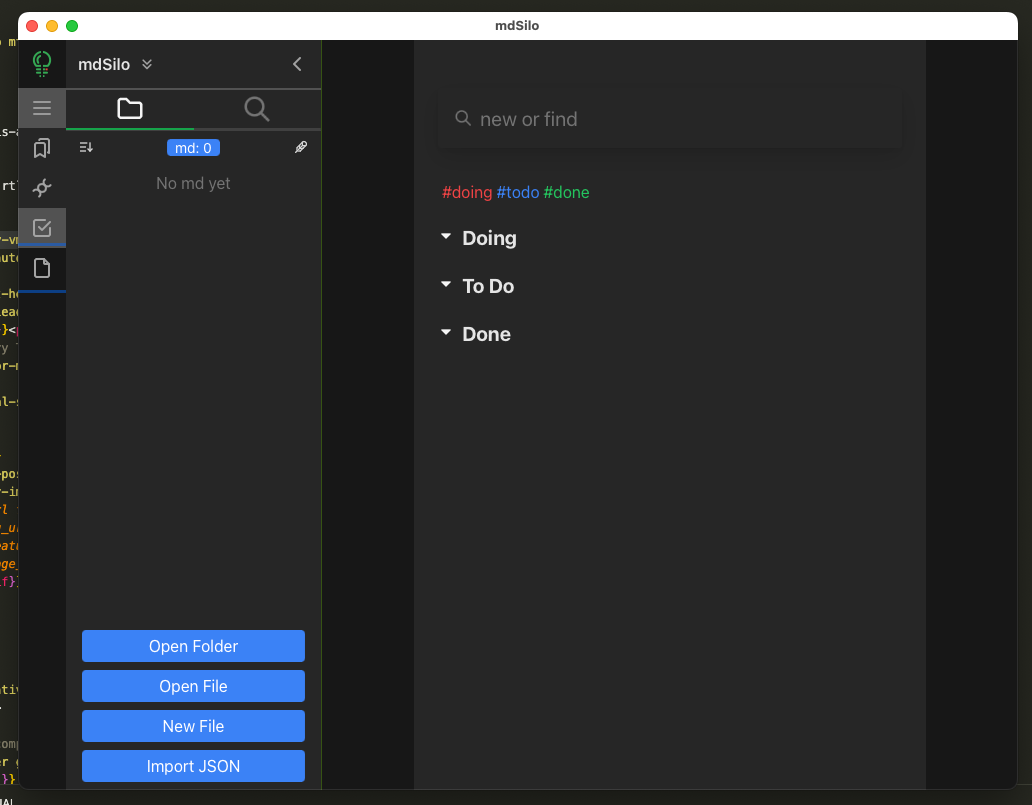
mdSilo is an outstanding open-source note-taking app for the active mind
mdSilo is a super lightweight knowledge-base and note-taking software for people who constantly taking notes.
It leverages Markdown for note-taking, internal tagging and backlinks, and building a connected network between notes for easy browsing.
mdSilo is built using Tauri, a revolutionary framework for building desktop applications on top of Rust and HTML/ JavaScript. It also uses React and Slate.
You can use mdSilo to organize anything, your personal note, code, tasks, personal projects, and keep track of your educational curve.
[...]
mdSilo is released under the GNU Affero General Public License v3.0.
-
How open source leads the way for sustainable technology | Opensource.com
There's a palpable change in the air regarding sustainability and environmental issues. Concern for the condition of the planet and efforts to do something about it have gone mainstream. To take one example, look at climate-based venture capitalism. The Climate Tech Venture Capital (CTVC) Climate Capital List has more than doubled in the past two years. The amount of capital pouring in demonstrates a desire and a willingness to solve hard climate challenges.
It's great that people want to take action, and I'm here for it! But I also see a real risk: As people rush to take action or jump on the bandwagon, they may unwittingly participate in greenwashing.
The Wikipedia definition of greenwashing calls it "a form of marketing spin in which green PR and green marketing are deceptively used to persuade the public that an organization's products, aims, and policies are environmentally friendly." In my view, greenwashing happens both intentionally and accidentally. There are a lot of good people out there who want to make a difference but don't yet know much about complex environmental systems or the depth of issues around sustainability.
-
Magda is an open-source Big Data cataloging system
Magda is a data catalog system that will provide a single place where all of an organization's data can be cataloged, enriched, searched, tracked and prioritized - whether big or small, internally or externally sourced, available as files, databases or APIs. Magda is designed specifically around the concept of federation - providing a single view across all data of interest to a user, regardless of where the data is stored or where it was sourced from.
The system is able to quickly crawl external data sources, track changes, make automatic enhancements and make notifications when changes occur, giving data users a one-stop shop to discover all the data that's available to them.
[...]
Magda is released under the Apache-2.0 License
»
-

- Login or register to post comments
 Printer-friendly version
- 1401 reads
 PDF version
More in Tux Machines
- Highlights
- Front Page
- Latest Headlines
- Archive
- Recent comments
- All-Time Popular Stories
- Hot Topics
- New Members
digiKam 7.7.0 is released
After three months of active maintenance and another bug triage, the digiKam team is proud to present version 7.7.0 of its open source digital photo manager. See below the list of most important features coming with this release.
|
Dilution and Misuse of the "Linux" Brand
|
Samsung, Red Hat to Work on Linux Drivers for Future Tech
The metaverse is expected to uproot system design as we know it, and Samsung is one of many hardware vendors re-imagining data center infrastructure in preparation for a parallel 3D world.
Samsung is working on new memory technologies that provide faster bandwidth inside hardware for data to travel between CPUs, storage and other computing resources. The company also announced it was partnering with Red Hat to ensure these technologies have Linux compatibility.
|
today's howtos
|


 Content (where original) is available under CC-BY-SA, copyrighted by original author/s.



Recent comments
1 year 11 weeks ago
1 year 11 weeks ago
1 year 11 weeks ago
1 year 11 weeks ago
1 year 11 weeks ago
1 year 11 weeks ago
1 year 11 weeks ago
1 year 11 weeks ago
1 year 11 weeks ago
1 year 11 weeks ago