



How I set up my data and backup strategy as a Linux user
Submitted by Roy Schestowitz on Friday 8th of April 2022 06:53:51 PM
Filed under 

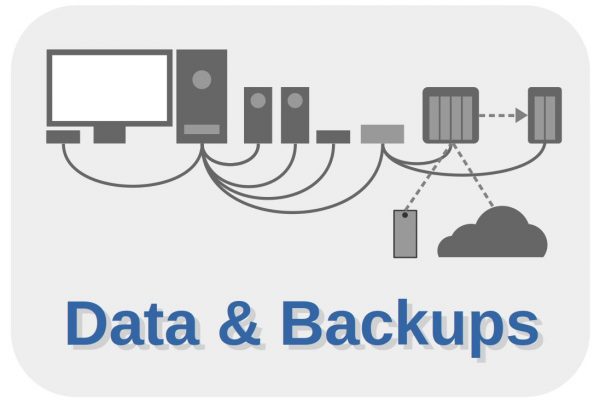
I write a lot about applications running on Linux and how to use them productively. From the many responses I receive from my readers, these articles are generally highly appreciated. However, applications do not stand alone. They use data, they also produce data and they exchange data with each other. Data workflow, data organization and data management are subjects that have always fascinated me. But it is also an important topic that I think everyone should think carefully about. You don’t want to know how many people have not implemented a good backup strategy for their important data. Personally, I always like to read articles or watch videos about how other people have arranged their data workflow, because their specific situations are very educational, but also very different and help to think about your own data situation. So, in this article, I will share a behind-the-scenes insight into how I handle my data in my Linux-based workflow, hoping it gets you thinking, gives ideas or perhaps triggers improvements, in your existing workflow. So here is an insight into how I set up my data and backup strategy as a Linux user.

»
-

- Login or register to post comments
 Printer-friendly version
- 1519 reads
 PDF version
More in Tux Machines
- Highlights
- Front Page
- Latest Headlines
- Archive
- Recent comments
- All-Time Popular Stories
- Hot Topics
- New Members
digiKam 7.7.0 is released
After three months of active maintenance and another bug triage, the digiKam team is proud to present version 7.7.0 of its open source digital photo manager. See below the list of most important features coming with this release.
|
Dilution and Misuse of the "Linux" Brand
|
Samsung, Red Hat to Work on Linux Drivers for Future Tech
The metaverse is expected to uproot system design as we know it, and Samsung is one of many hardware vendors re-imagining data center infrastructure in preparation for a parallel 3D world.
Samsung is working on new memory technologies that provide faster bandwidth inside hardware for data to travel between CPUs, storage and other computing resources. The company also announced it was partnering with Red Hat to ensure these technologies have Linux compatibility.
|
today's howtos
|


 Content (where original) is available under CC-BY-SA, copyrighted by original author/s.



Recent comments
1 year 11 weeks ago
1 year 11 weeks ago
1 year 11 weeks ago
1 year 11 weeks ago
1 year 11 weeks ago
1 year 11 weeks ago
1 year 11 weeks ago
1 year 11 weeks ago
1 year 11 weeks ago
1 year 11 weeks ago